Estimated reading time: 5 minutes

Mary enjoyed her morning coffee, but it tasted a lot like wine!
OK, fine, I’ll confess: I finally clawed my way back to consciousness at around 8:00 am… after approximately fourteen hours of coma-level sleep.
We heroically attempted to summon room service like civilized humans, only to discover the tragic truth: there is no room service. None. Just us, our hunger, and the crushing realization that we might have to put on real clothes and interact with the outside world.
We both got the same idea; we decided to go to the Elks for breakfast.
We checked on Diamond Head, and it was still there. Diamond Head’s history is as layered and multifaceted as the stratified rock that composes it, serving various pivotal roles throughout the ages. To ancient Hawaiians, this towering edifice was a crucial navigational landmark, its imposing silhouette guiding voyagers across the vast Pacific. Fast forward to the 20th century, and Diamond Head assumed a new identity as a strategic military lookout and fortification, playing a significant role in the defense of the Hawaiian Islands during periods of international conflict. This transition from a symbol of natural guidance to a bastion of military might encapsulates Diamond Head’s historical significance, highlighting its enduring presence in the changing tides of Hawaiian history.

It looks like a Diamond!
Diamond Head, known to Native Hawaiians as L’ahi (brow of the tuna), is a 300,000-year-old volcanic tuff cone formed by a single explosive eruption. Originally a navigational landmark, it was named “Diamond Head” by 19th-century British sailors who mistook volcanic calcite crystals for gems. The U.S. military purchased it in 1904 for strategic coastal defense, building tunnels and bunkers still present today.
Geological Formation: Formed about 300,000 years ago, it is an extinct tuff cone that resulted from magma interacting with ocean water, triggering a massive explosion, says the Hawaii Department of Land and Natural Resources.
Hawaiian Name (L??ahi): Ancient Hawaiians named it for its resemblance to the dorsal fin of a tuna fish, according to the Pacific Historic Parks.
Military Significance (Fort Ruger): In 1904, the U.S. government bought the crater for coastal defense. In 1908, the hiking trail, tunnels, and fire control station were built to defend Honolulu.
Modern Status: It was designated a National Natural Landmark in 1968 by the Hawaii Visitors and Convention Bureau.
We took a short cab ride from our hotel, well worth the $12.00.
We just made it for breakfast since they were closing early for an Elks formal meeting upstairs.

“Aloha, come on inside!!”
We had a wonderful table close enough to hear the ocean but far enough away from the seawall to avoid getting splashed by the occasional rogue wave.

We ordered quickly and were served within minutes, since the kitchen was about to close.
I went off the rails and had French Toast; it was terrific. The service was outstanding and the view spectacular.

No laughing at the legs!!
After breakfast, we walked along the perimeter of the Elk’s Lodge and spotted our hotel in the distance. No wonder it is called the “Pink Lady”.

It’s about three or four miles away!
According to the map, our hotel is 2.5 miles from the Elks Lodge. The cab fare averaged $15 each way.

If my back were OK, it would be within walking distance of the Lodge.
The telephoto lens helped us see the details, and in fact, we could see our room.

The hotel is indeed in the middle of Waikiki!
After our meal, we caught a cab back to the hotel. Mary introduced herself to the welcoming Elks; his name is Igor Elk-a-Seltzer!

We said goodbye to the Elks and went back to the hotel!
Mary went shopping while I relaxed in our room.

The hote staffl is carrying her many other purchases.
We rested the rest of the afternoon, but at 4:00 pm, we got ready to go to the Elks for dinner. Aim for Diamond Head, and you can’t miss the Lodge!
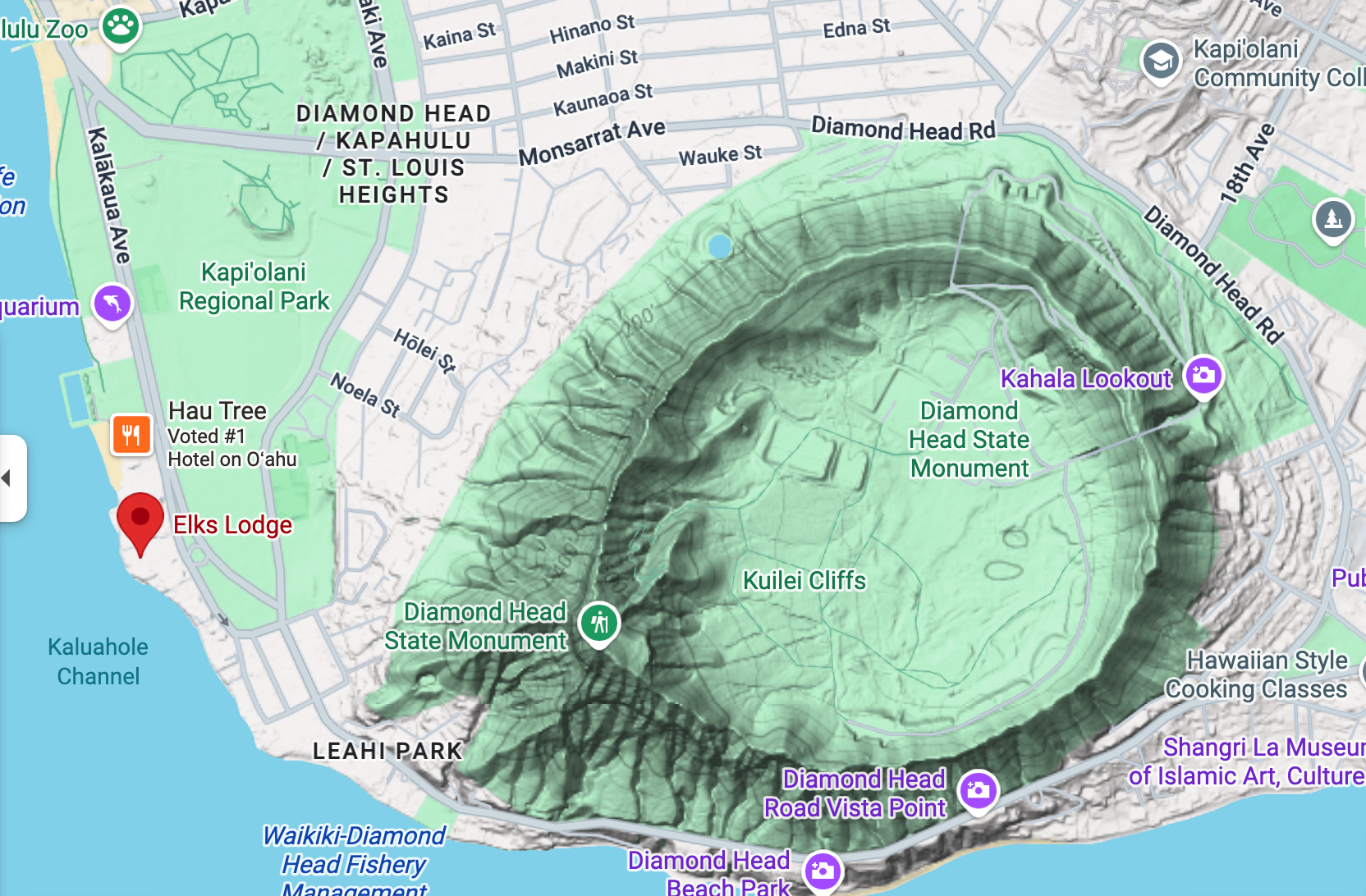
The Lodge was established in 1901, and they picked a perfect spot.
We had a marvelous dinner and enjoyed the occasional rumble of the ocean hitting the seawall adjacent to our table.
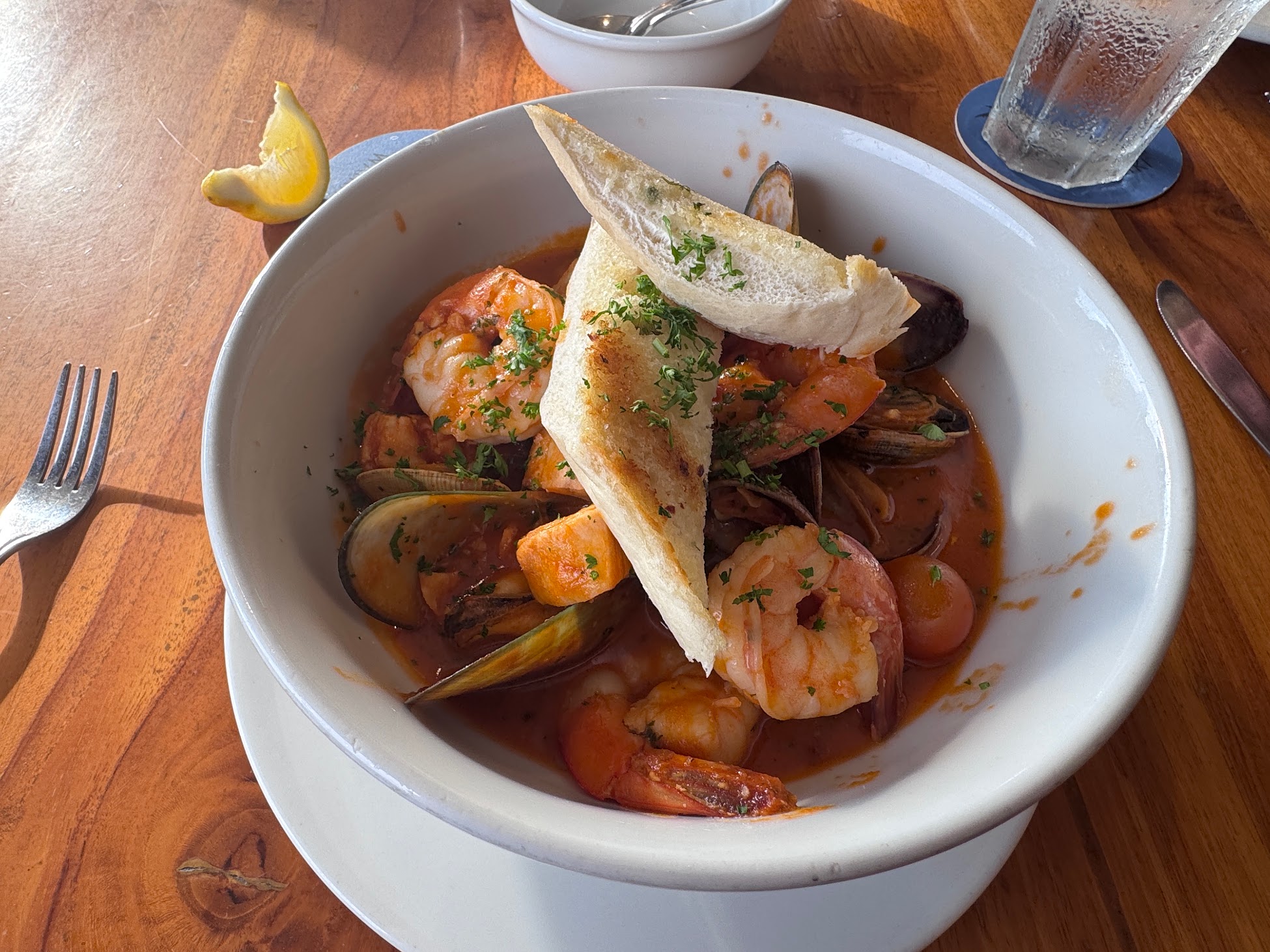
By far the best “fish soup” I have ever had.
We had wonderful seating with a view of the ocean and the surfboarding people. As the sun began to set, we rotated our seating to avoid staring into the. bright sky.

Dinner was superb!
We attempted to get home by sunset, but alas, we caught this glimpse out of the door of the cab. Tomorrow, we will make sure we are in our room by 6:45 pm. Not too bad a picture, considering it was taken from inside the Tijuana Taxi.
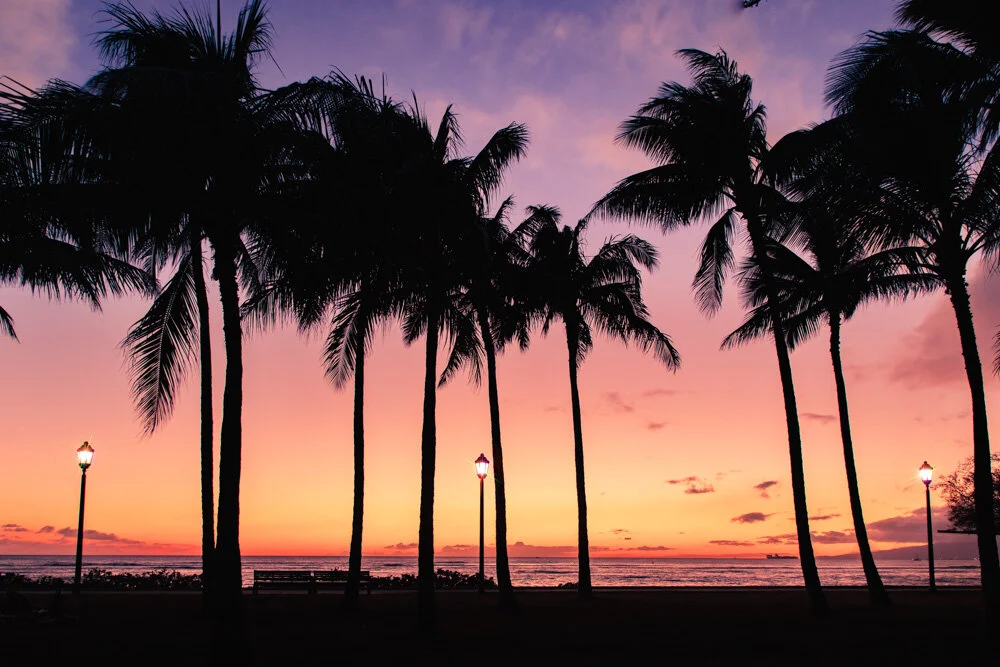
Just like in the postcards!
We crashed a little early and watched some TV.

