
It’s Monday. I woke up, glanced at the calendar, and saw the dreaded words: GYM TIME.
“Oh no,” I thought. “Another day of forcing my poor little fragile body into positions usually only seen in horror movies and IKEA assembly manuals.”
I didn’t even know I was triple-jointed until I saw the bottoms of my feet waving at me from somewhere behind my head. At that point, I wasn’t exercising — I was being folded for storage.
On the bright side, we bicycled over five miles each leaving the smell of burnt rubber behind us!

From the gym, we went VFR to see Dr. Bill to get my toenails trimmed and an ingrown nail fixed so I can walk again! Dr. Bill is a good friend, so we spent some time jabbering with him and learning about his recent trip to Michigan to see family
From Dr Bill’s office, we went to Bei for lunch. As their website says:
Our name, Bei, is a nod to Beirut, It’s a playful take on the city’s name. Bei Restaurant is a heartfelt celebration of Beirut, born from a deep passion for the city’s rich culture, flavors, and atmosphere. We’re focused on capturing the essence of Beirut’s vibrant culture and spirit in every aspect of our restaurant, while blending tradition with a modern twist.
It was easy to find, and we were today’s first customers of the day. The menu was quite elaborate, and we took the waiter’s suggestions; he spoke perfect English. We tried the Lebanese wine, and it was pretty good!

We ordered the special mixed plate and shared it, adding some other goodies as well. The Bekaa Valley is in eastern Lebanon. It lies between the Mount Lebanon range to the west and the Anti-Lebanon Mountains to the east, near the border with Syria. It’s one of Lebanon’s most important agricultural regions, known for its vineyards, farms, and historic sites like Baalbek.

We ordered the sample, and the food kept coming and coming! Lebanese food is one of the most popular cuisines in the Middle East. It’s known for being fresh, colorful, flavorful, and often very healthy. It uses lots of olive oil, lemon, garlic, herbs, vegetables, grains, chickpeas, yogurt, and grilled meats.
Some famous Lebanese dishes include:
• Hummus — creamy chickpea dip with tahini, lemon, and garlic
• Tabbouleh — parsley salad with tomatoes, bulgur, lemon, and olive oil
• Fattoush — crunchy salad with toasted pita bread and sumac
• Baba ghanoush — smoky eggplant dip
• Kibbeh — bulgur and minced meat, often shaped into balls or baked
• Shawarma — spiced meat cooked on a rotating spit, served in bread or plates
• Falafel — fried chickpea or fava bean patties
• Manakish — flatbread topped with za’atar, cheese, or meat
• Warak enab — stuffed grape leaves
• Kafta — seasoned ground meat skewers or patties
Lebanese meals often start with mezze, which are small shared plates such as dips, salads, pickles, olives, and bread. Meals are usually social and meant for sharing. For desserts, Lebanon is known for Baklava and Ashta cream desserts
Overall, Lebanese food is a mix of fresh ingredients, bold seasoning, and shared dishes that make meals feel warm and communal.


We enjoyed taking our time and sampling everything. The spicy hummus was outstanding! Our waiter was perfect for us, offering several excellent recommendations, making sure Mary didn’t end up with anything spicy, and I got my spicy fix for the day!

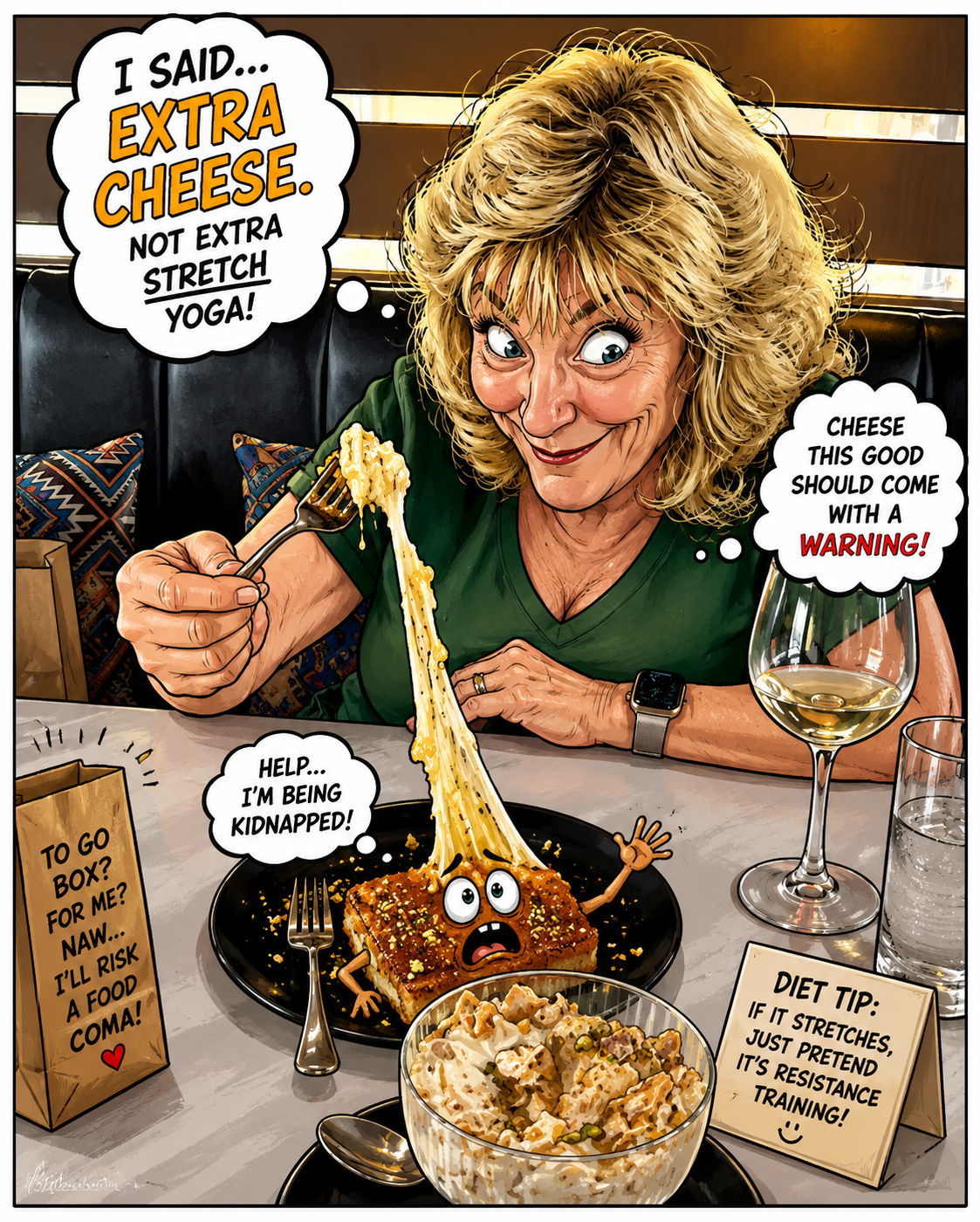
And of course, dessert!

I closed my eyes, and to my surprise, an image of Mary popped into my head!
After lunch, we headed home and stayed inside for the rest of the day, enjoying our air conditioning, which keeps the house at 75 degrees! We fed the lost cat, and sure enough, the darned thing found its way to the patio and ate! I guess she is really an outdoor cat!
We did NOT go to the pool today but opted for some TV movies instead. We gave up the ghost at 11:00 and crashed.