Estimated reading time: 7 minutes

NOTE: Mary thought that by going here, we would get some culture, but alas, nothing changed. She asked for her money back.
We were up and ready for today’s adventure. Megan met us in the room at 9;45 am, giving us 15 minutes to get to the departure point. We walked to the Ross Store, our pickup point, and after about 8 minutes, the bus showed up. I went to the ABC Store for supplies (water, cookies, macadamia chocolates, etc.).

We entered from the side (where the buses meet)
We love the flowers! Hawaii is home to more than only animals and plants found nowhere else on the planet: it also has seven unique hibiscus species, though most visitors and residents see Chinese hibiscus and hybrids. On the other hand, the vibrant, jazzy flower, which comes in a variety of colors ranging from bright pink to white, has come to characterize Hawaii, with the yellow hibiscus, also known as pua alo alo, acting as an emblem of the state. Hibiscus flowers bloom every day on the islands, but their petals fade almost as quickly—most hibiscus don’t live much past dusk.
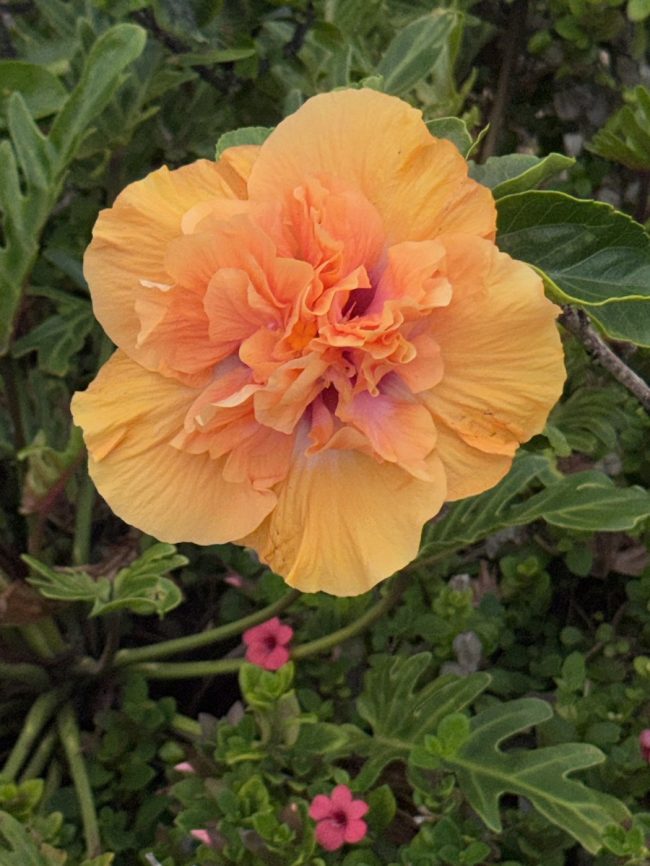
We grow these at home.
Being hungry and from SoCal, we headed to the Hawaiian Tacos Stand. The food was pretty good, although $65 for two tacos, a casadea, and a small burrito seemed a bit pricy!

We filled up and are ready to roam the South Pacific.
A serious study of the map was needed. Megan checks our coordinates on the iPhone, which Captain Mary revisits her mapping skills from the army!
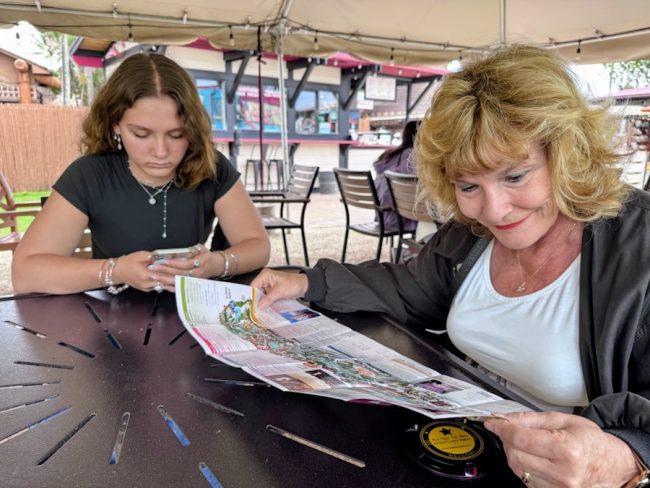
P-s-s-s-s-s-t. Mary, the map is upside down.
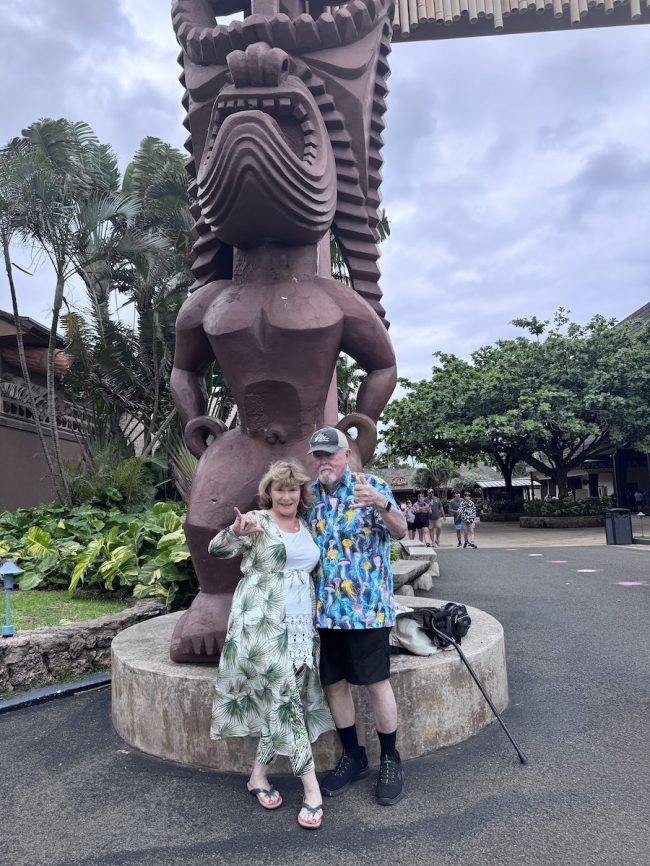
The statue was enjoying being photographed. Polynesian statues are primarily known as Moai (or mo?ai) when referring to the massive, monolithic stone figures on Easter Island (Rapa Nui), which represent deified ancestors. Generally, across Polynesian culture, carved humanoid figures made of wood or stone are referred to as Tiki, representing gods or the divine.

Don’t make Mr. Tiki mad!!
OK, girls, time to visit the islands.
The Polynesian Cultural Center (PCC) is a family-centered cultural tourist attraction and living museum in Laie on the northern shore of Oahu, Hawaii. The PCC is owned by the Church of Jesus Christ of Latter-day Saints (LDS Church), was dedicated on October 12, 1963, and occupies 42 acres (17 hectares) of land belonging to nearby Brigham Young University–Hawaii (BYU-Hawaii).
The PCC encompasses eight simulated tropical villages where performers demonstrate various arts and crafts from throughout Polynesia. Visitors may also take a free shuttle tour of the university and see the LDS Church’s Laie, Hawaii, Temple and its associated visitors’ center.
Seventy percent of the PCC’s approximately 1,300 employees are students at BYU-Hawaii. Since opening, the PCC has provided financial assistance to more than 12,000 BYU-Hawaii students. Students may work up to 20 hours per week during school terms and up to 40 hours per week during breaks. As a non-profit organization, PCC uses its revenue for daily operations and to support education.

Get ready, get set, GO!
Tiki culture, popularizing a romanticized Polynesian aesthetic, was founded by Donn Beach in 1934 and boomed in the 1940s-50s as a postwar escapist trend. It is defined by rum cocktails, exotic decor, and iconic statues representing gods or ancestors. Key figures include Donn Beach and Trader Vic, creators of classics like the Mai Tai
Exploring, we will go!
There are maps all over the facility

We did not know that New Zealand is part of Polynesia!
New Zealand (Aotearoa) is considered part of Polynesia. The indigenousM?orii people are Polynesians who migrated from East Polynesia in waka (canoes) between approximately 1280 and 1350 CE. New Zealand forms the southwestern corner of the “Polynesian Triangle,” with Hawaii and Easter Island being the other two corners.

We walked through all the islands and put 2.8 miles on our shoes!

Vicky and Jim came to mind when we saw the Ukulele Experience store. The ukulele originated in Hawaii in the late 19th century, adapted from Portuguese instruments (the braguinha or machete) brought by settlers. It means “jumping flea,” likely referring to a player’s fast finger movements, or “the gift that came here,” as termed by QueenLili’okalanii.

They have a few items for sale!!! In 2012, over 4,750 people gathered to form the world’s largest ukulele ensemble. Was Jim there?

Perhaps we should give Vicky a thousand pounds of clay so she can sculpt Jim in action??

They have live demonstrations of the various cultures. The Tonga group was cooking up a storm, and the instructor is actually a student at the university. He was VERY funny!!
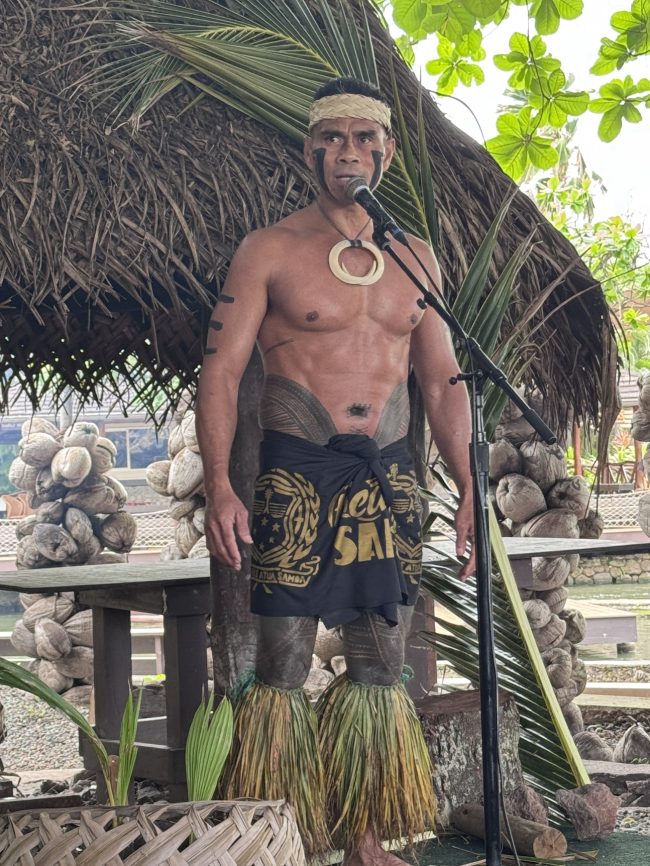
I needed a costume like the one he is wearing.
We had to get a fresh coconut! Coconuts are actually drupes (stone fruits), not nuts, and are renowned as the “Tree of Life” because every part—from water to husks—is used for food, fuel, and shelter. They are highly buoyant, capable of traveling across oceans to grow, and can even be used as an emergency blood plasma substitute.

It was quite refreshing.
Here are the key reasons and trivia behind Polynesian longhouses:
Communal Living & Social Structure: Polynesian society was based on large, extended family units (ramages) that lived together. A single, large house allowed multiple generations to live under one roof, strengthening kinship ties, sharing resources, and providing collective child-rearing.
Adaptation to Climate (Open Walls): Rather than solid, permanent walls, many traditional Polynesian homes used retractable mats that could be rolled down for privacy or protection from storms and rolled up to let in cool breezes, helping them deal with tropical heat and humidity.
Symbol of Authority: Large, elaborate longhouses were often occupied by chiefs (ali?i) and served as community gathering places or guest houses (fale talimalo), showcasing the family’s prestige.
Coastal Defense & Location: Villages were frequently built along the coast, and longhouses could be positioned to watch the ocean while protected by surrounding palm groves or palisades.
Construction Techniques: The homes typically featured strong, central, notched wooden pillars and steep, thatched, beehive-shaped roofs, well-suited to high rainfall and wind resistance.
We saw many different kinds of dancing, and we took notes.

My back ached just watching them move.
We are heading to a Hawaiian wedding now.

Mary and I renewed our vows; Megan giggled.
The question was asked, “Will you ever leave her?” When I answered, “No, unless there is a bar nearby!” I was reminded who the boss is.

We have been walking for several hours; it’s time to sit and eat again!
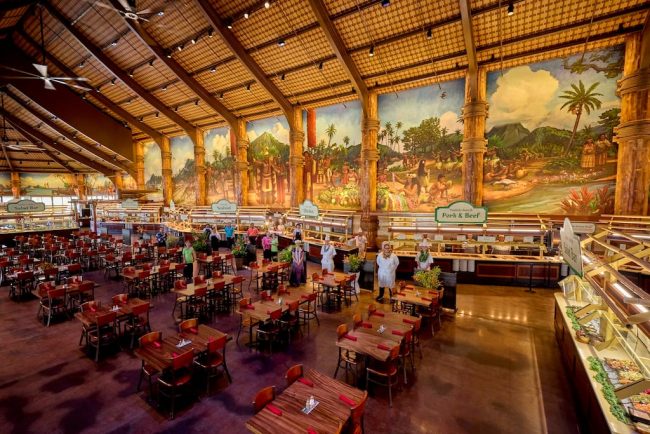
The buffet was HUGE! Casual restaurant featuring a large selection of all-you-can-eat comfort food, plus live entertainment.
We received our daily security system summary and called Robin, who was staying at the house.


After dinner, we walked around and shopped some more.
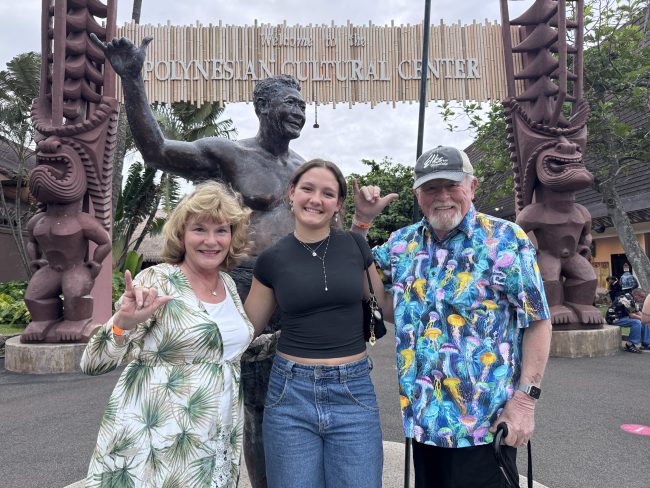
We look pretty good after walking three miles!
We thought of Donna when we saw the roosters on display.

Chickens are everywhere on the islands.
We waited outside the Pacific Theater. The symbolic story of Mana and his beloved Lani, punctuated by Polynesian dance, music, and blazing fireknives, is told in “H?: Breath of Life,” in the stunning evening show featuring Pacific Islanders, special effects, animation, and surround sound. It is a Pacific isle saga of birth and death, love and family, tragedy and triumph.

It looked small from the outside.
The interior was spectacular, an open-air theater complete with waterfalls, mountains, and a large stage. There were over 60 performers in the play.

We were worn out, so the bus ride home provided well-needed rest. As the lights of Honolulu came into view, we were ready to go to the hotel and pack. Tomorrow we are leaving for home.

