
At 6:30 am sharp, Alexa sounded her “get the hell out of bed ” alarm, meaning it’s time to go to the kitchen and begin preparations. Today, we are making corned beef boiled, baked, in the slow cooker, and in the Instant Pot.
Did You Know?
- Corned beef gets its name from the “corns” (large grains) of salt historically used to cure it, not from corn, the vegetable.
- Traditional Irish corned beef wasn’t the everyday staple in Ireland; it became strongly associated with Irish-Americans in the U.S., who often bought brisket from Jewish butchers as an affordable substitute for Irish bacon.
- The cut is usually brisket (or sometimes round), cured in a salty brine with “pickling spices” such as mustard seeds, coriander, peppercorns, bay leaves, and cloves.
- The pink color in many store-bought corned beef comes from curing salt (sodium nitrite), which helps prevent spoilage and keeps the meat rosy even after cooking.
- Historically, beef in Ireland was relatively expensive; much of the salt-cured beef was exported, especially in the 17th–19th centuries.
- Corned beef and cabbage became a classic St. Patrick’s Day meal in America partly because cabbage was cheap and readily available alongside brisket.
- Corned beef is cured (brined) first; pastrami is typically corned beef that’s then seasoned (often with coriander/pepper) and smoked.
- The brisket’s two main parts are the flat (leaner, slices neatly) and the point (fattier, more flavorful). Many packaged corned beef briskets are mostly flat.
- If you cook corned beef too fast or too long, it can get tough. Low—and—slow simmering or braising helps melt collagen into gelatin.
- Leftover corned beef is the classic base for corned beef hash—and it also makes a great Reuben (or”Rachel” if you swap in turkey).
We are now on a search-and-rescue mission to find the appropriate cooking utensils, including pots and pans! We found everything and remembered where we stashed it.
-
- A large pan for roasting
- The one-gallon pressure cooker
- The Dutch Oven for boiling, and
- The slow cooker
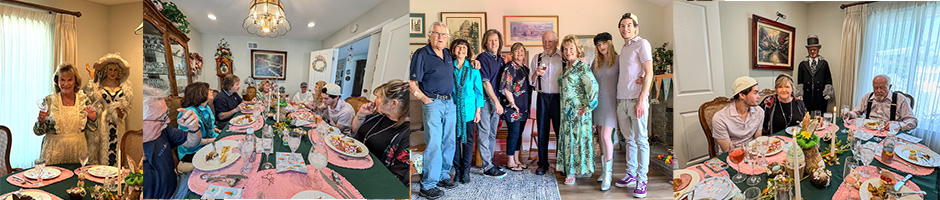
We scurried around the house getting everything ready. We set up tables, moved chairs in from the HeShed (thank you, Robin), set the table, and did all the other things needed for a party. You can see the entire party right here!
Mary went “picking” in the garden and returned like a vegetable pirate—arms full of onions and carrots—then dumped the haul on Paul and said, “Congrats, you’re in charge of washing, peeling, and prepping these for whatever cooking chaos we’re attempting today.”

When Paul was done, they were perfect for tossing into the pots!
Mary took a few minutes off to relax before our friends and family arrived. Everything is ready to go! When the alarm bells go off, dinner will be served!

“Wake me up when it is over!!”
When Robin arrived around noon, she ran to the kitchen and began preparing the green Jello shots!
Jello shots are small, single-serving snacks made by mixing gelatin (like Jell-O) with water/juice, and alcohol (usually vodka, rum, or tequila), then letting them set in little cups.
- How they’re made (basic idea): dissolve gelatin in hot water, mix in cold liquid + liquor, pour into cups, refrigerate until firm.
- What they’re like: sweet, jiggly, and usually about 0.5–1 oz each.
- Alcohol content: varies a lot; they can be surprisingly strong depending on the recipe.

Yummy! Jello and Fireball!!!

We took a grand tour of every garden bed, like we were hosting a very low-budget nature documentary—explaining what we’d done, what we meant to do, and then giving everyone our best, totally scientific estimate of when they can come back to start harvesting.
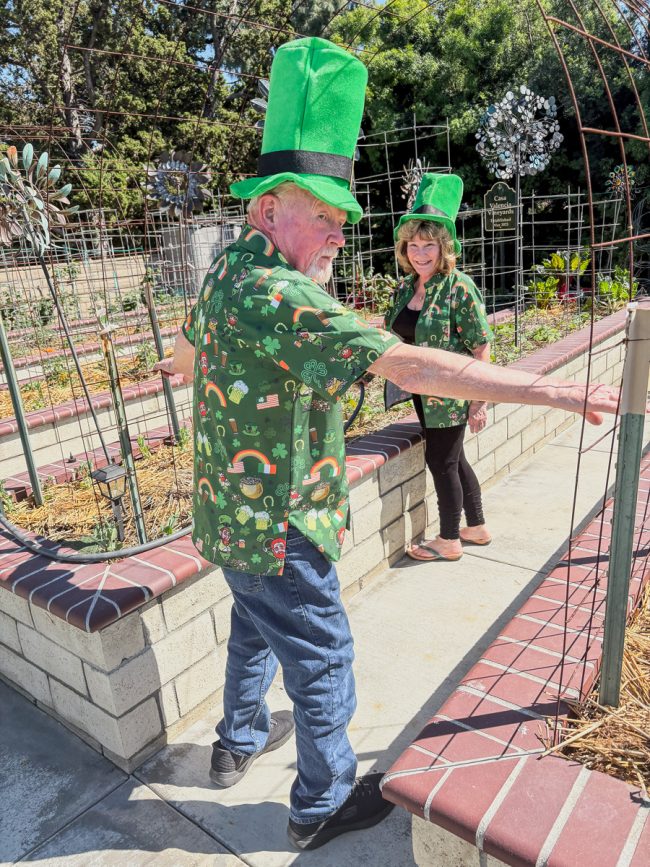
A little Irish dancing was needed to liven things up!
Come and get it! The clamor of people moving to the kitchen island was so loud that the neighbor’s dog began marking! We had several first-aid kits available just in case! We placed signs under each of the different methods used to make dinner.
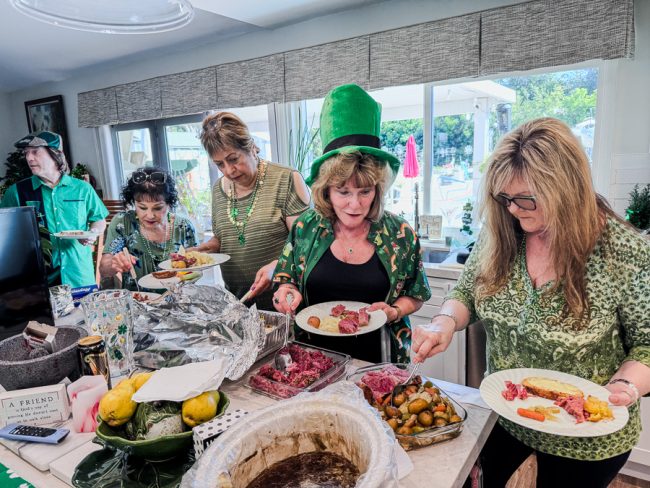
Serve it up! Remember to keep track of which method you liked!
Vicky arranged her corned beef in numerical order to make the selection and voting easier.
“Friendship is born at that moment when one person says to another: ‘What! You too? I thought I was the only one.”

Beef, beef, everywhere I look!
Happy people mean full tummies—and full tummies mean nobody asks what’s for dinner.
I introduced several people to my new creation, the totally clear Chocolate Martini. It is a dangerous drink because it tastes like a chocolate bar and is about 4.5 ounces of various vodkas all mixed together! It is guaranteed to solve the problem of not sleeping, as evidenced below!

Then, suddenly, the Chocolate Martini hit!
“Family is not an important thing. It’s everything.”

Bob and Robin, our heroes!
Your happy hosts are simply enjoying the fact that everyone is having a good time! We spent three hours together swapping stories, reliving adventures, and curing the world’s problems.

We didn’t want anyone to go home, but alas, they need a nap, too!
We were the last people standing; everyone else was in their cars,s sitting down!

Bye-bye, you all, see you this time next year!
May the wind be at your back, not because of the corned beef and cabbage!
You can see the entire party right here!

