Saint Patrick's IS Celebrated With Loads Of Corned Beef & Cabbage!
Our annual Saint Patty's day gets underway with friends and family. This year we have:
- Bob & Donna
- Geri
- Vicky
- Dianne & Eddie
- Robin & Bob
- and Us!!

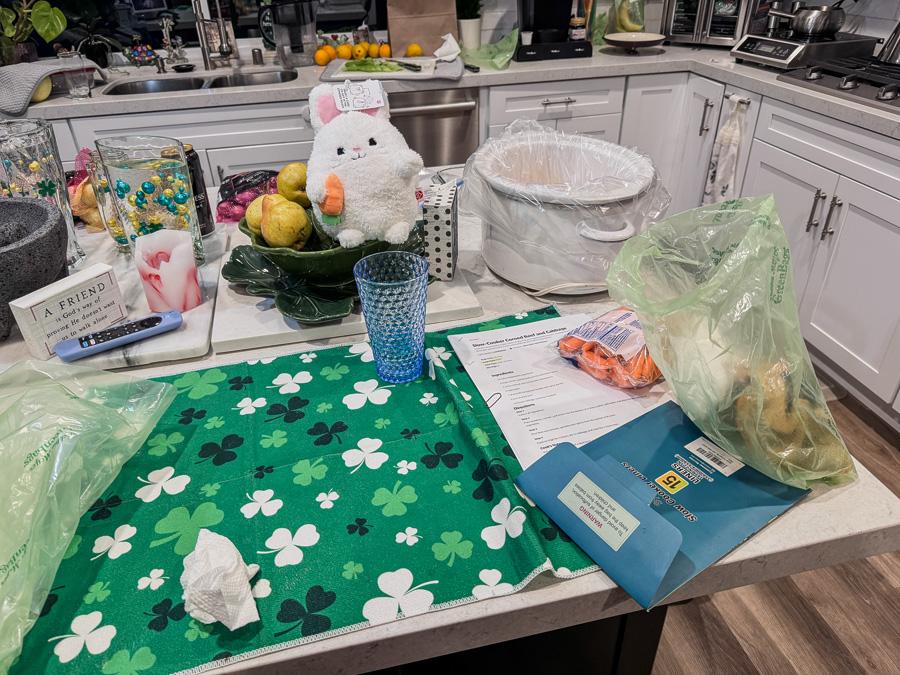
All the necessary equipment is in place!
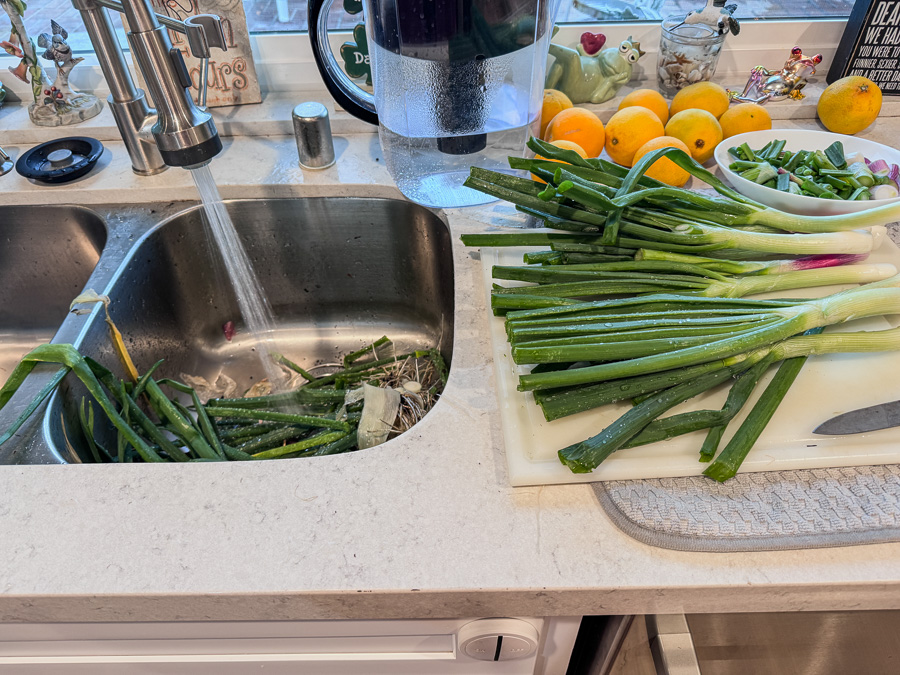
Talk about "fresh", Mary went picking this morning in the garden!
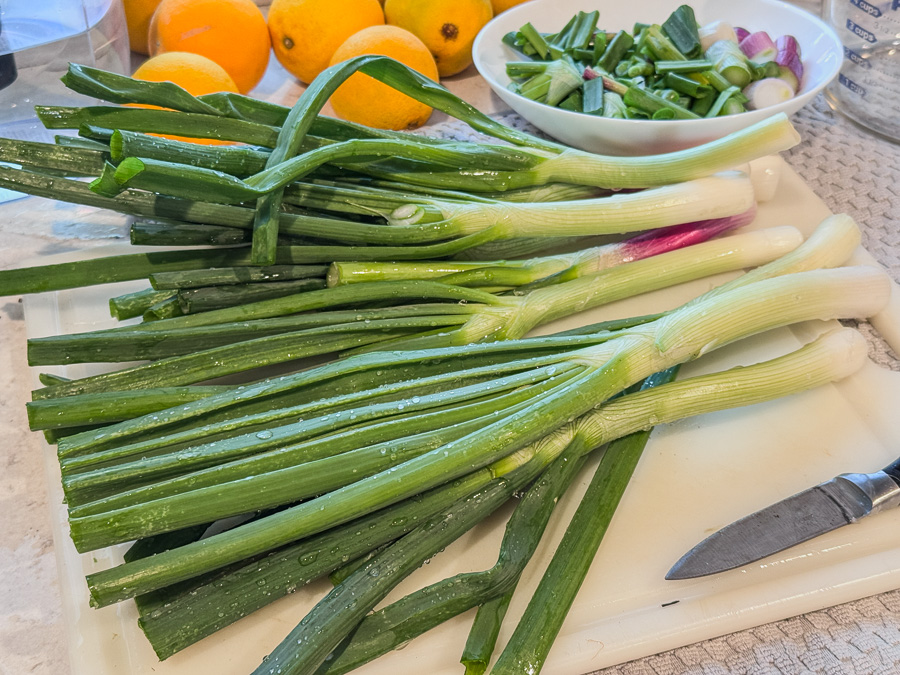
Paul dried the entire time!
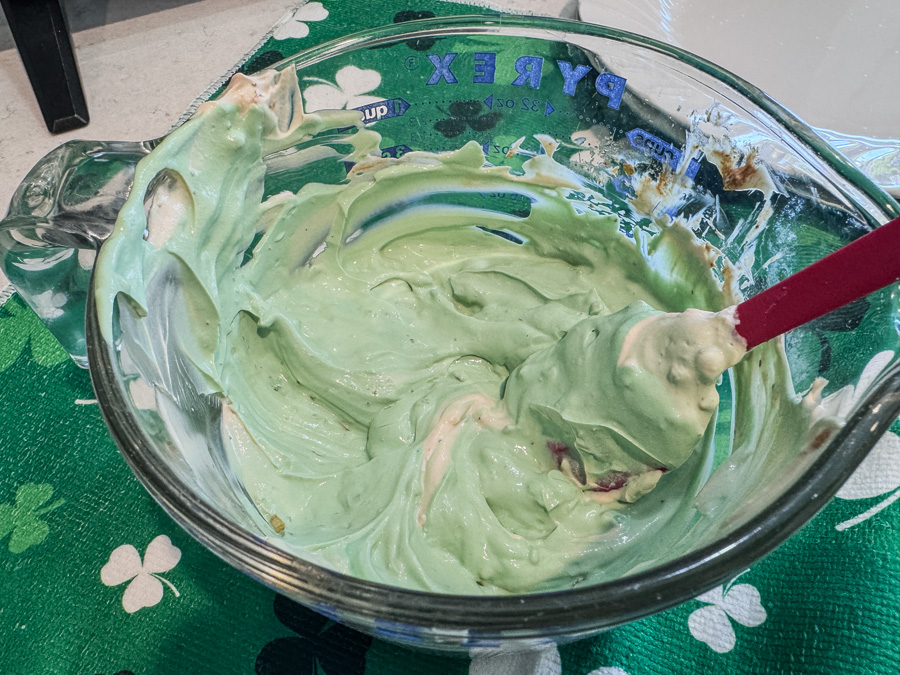
Mary made some onion dip and via the magic of food coloring, we have St. Patrick's Dip!
Did You Know? -
Most "green" is actually a blend. Many green food colorings are made by mixing yellow + blue dyes rather than using a single green dye.
Common U.S. dyes used: The bright "leprechaun" green you see in frosting is often made from FD&C Yellow 5 (tartrazine) plus FD&C Blue 1 (brilliant blue). (Ingredient labels may list these.)
Natural greens are tricky. Plant-based green pigments like chlorophyll can turn olive or brown with heat or acidity, so "natural green" products often look more muted than synthetic ones.
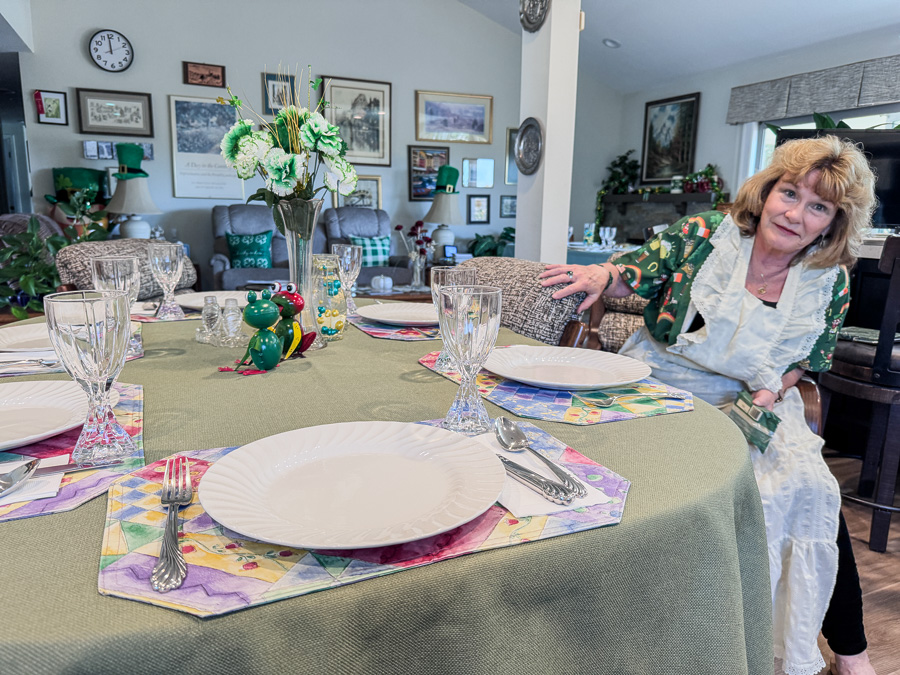
The tables are set, the beef is cooking four different ways!
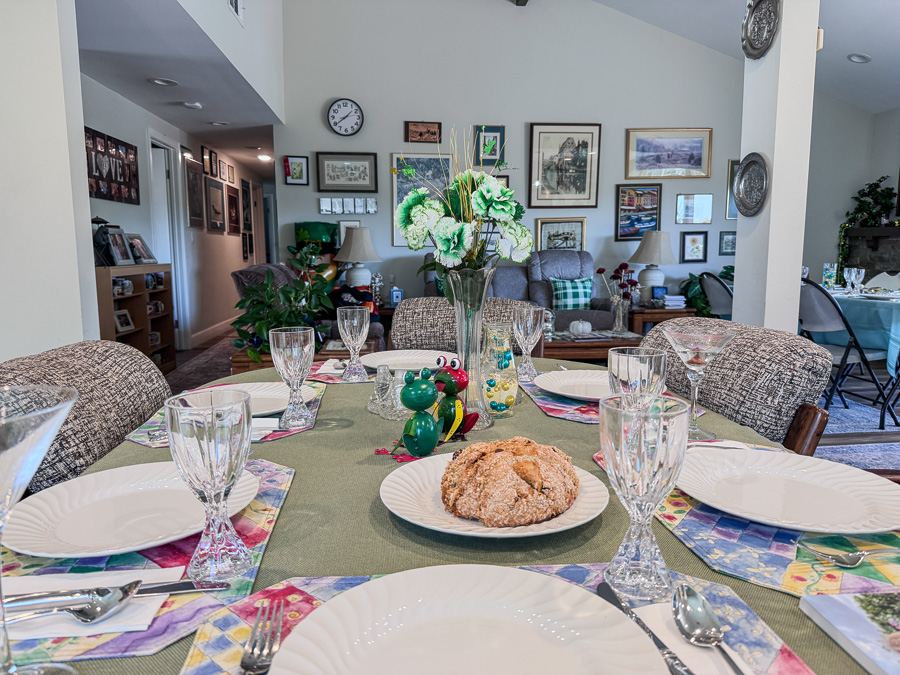
Final touches the Irish Soda Bread!
Did You Know? - It's "soda" because of baking soda. Irish soda bread is leavened with bicarbonate of soda (baking soda) reacting with an acid (traditionally buttermilk), not yeast.
A practical invention. It became common in Ireland in the mid-1800s, when baking soda became widely available and soft wheat (better for quick breads than chewy yeast loaves) was common.
Traditional Irish versions were often very plain. In Ireland, classic soda bread is usually just flour, baking soda, salt, and buttermilk. The raisin-studded "Irish soda bread" common in the U.S. is closer to what Ireland calls spotted dog (a sweet soda bread).
Baked in a pot, not always an oven. Many households cooked it in a cast-iron pot (bastible) or on a griddle over the fire, which is why you'll hear of "soda farls" (flattened rounds) in some regions.
The cross on top has multiple explanations. Scoring a deep X helps the loaf bake evenly, but folklore says it also "lets the fairies out" or offers a blessing/protection.

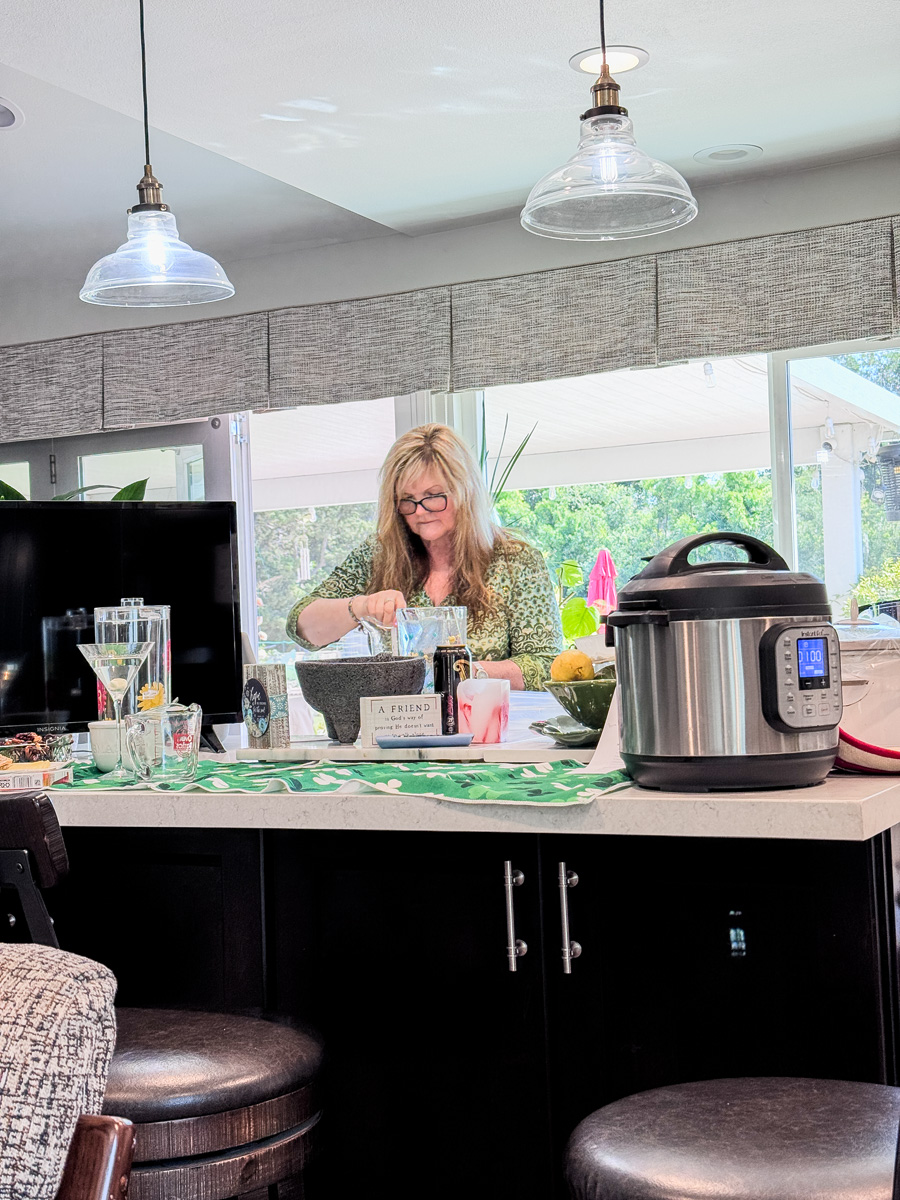
Robin is whipping up something! Could it be Jello-Shots?
Did You Know? -Jell‑O shots trace back to at least the 1950s–60s, but the big pop-culture boom came in the 1980s–90s U.S. party scene.
"Jell‑O" is a brand; the generic term is "gelatin shots," but almost everyone calls them Jell‑O shots.
Standard-strength gelatin (like Knox) will set even with alcohol, but too much booze can stop it from gelling—pure alcohol won't set gelatin.
Typical "classic" ratio is roughly 1 cup boiling water + 1 cup spirits per 3 oz box, but higher-proof liquor often needs more water (or extra gelatin).
Vodka is popular mostly because it's neutral; strongly flavored spirits (tequila, rum, whiskey) can show through more than people expect.
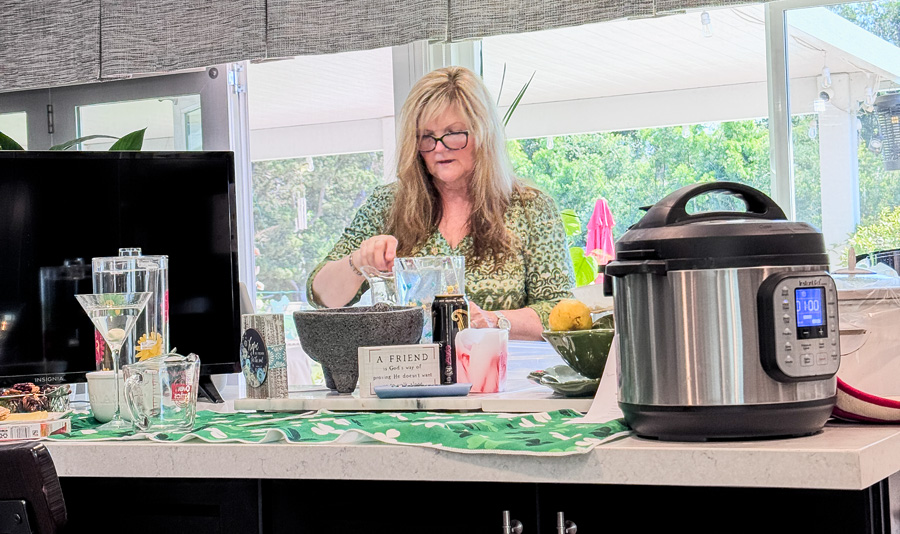
The "Brew Master" is at work!!

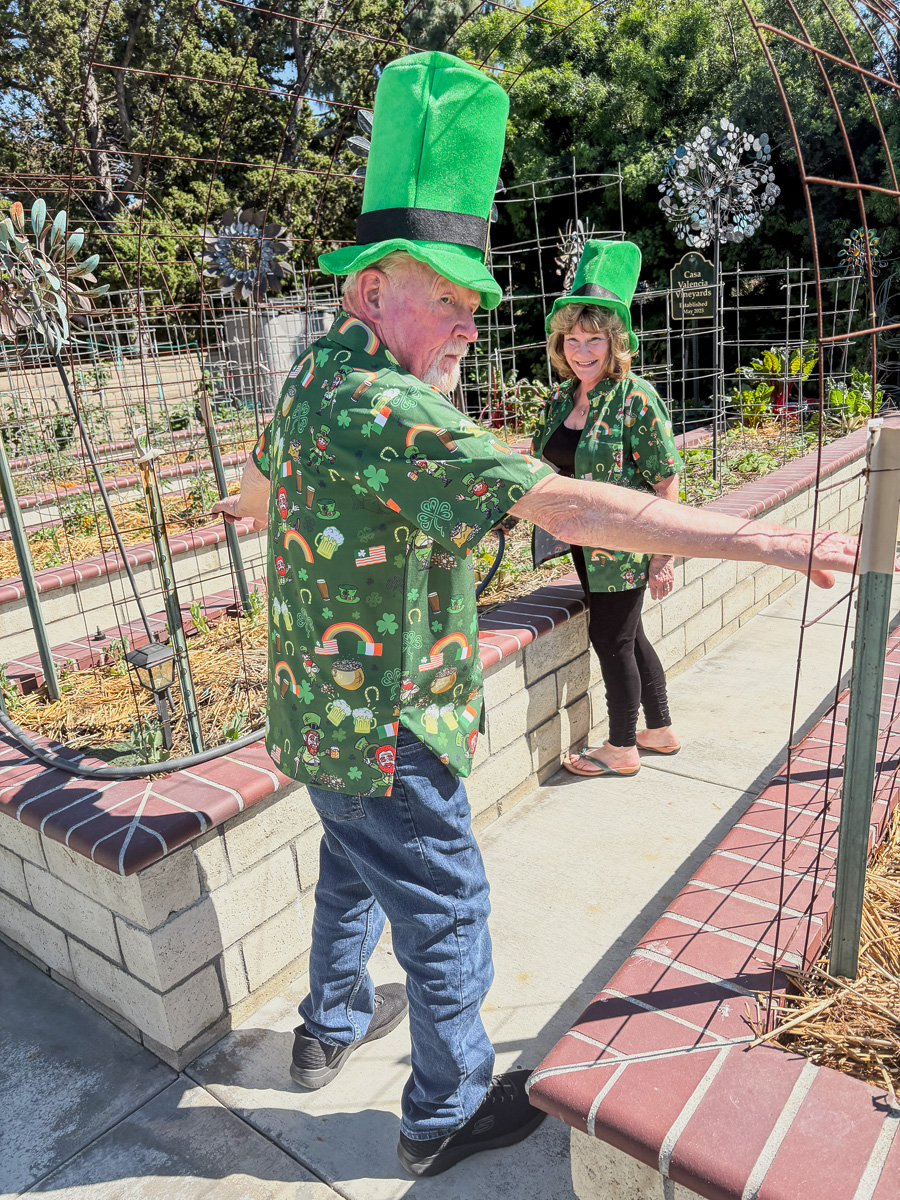
The proud parents show off the garden!
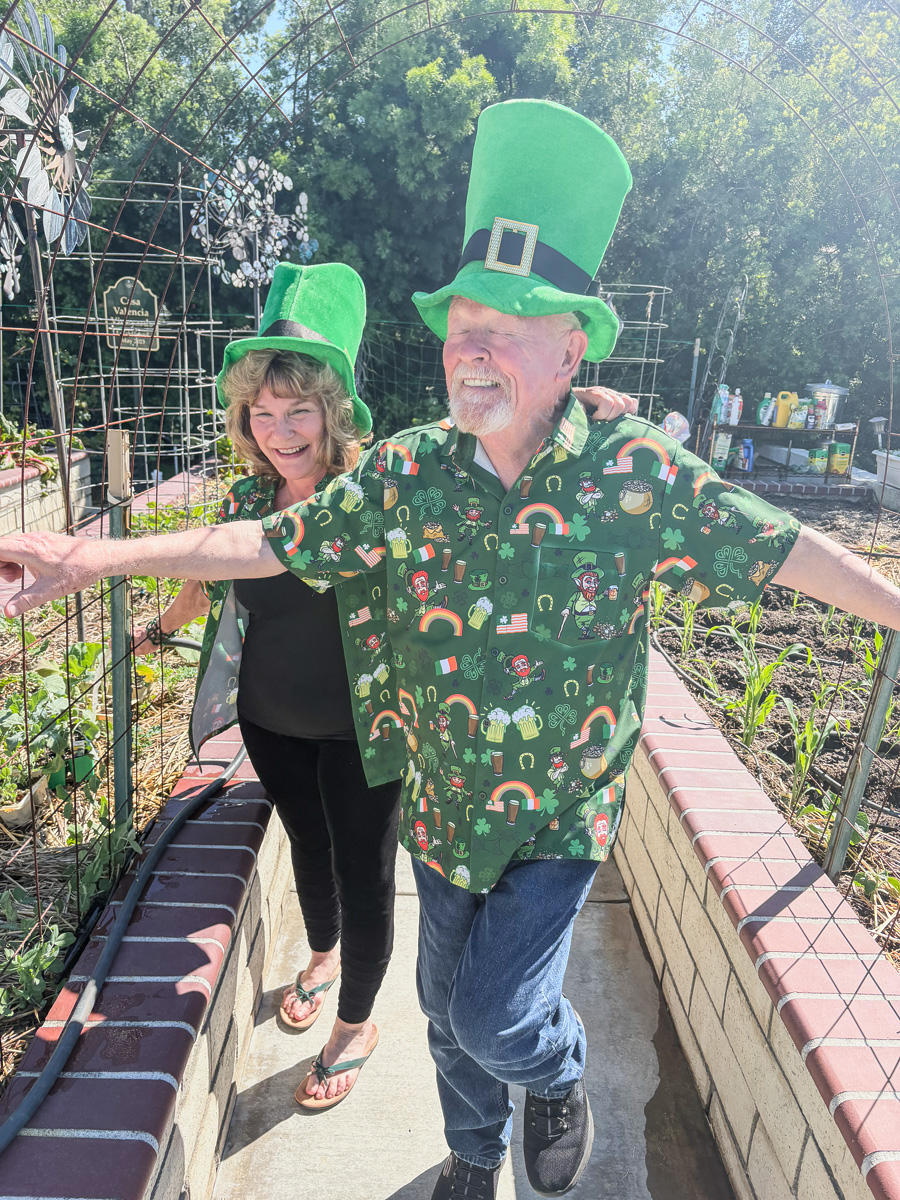
A little dancing goes a long way!
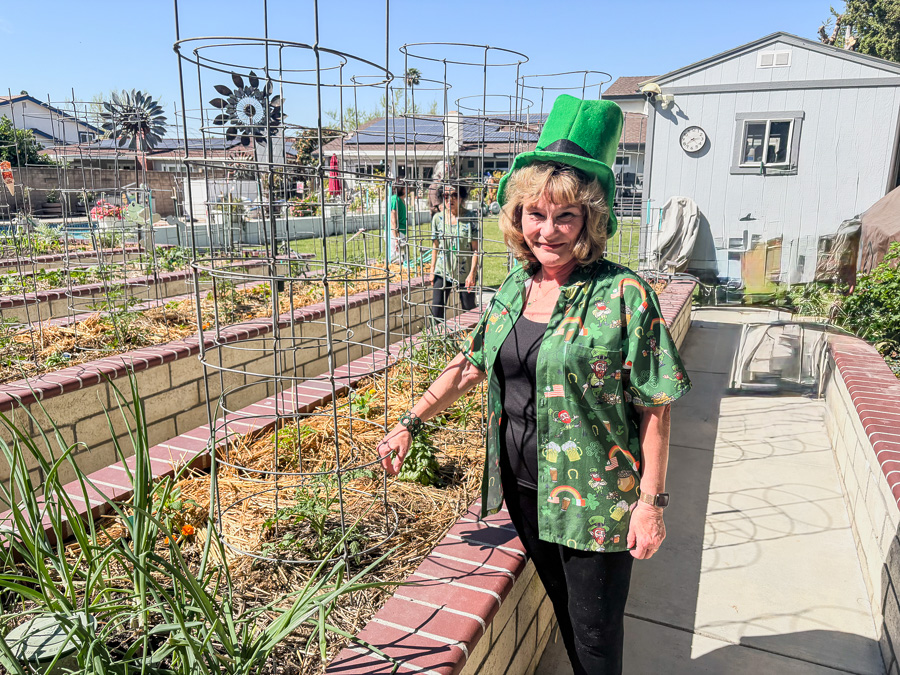
Careful, Mary is about to go picking again!

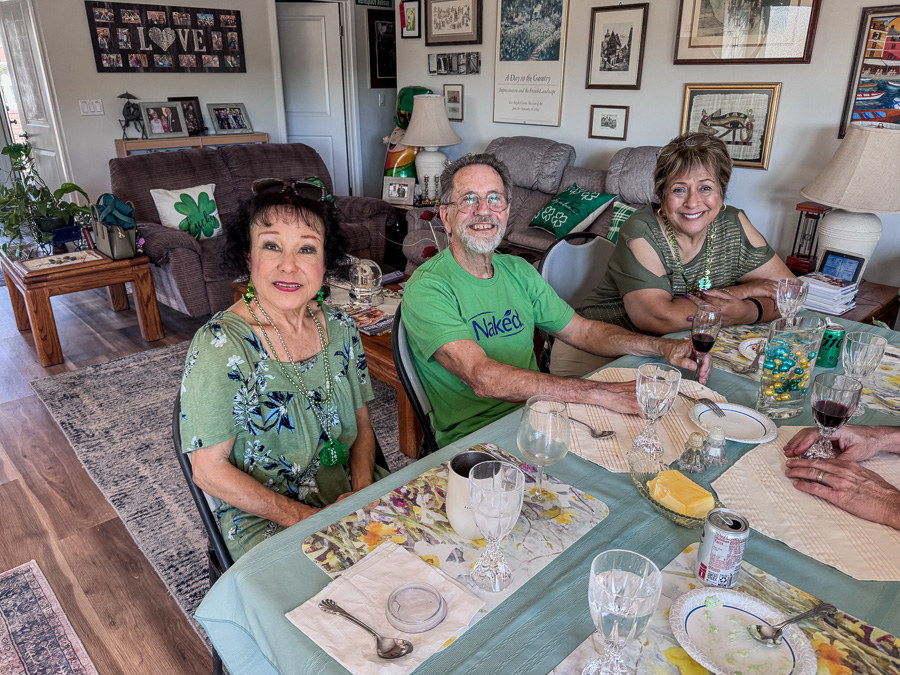
They are singing... "Rubba dub dub, bring on the grub!!"
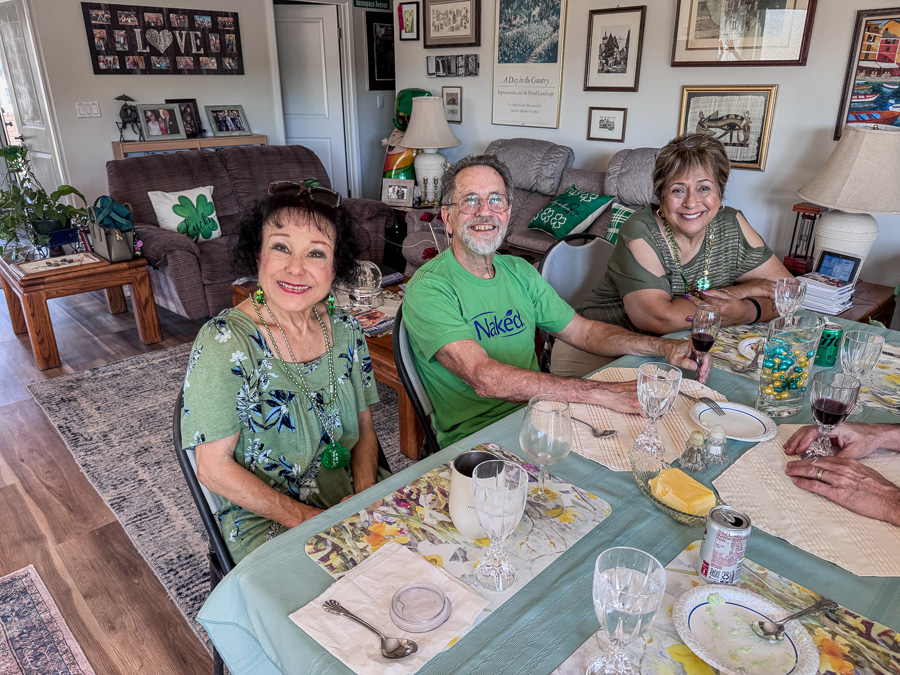
The taste testing rules are explained... and promptly forgotten!
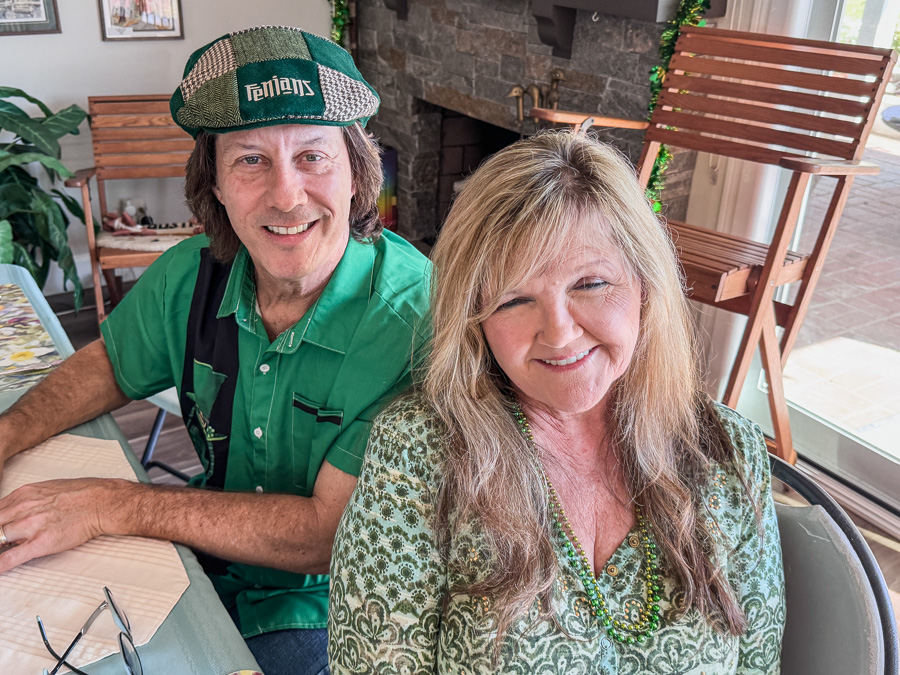
Robin is ready to jump up and lead the line through the goodies.
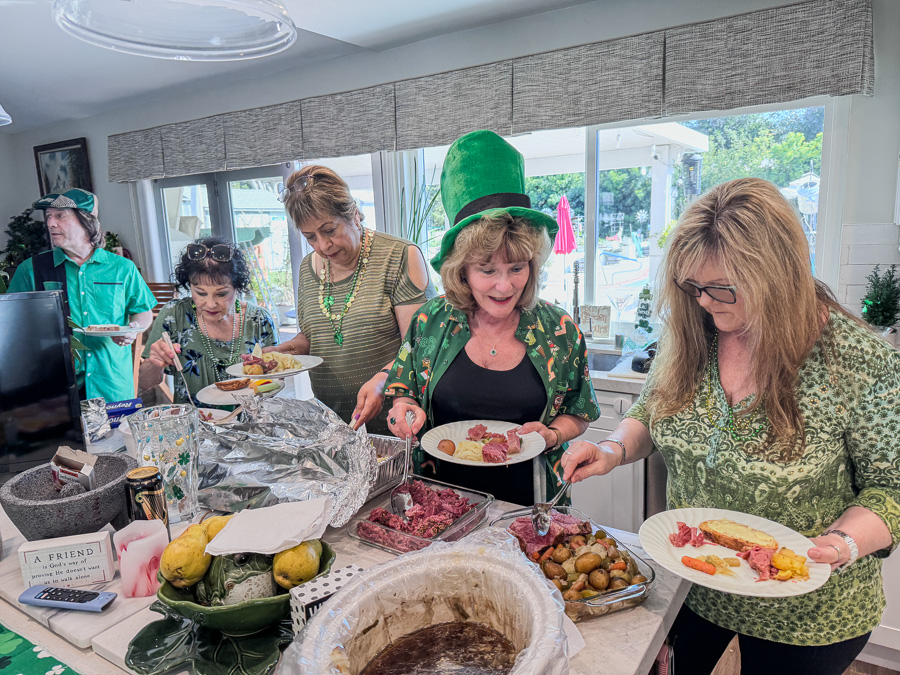
Forks are flying, watch your extremities!
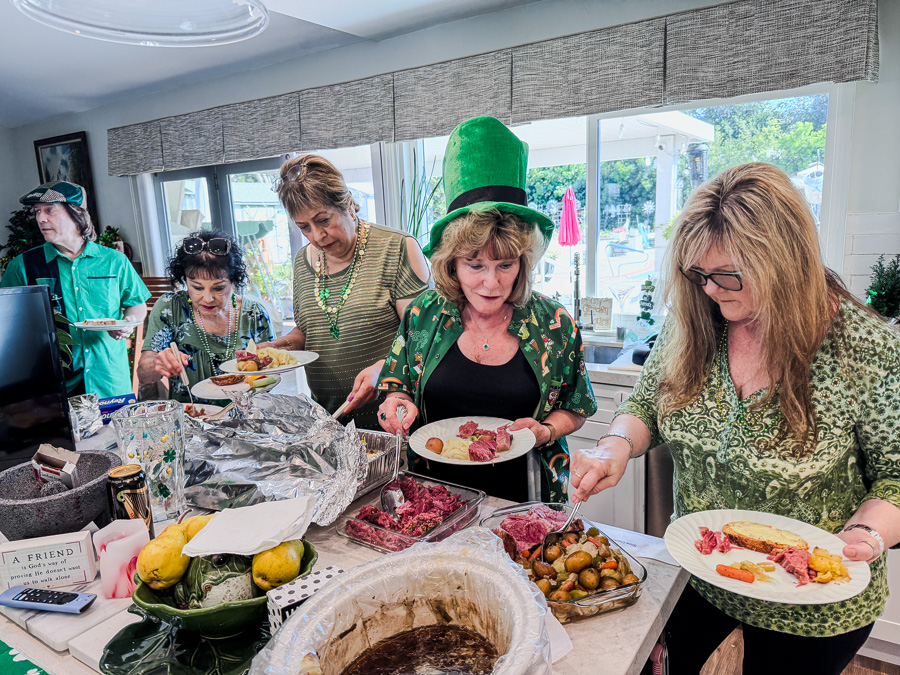
Decisions decisions!
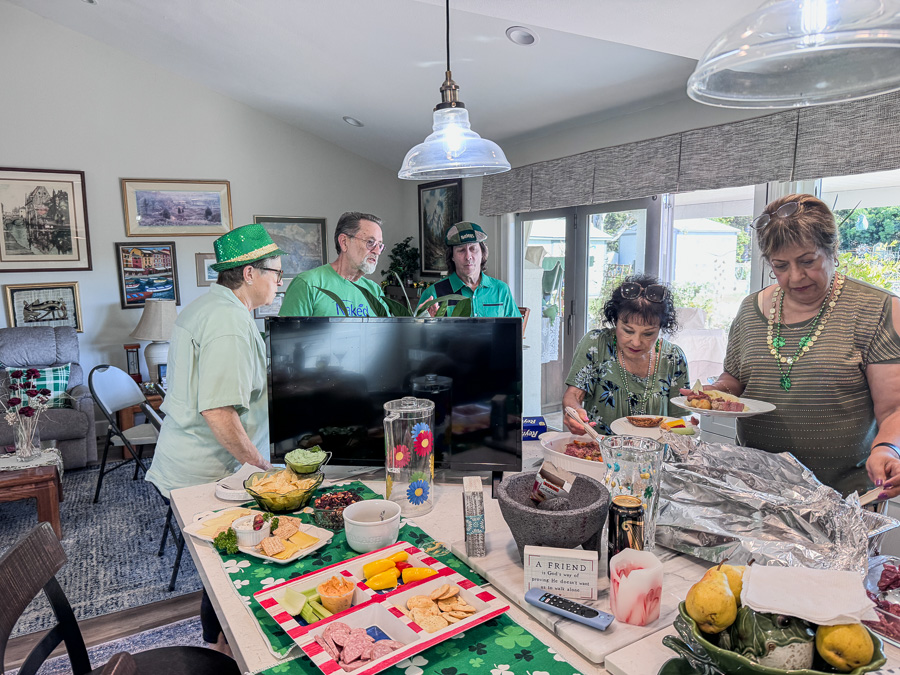
What is Geri doing at the end of the line! Oh, this was her second time through!
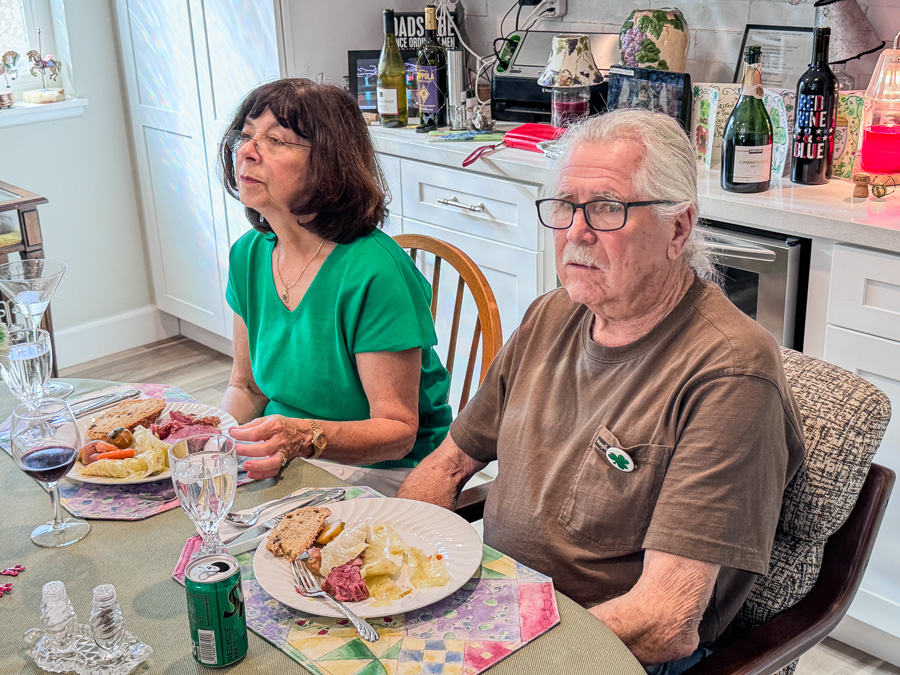
Plates are full, taste testing begins!
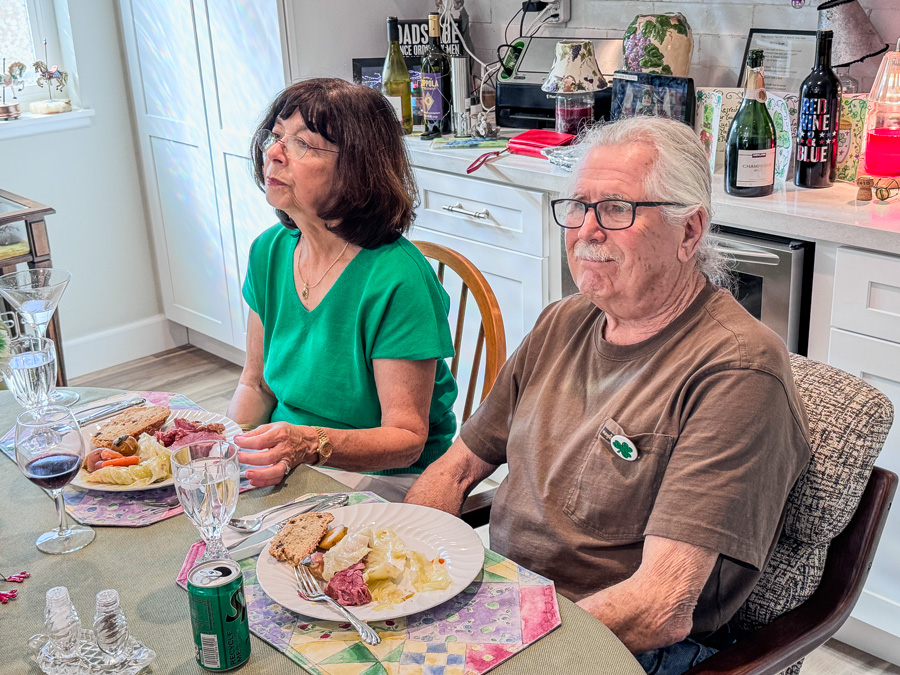
Fast Eddie does not to too sure about this!
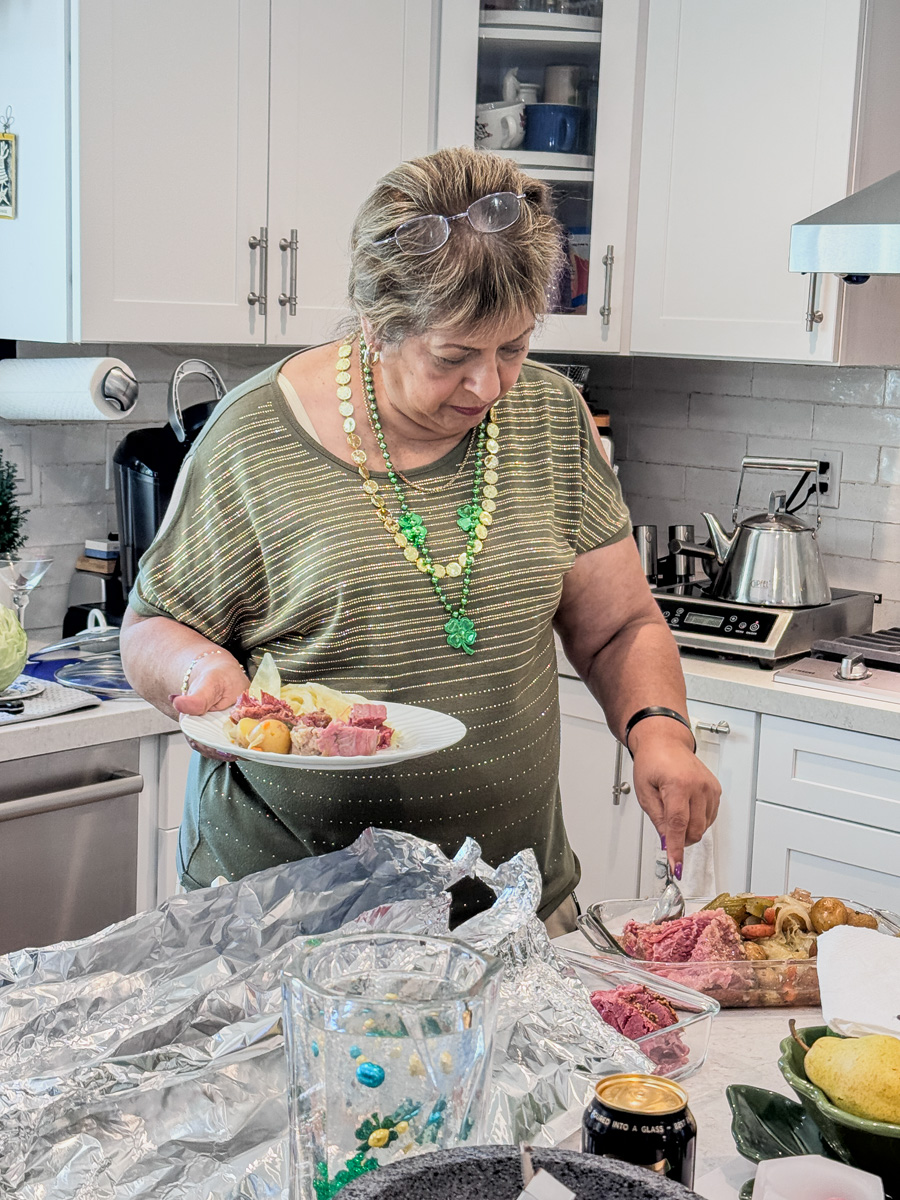
The Chief Taste Tester at work! She uses a scientific procedure!
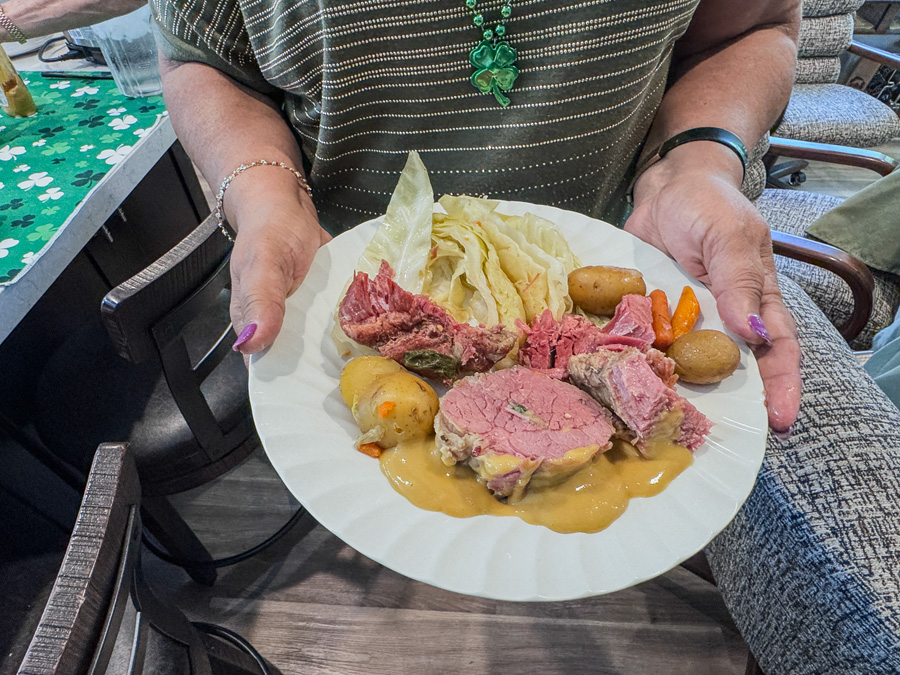
Arranged in order so she can keep track at the time of the vote!

"Hey guys, this is the way you do it!!"

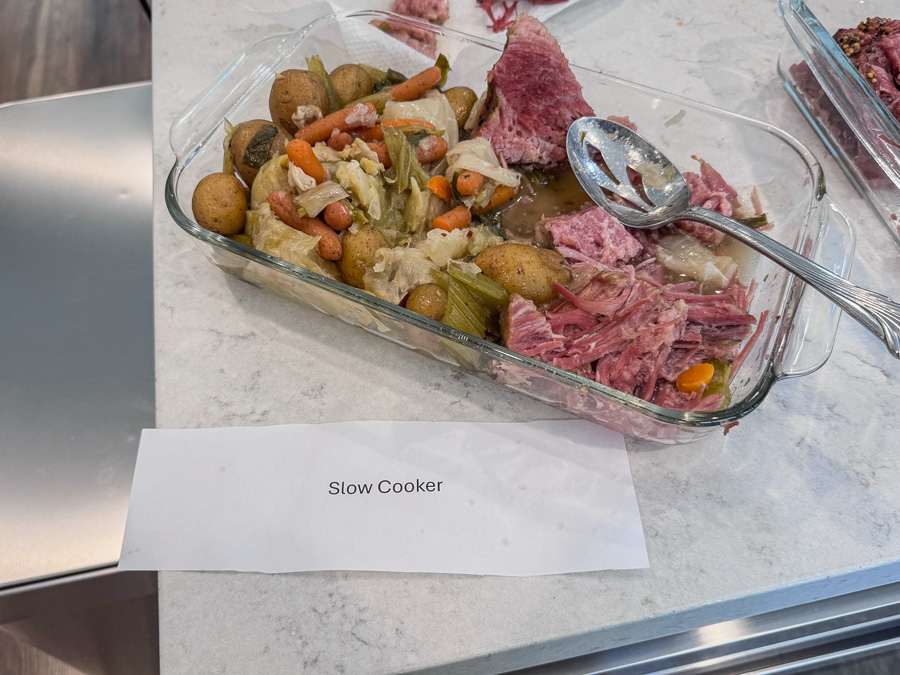
Easy to make!
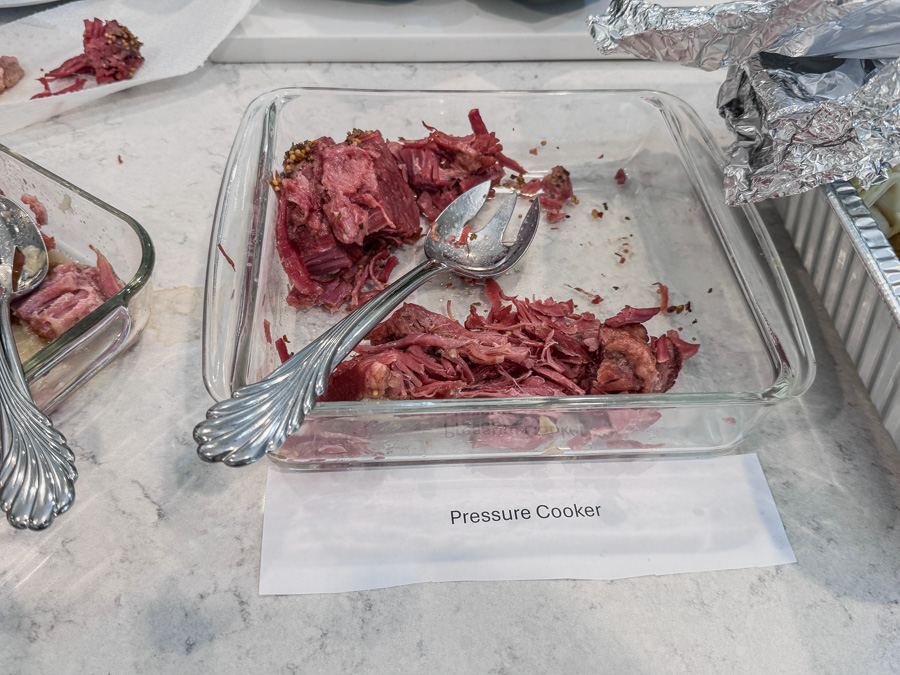
Finishes fast!
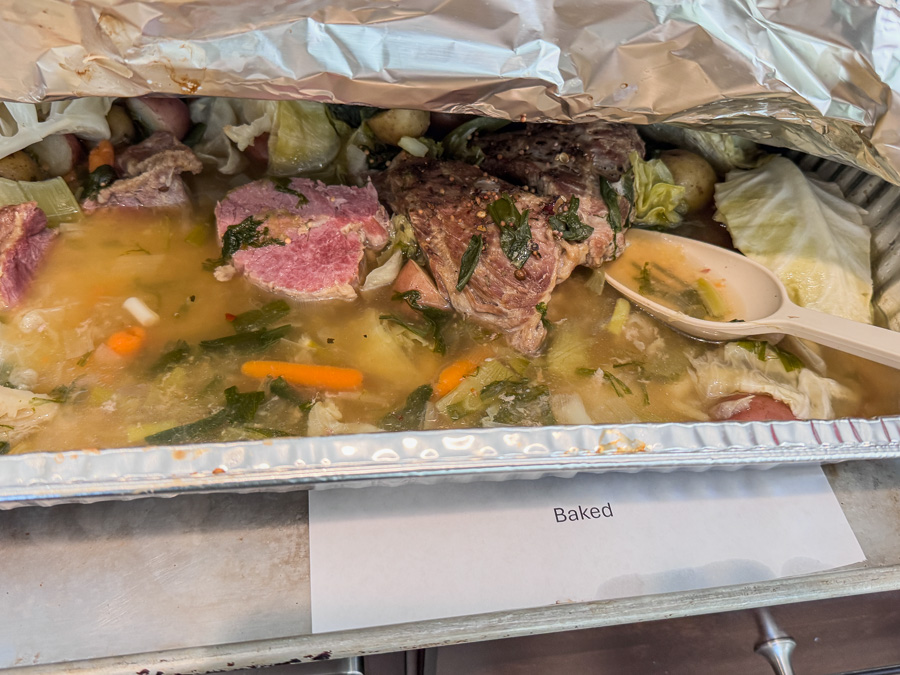
Easy, just watch and wait!
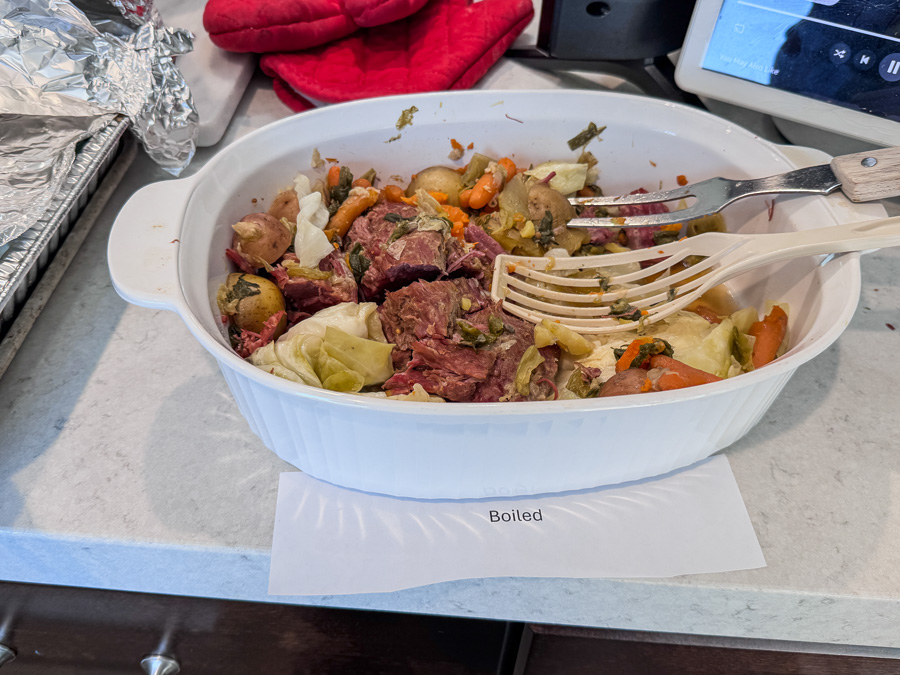
The winner!
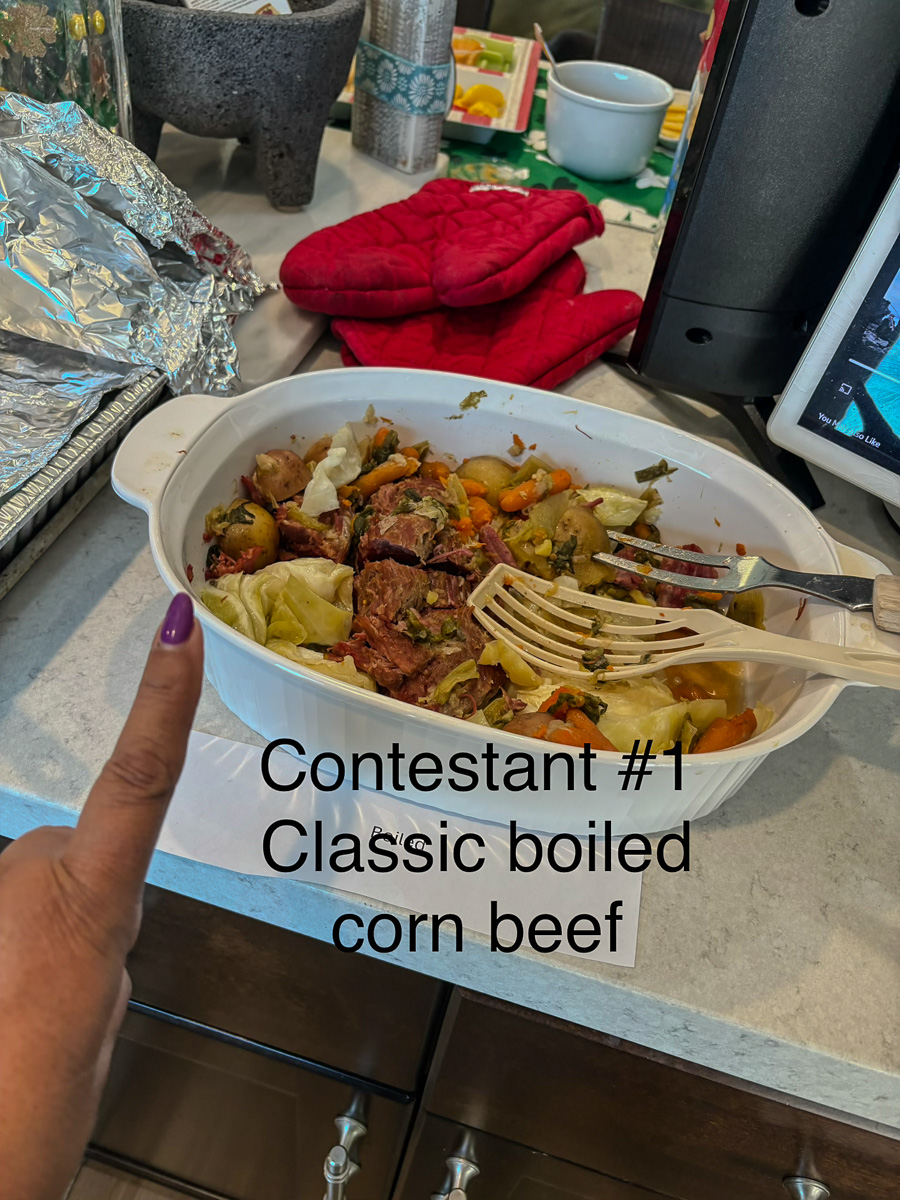
Did You Know? - Stovetop (most foolproof) 1
- Rinse (optional): Rinse the brisket under cool water if you want it less salty.
- Pot it up: Put corned beef (fat cap up) in a large pot/Dutch oven. Add the spice packet (optional) plus aromatics if you like (onion, garlic, bay leaf).
- Cover with liquid: Add water (or half water/half beer). Keep it fully submerged.
- Simmer, don't boil: Bring just to a boil, then drop to a bare simmer (small bubbles). Cover.
- Cook time: ◦ ~3 hours for a 3–4 lb piece, or 45–60 min per lb, until a fork slides in easily. ◦ Target tenderness: 195–205°F (90–96°C) internal if you're using a thermometer.
- Add veg (optional): Add potatoes and carrots for the last 45–60 min; cabbage for the last 10–20 min.
- Rest + slice: Rest 10–15 min. Slice thinly against the grain (this is huge for tenderness).
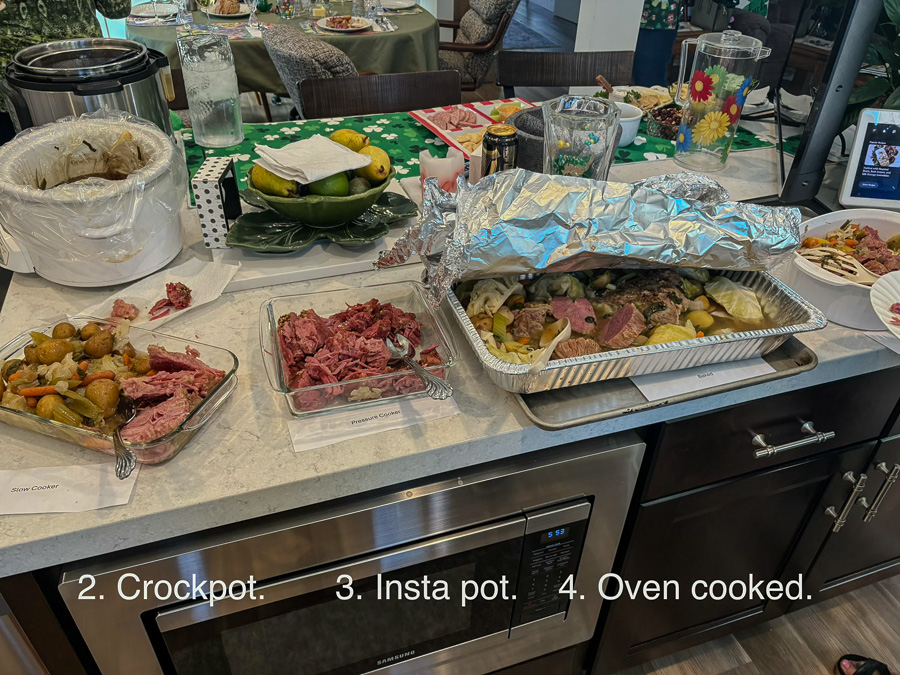
The runner ups were still mighty tasty!!

Mary provided a watercolor for the kitchen!


Vicky visualizing the contest winner!

"Ah ha... I know which method won!!"

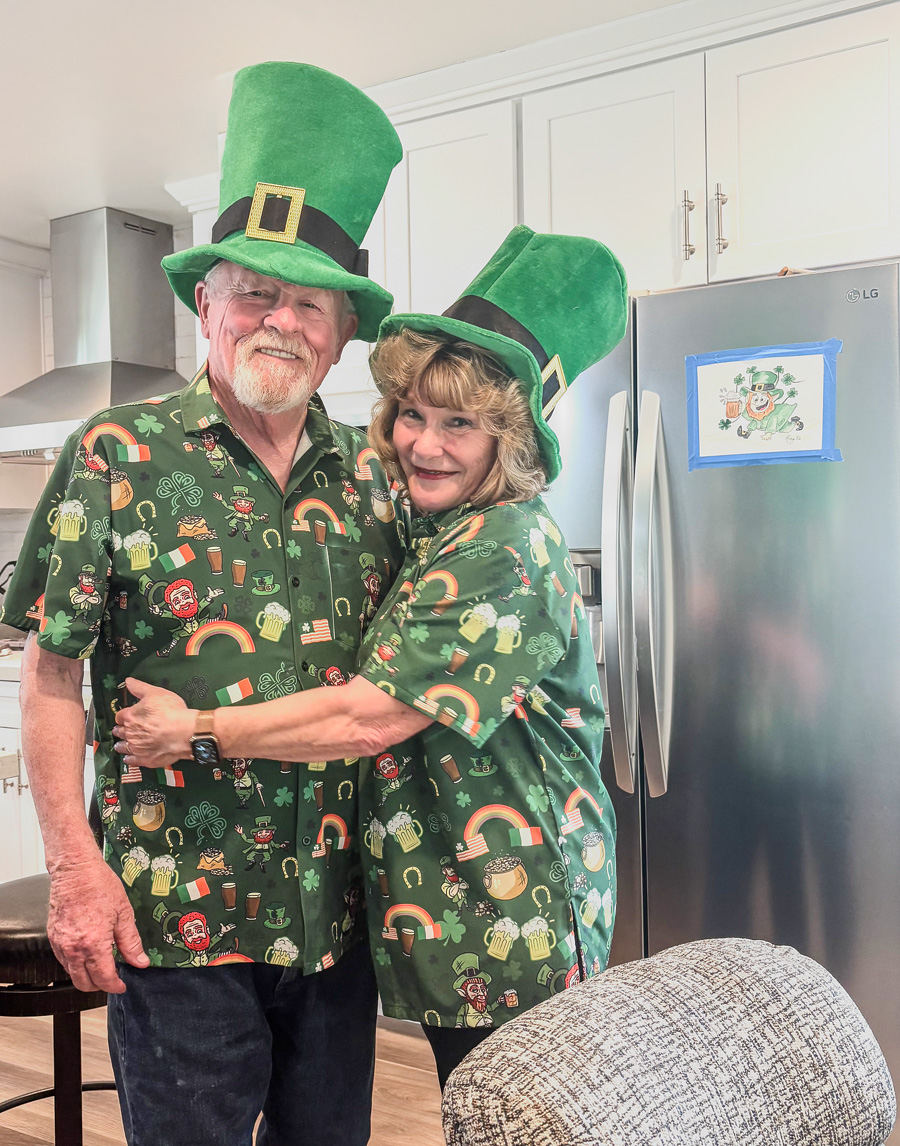
The matching shirts were ordered separately from Amazon without sharing!!
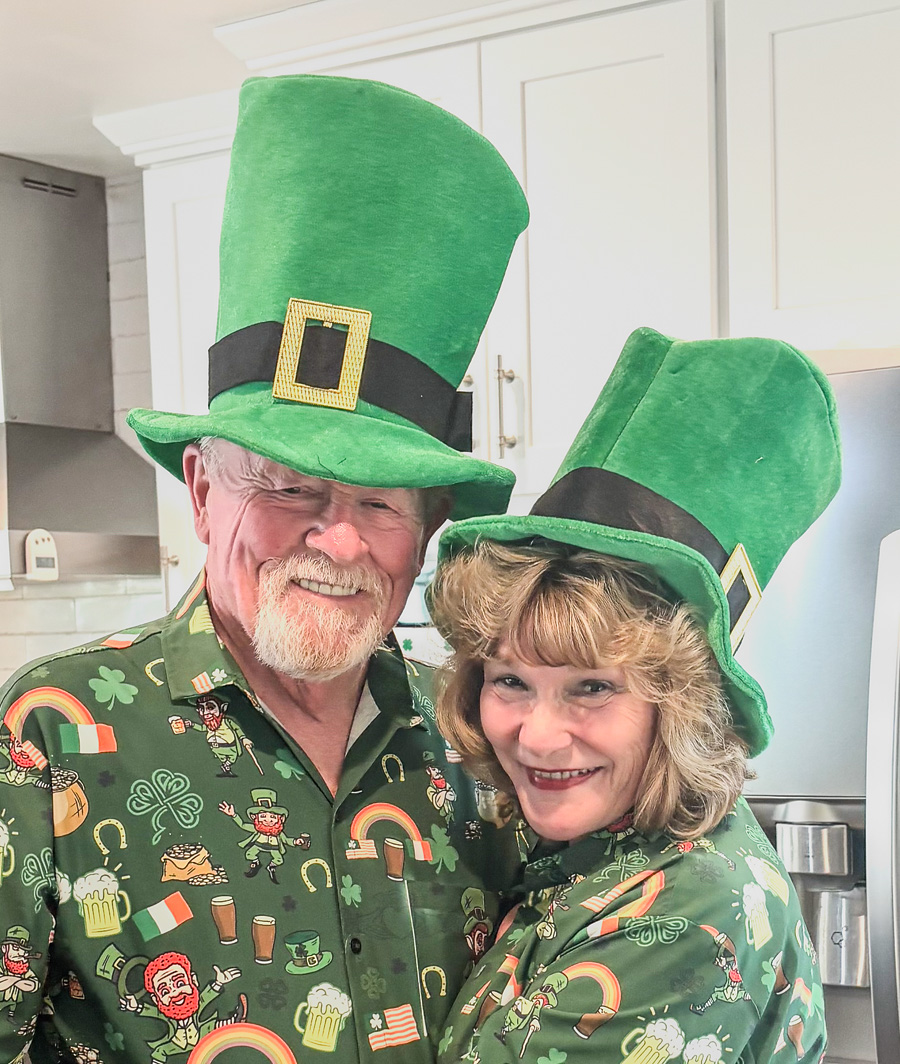
Two Leprechauns for the price of one!
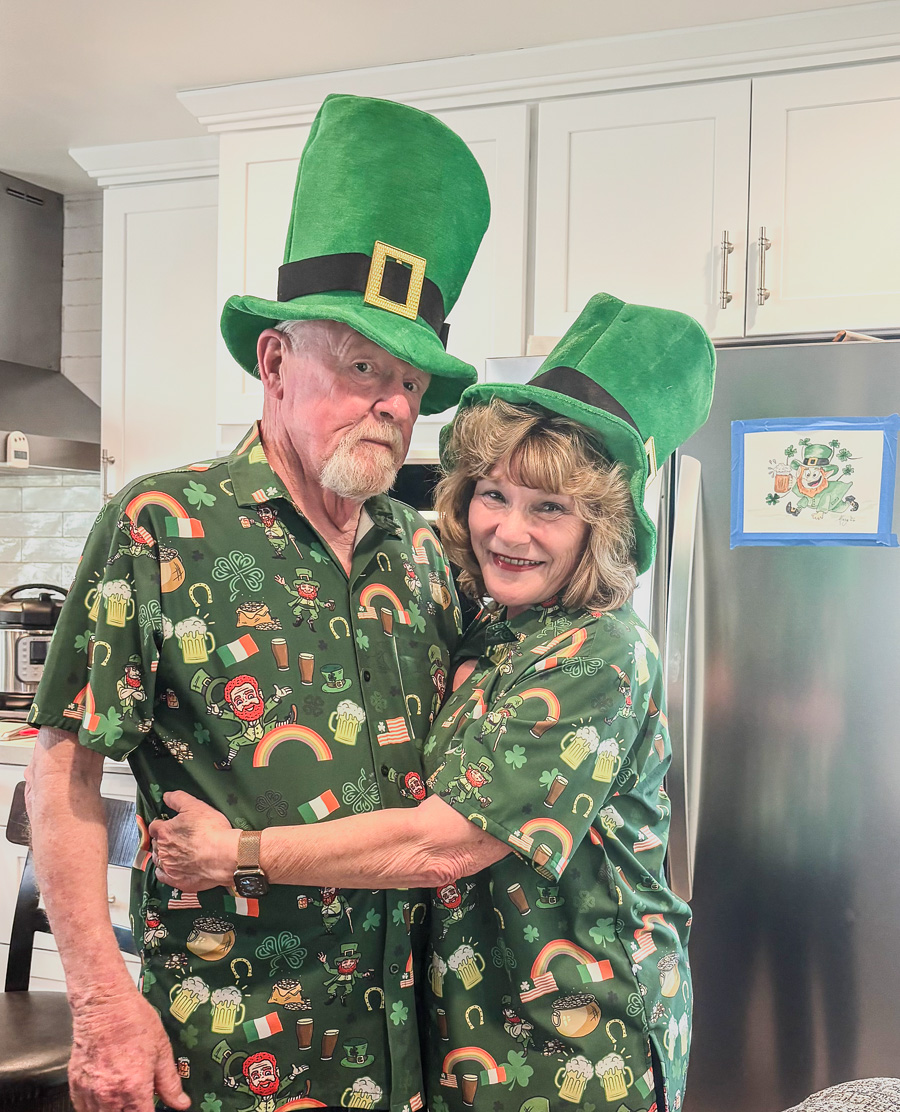
We love our hats!
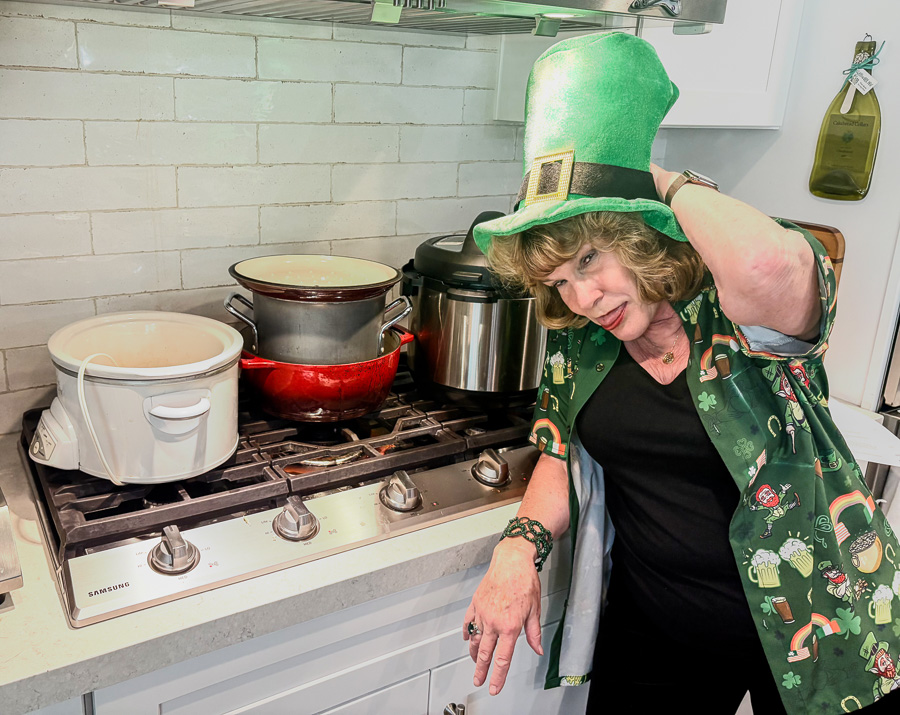
The chef is pooped out!
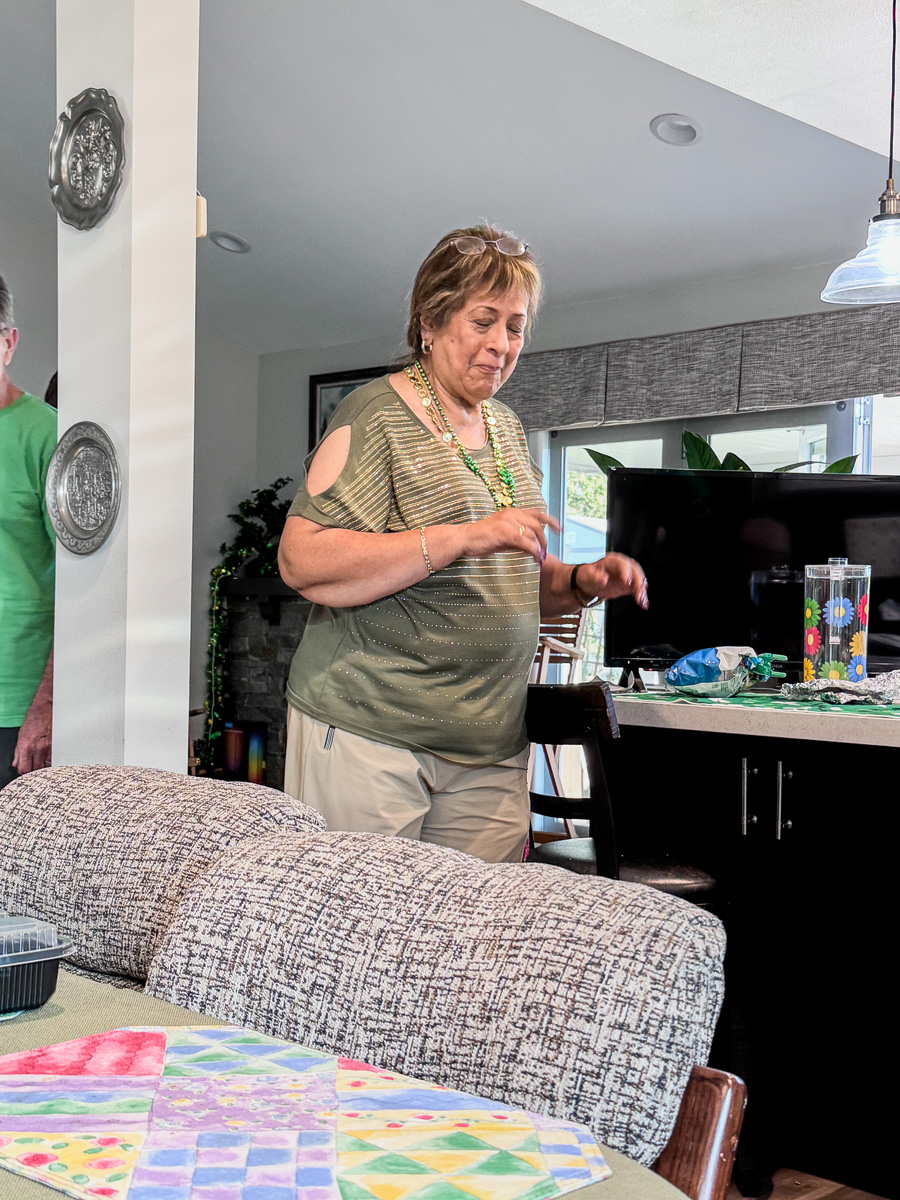
We know when Vicky is telling a story, her face smiles more than normal!
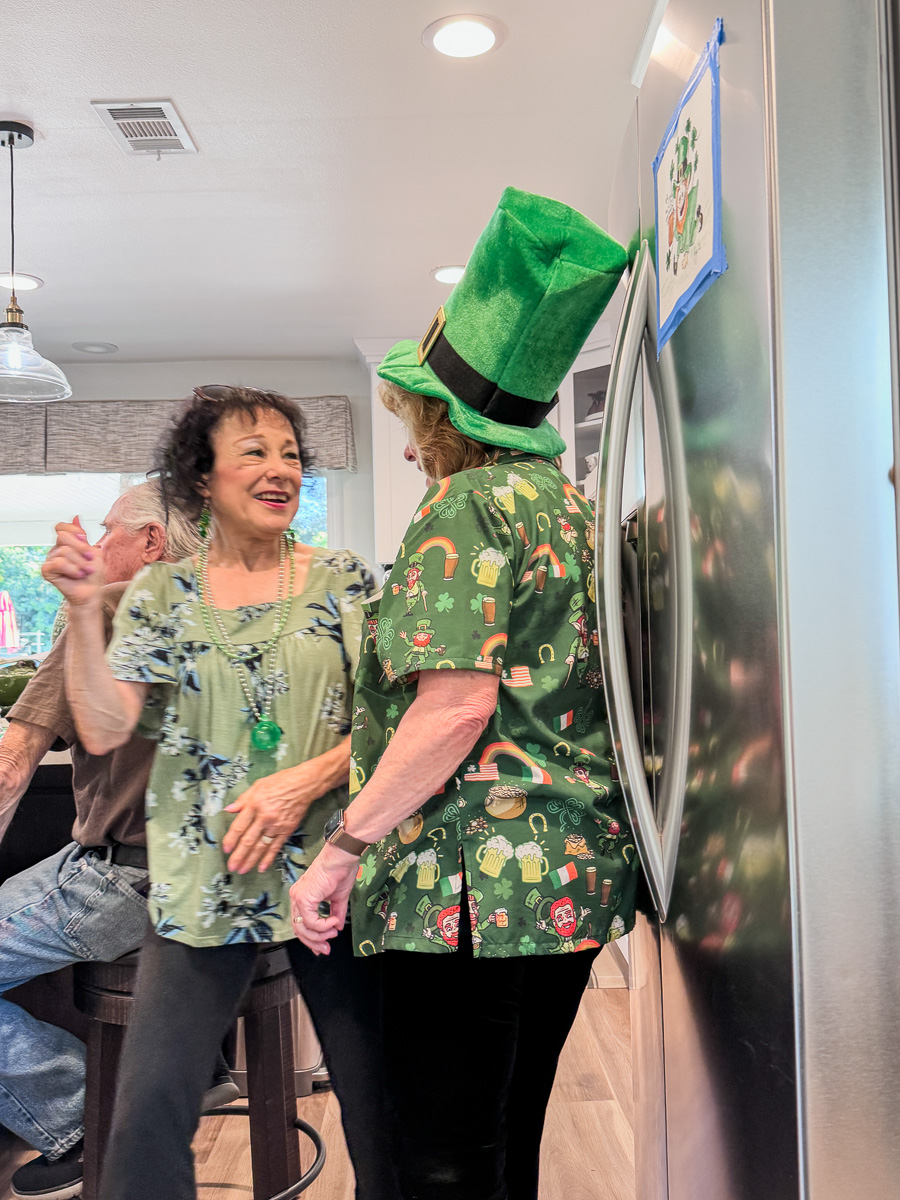
Donna assists with dessert!

Donna and Bob. always fun!
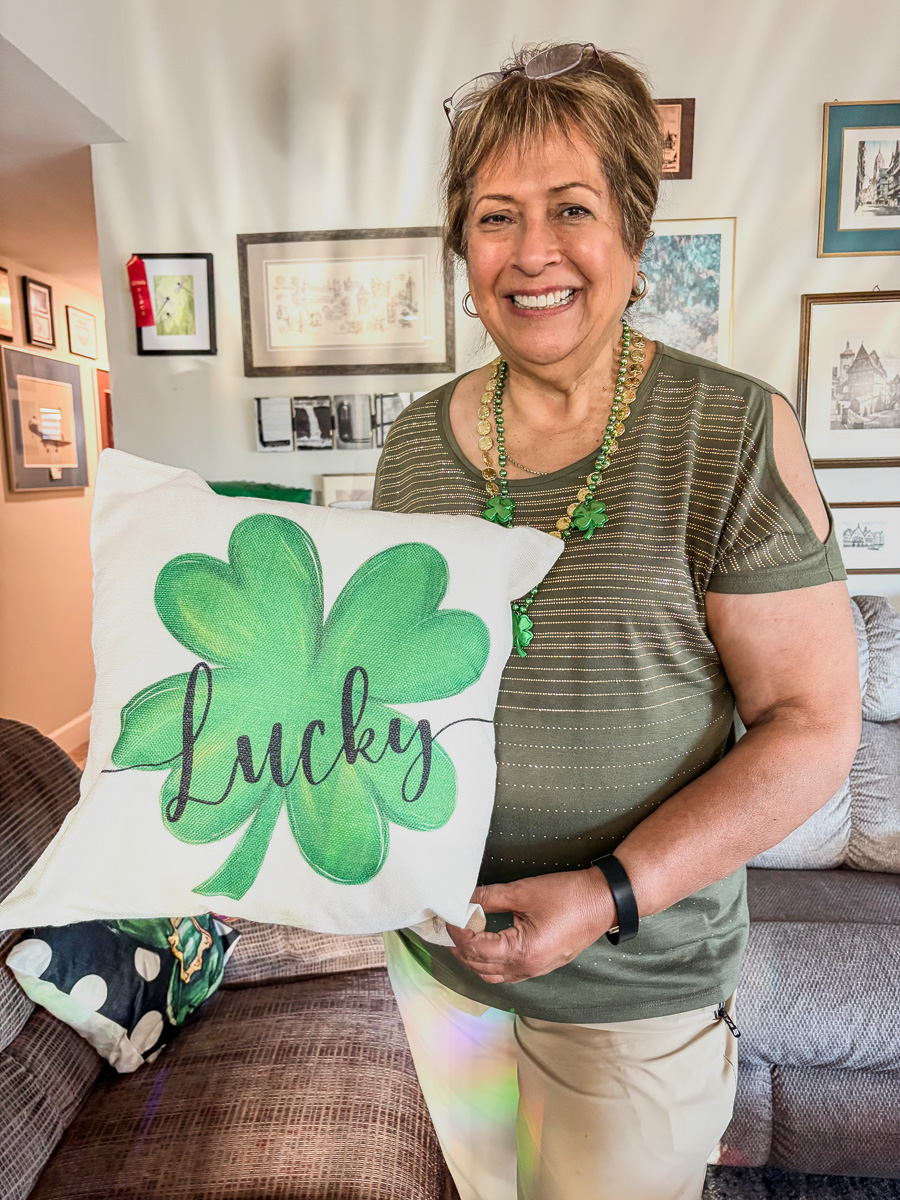
"Yes Vicky, we are lucky to have you as a true friend!"
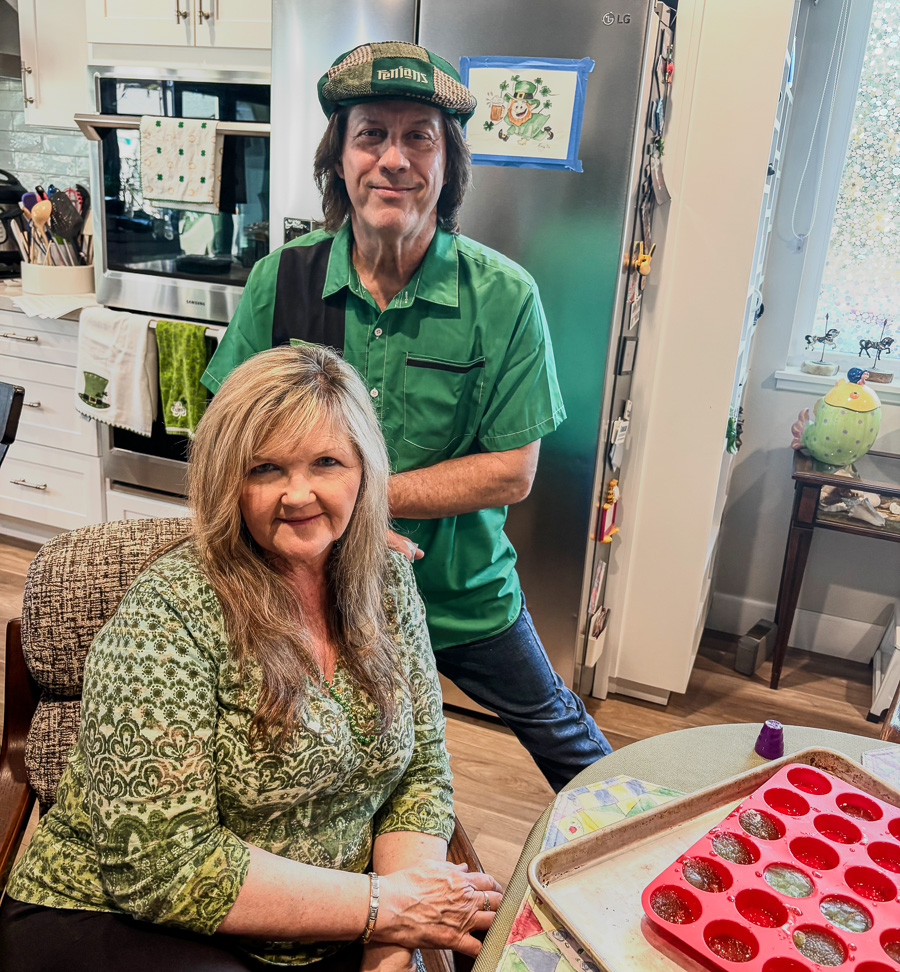
Jello shots being consumed!
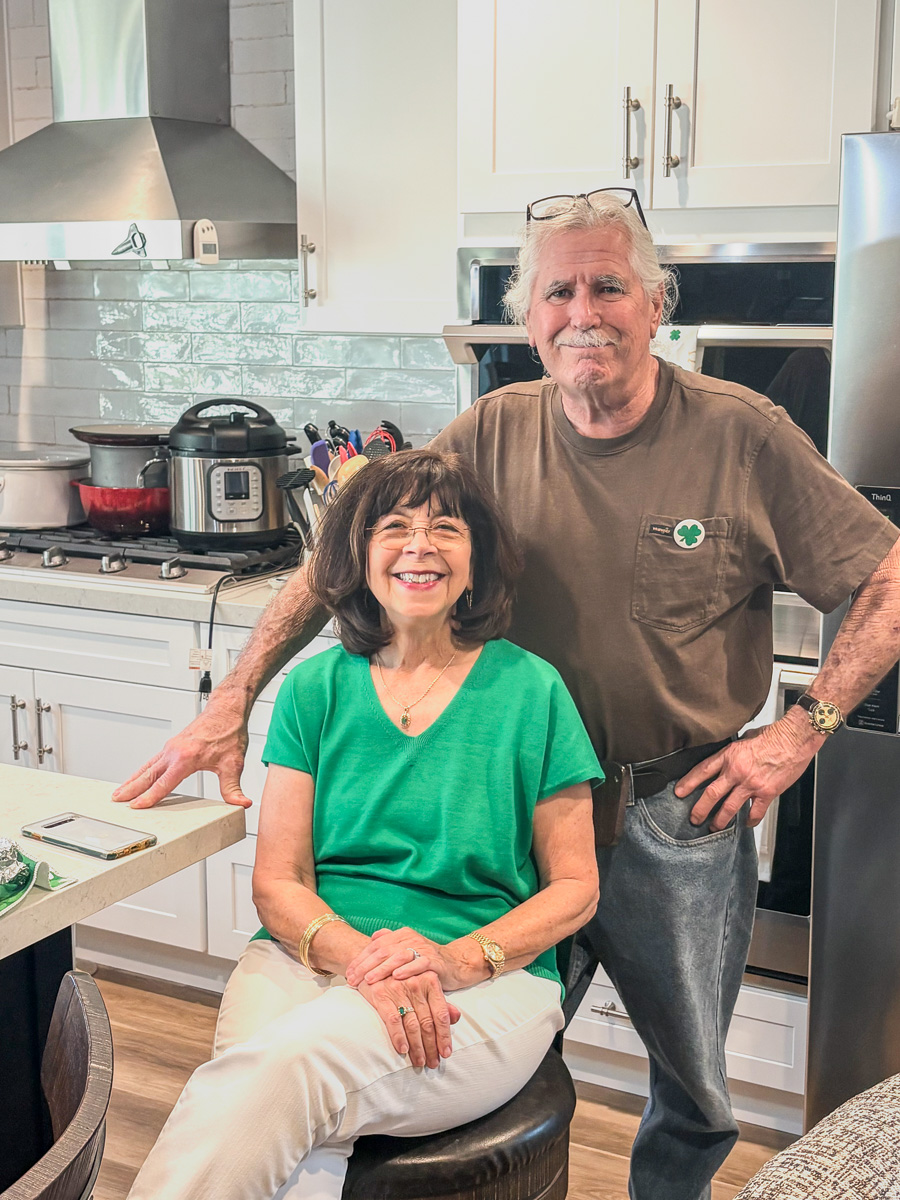
Dianne and Freddie digesting!
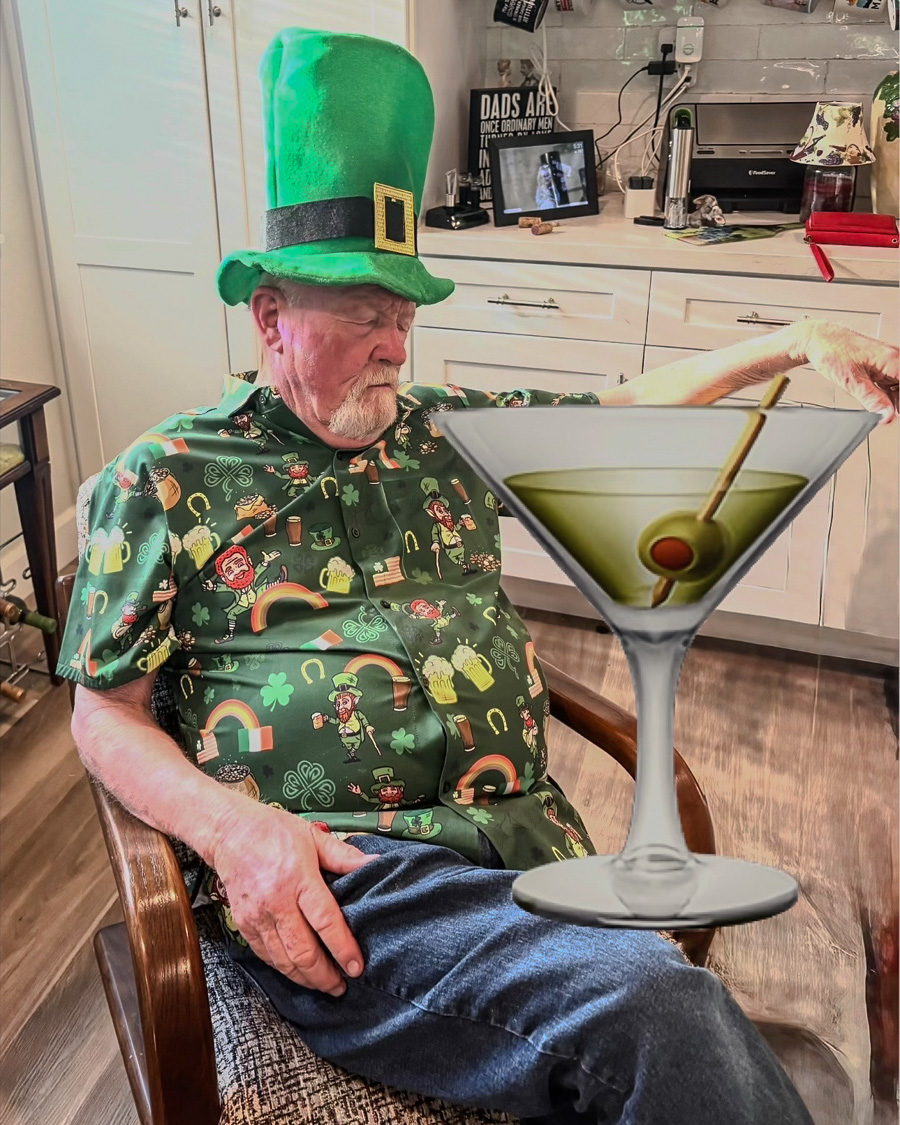
I introduced several people to "The Ultimate Chocolate Martini!"
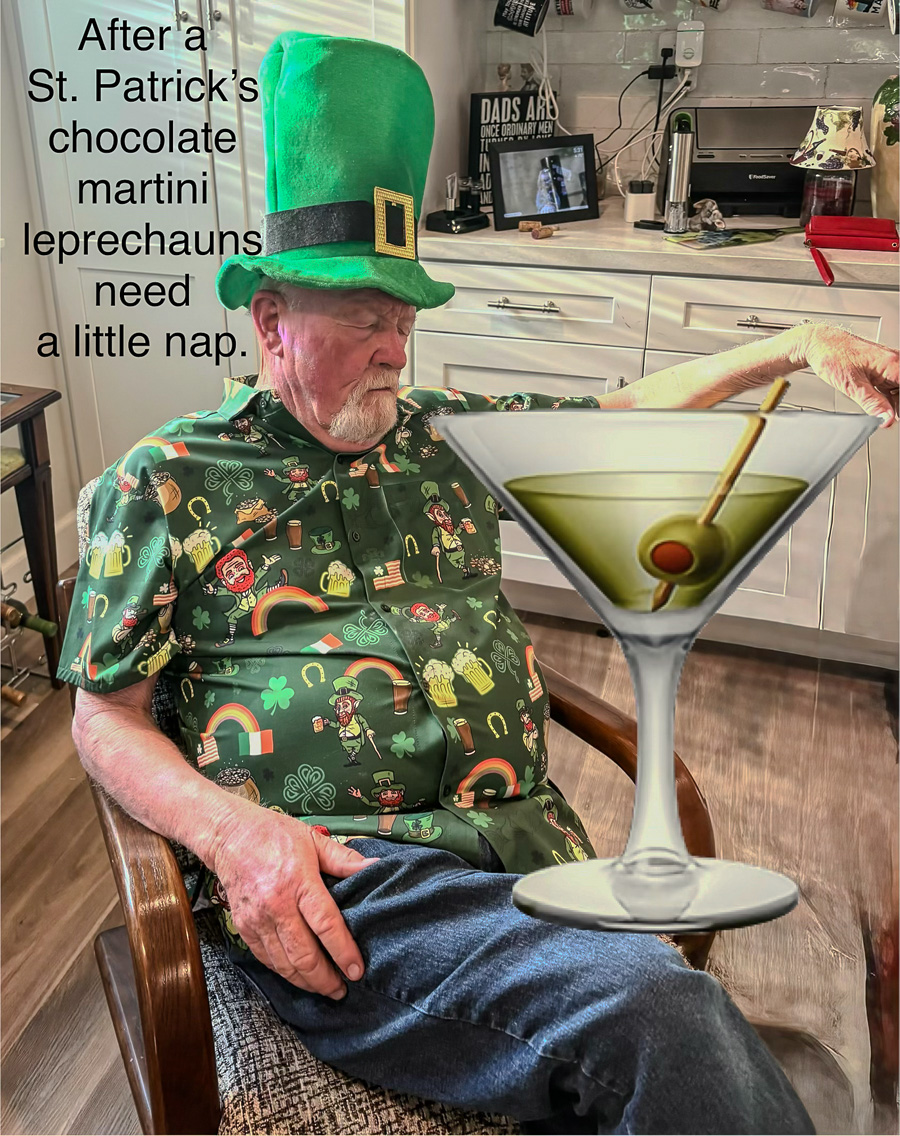
Z-z-z-z-z-z-z-z-z-z

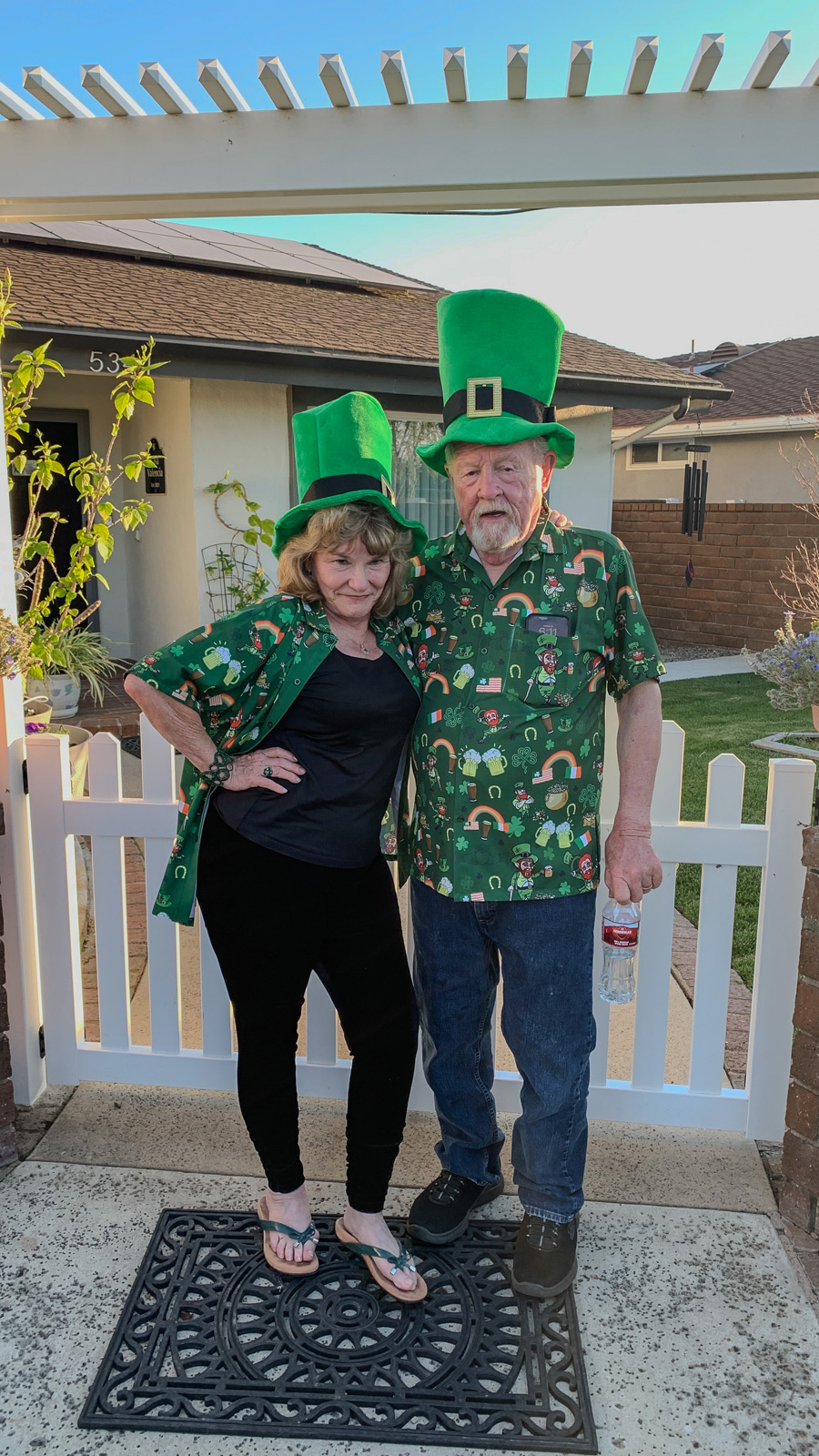
What???? Paul is carrying bottled water instead of green beer?
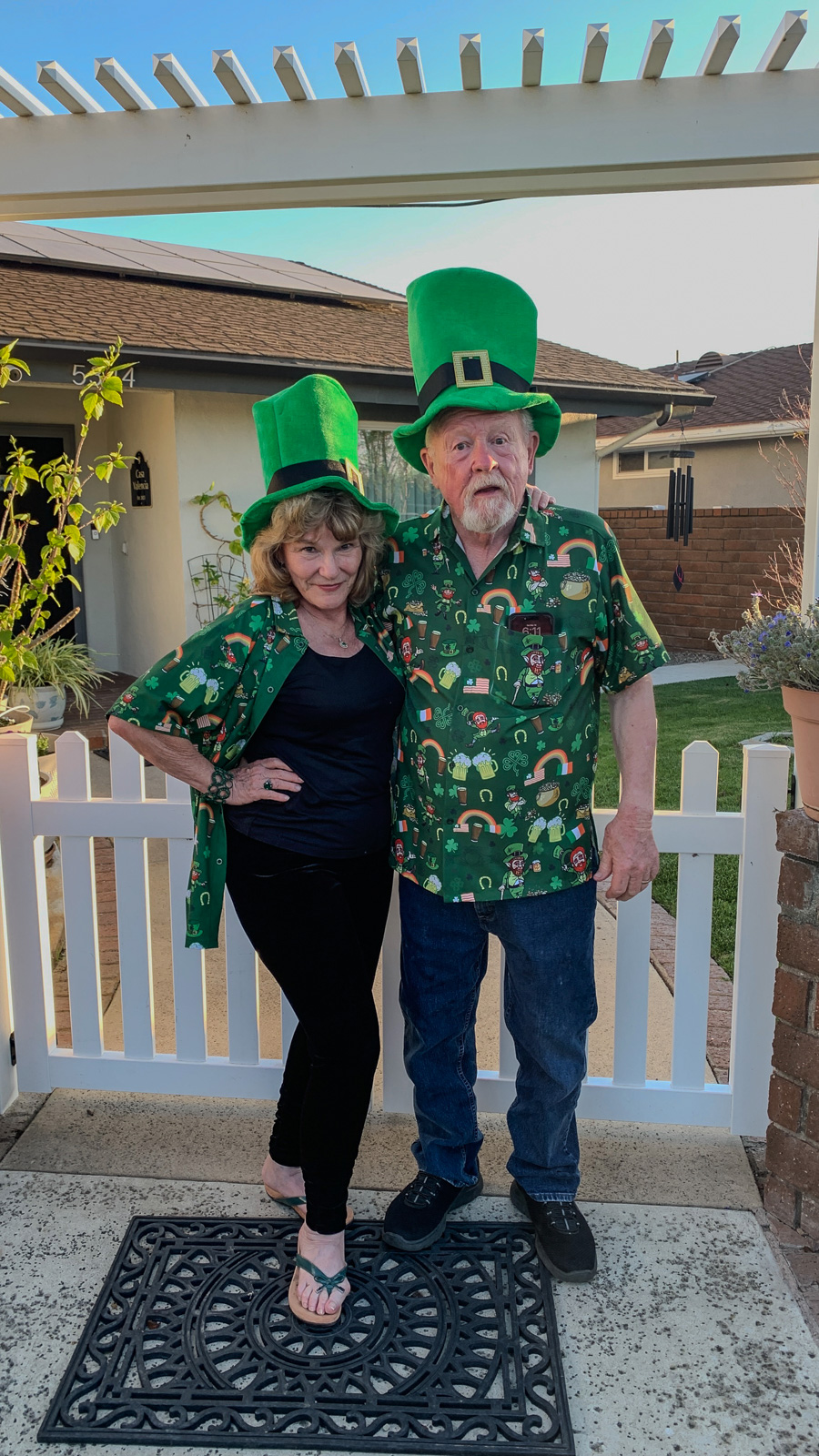
Just us!
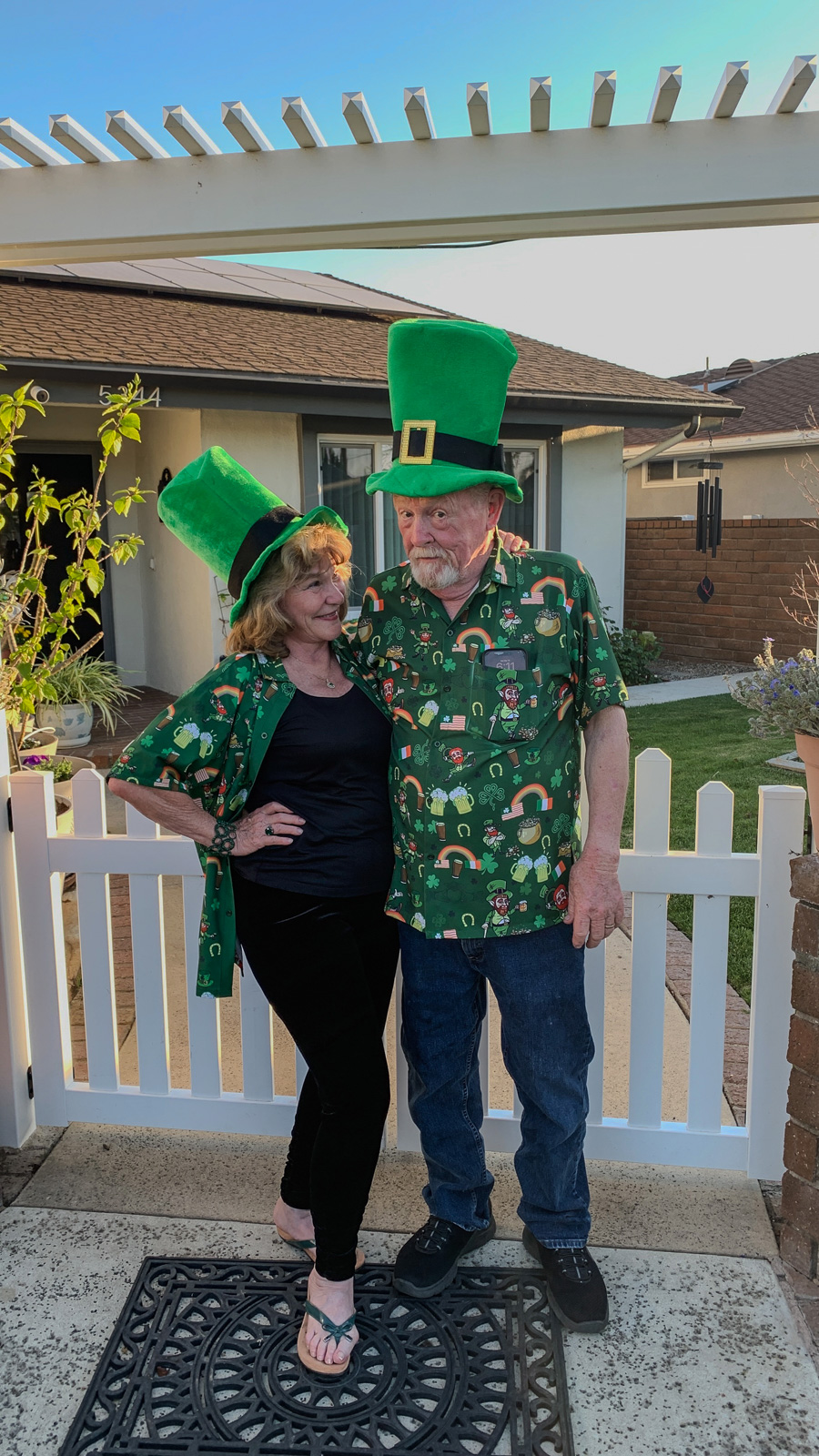
We worked hard yesterday to get the front of the house in shape!
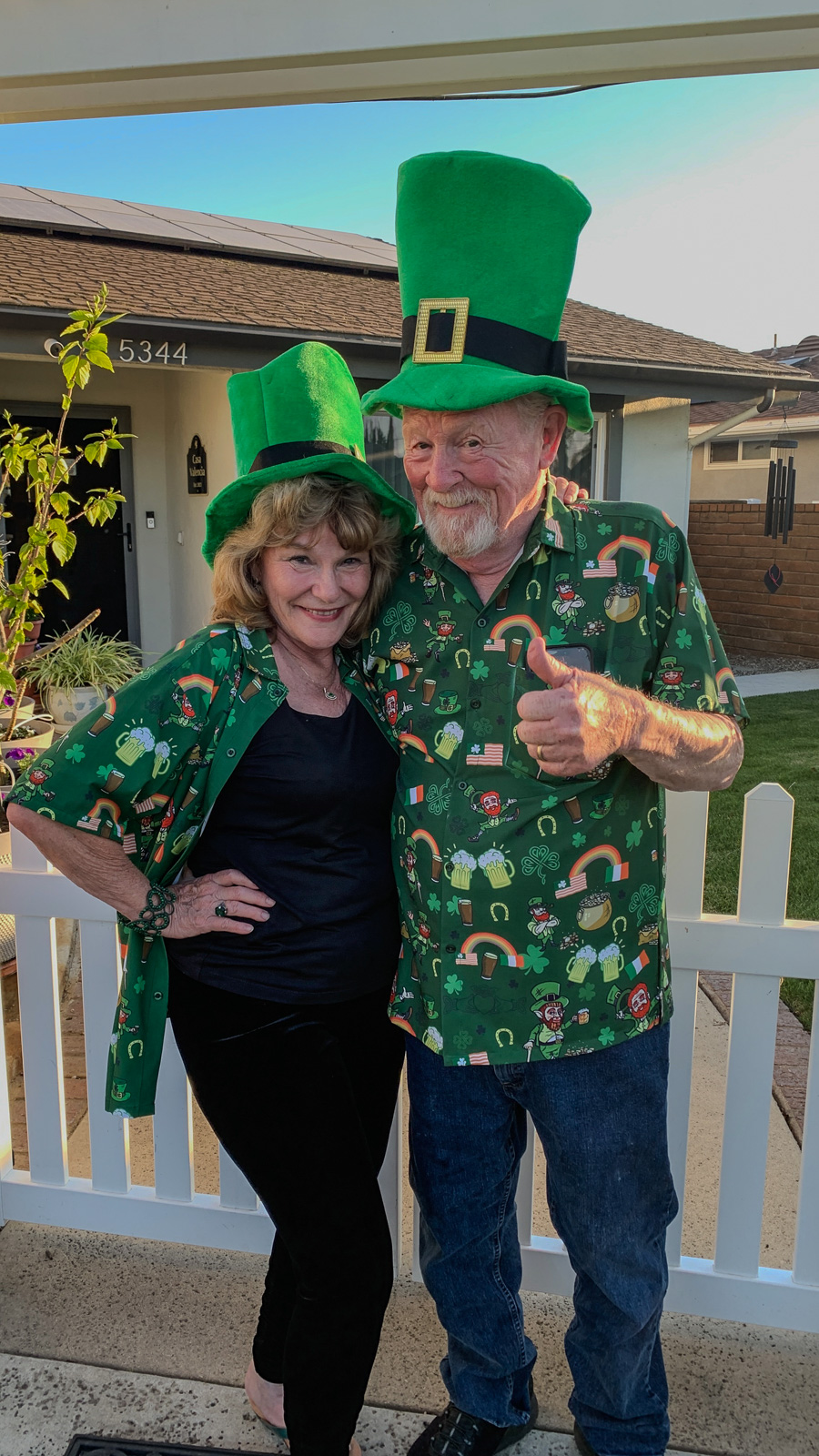
Bye everyone, drive safely!
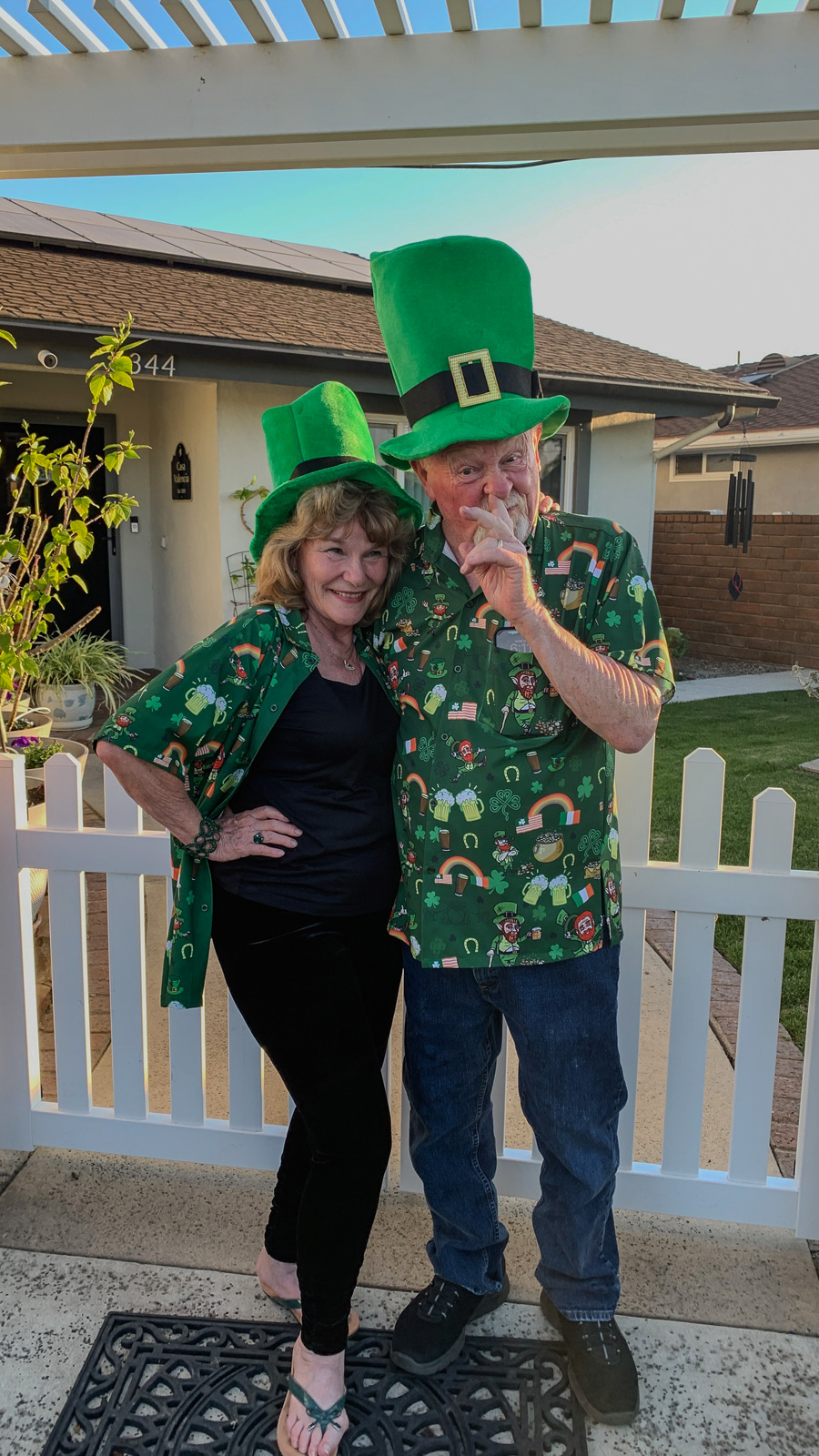
"No Paul, the leprechaun's gold is NOT in your nose!"
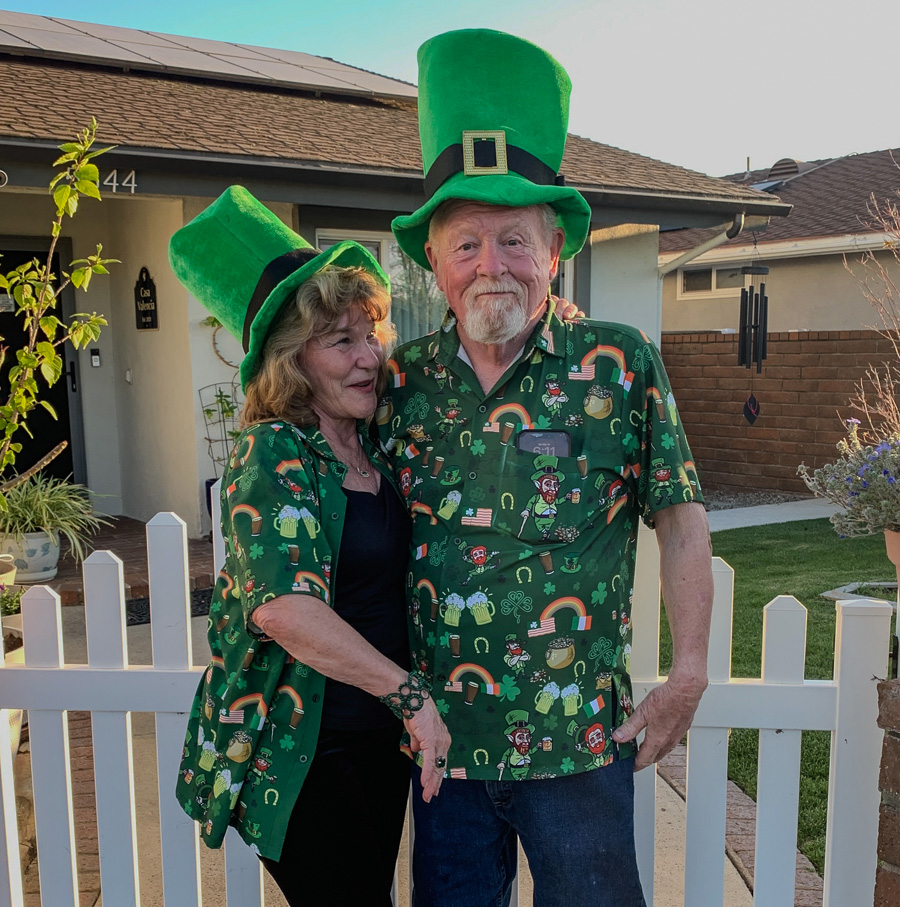
Fun times!

Three more days until the 17th and then we change decorations again!
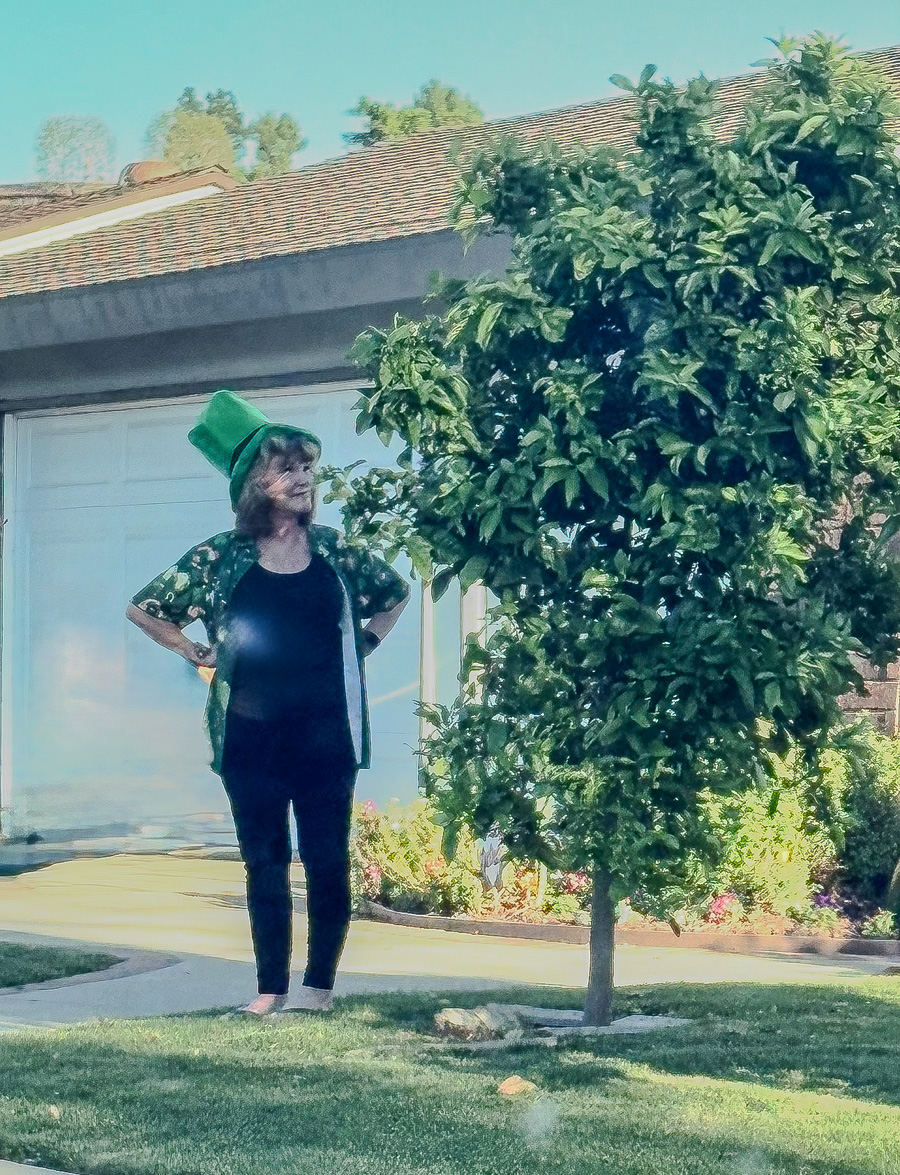
Did he put the gold under this tree?
Did You Know? - The most obvious places are:
- Inside a "totally normal" decoy rock labeled NOT GOLD
- In a jar of instant oats: "Irish storage unit"
- Under the rainbow… in your phone's wallpaper folder
- At the bottom of a bag of frozen peas (no one goes there)
- In a shamrock-shaped soap (the cleanest crime)
- In a hollowed-out Guinness can sitting with the recycling
- In a plant pot labeled "Definitely Not Treasure, Just Dirt"
- In the lint trap (security level: disgusting)
- In a library book called Accounting Basics, Vol. 3

"You are cleared for takeoff!"