Page 5 - 9/28/2026 - First Full Day With Collen & Family (Daily Diary)
We were up early and had breakfast at the inn. After devouring our breakfast, we headed to Colleen's house and met up with Colleen and Cassie. As an added surprise, both Jon and Sarah joined us for the day!
We departed Dover for the Wright Museum of WWII at 77 Center St, Wolfeboro, NH 03894. The drive was a bit wet, but the colors made up for the moisture.

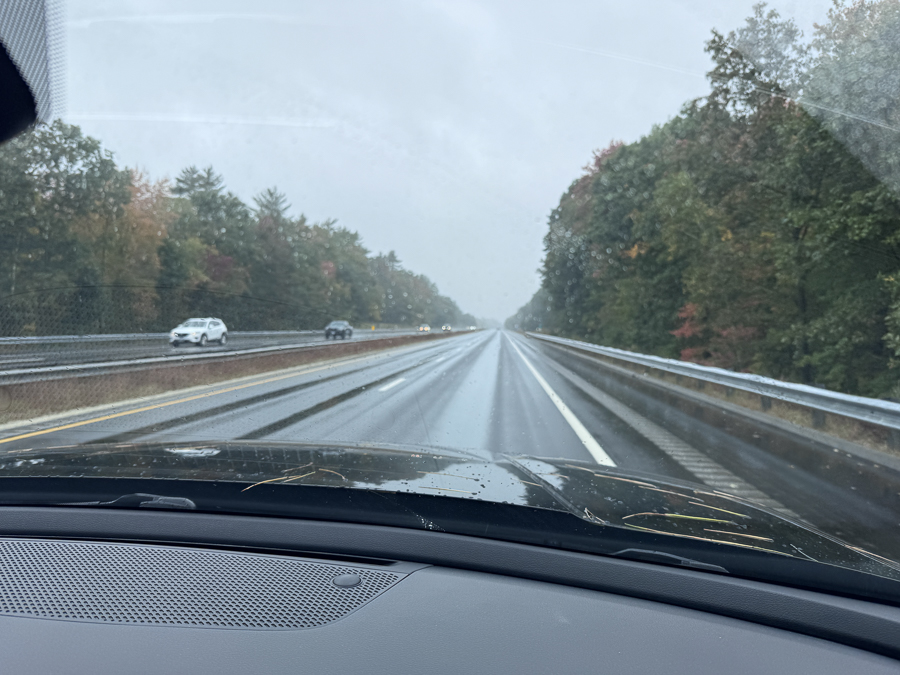
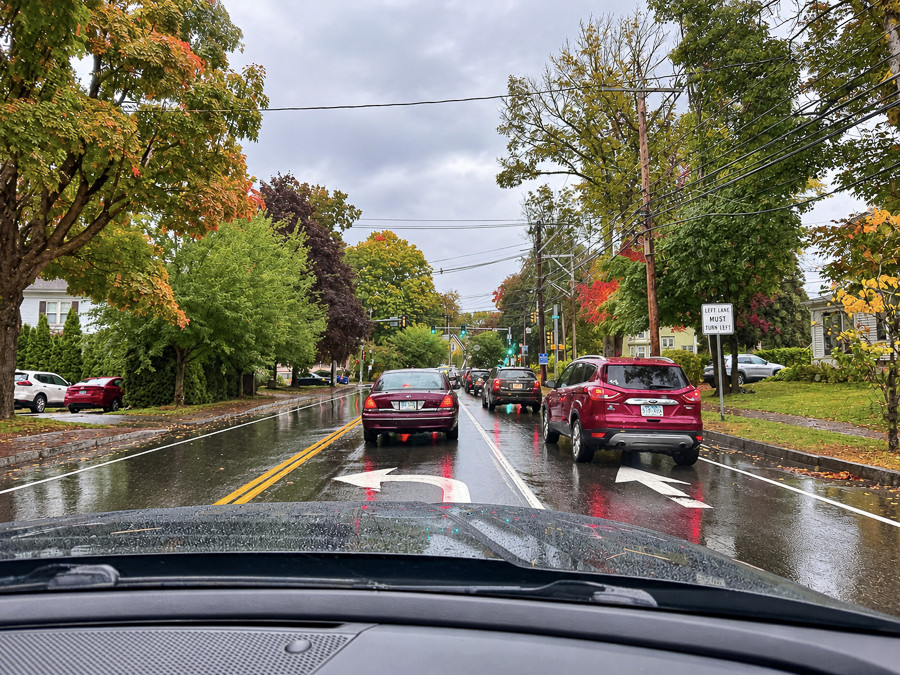
We had some rain on the way!

The highways were clear.
The Wright Museum of World War II is in Wolfeboro, New Hampshire. It focuses on the war's impact on American life, especially the home front—the experiences of civilians, military personnel, and families during the 1940s. Exhibits include wartime artifacts, vehicles, photographs, and displays about subjects such as rationing, factory work, military service, and daily life during the war. The museum is at 77 Center Street and is generally open seasonally, so check its official website for current hours and admission details.
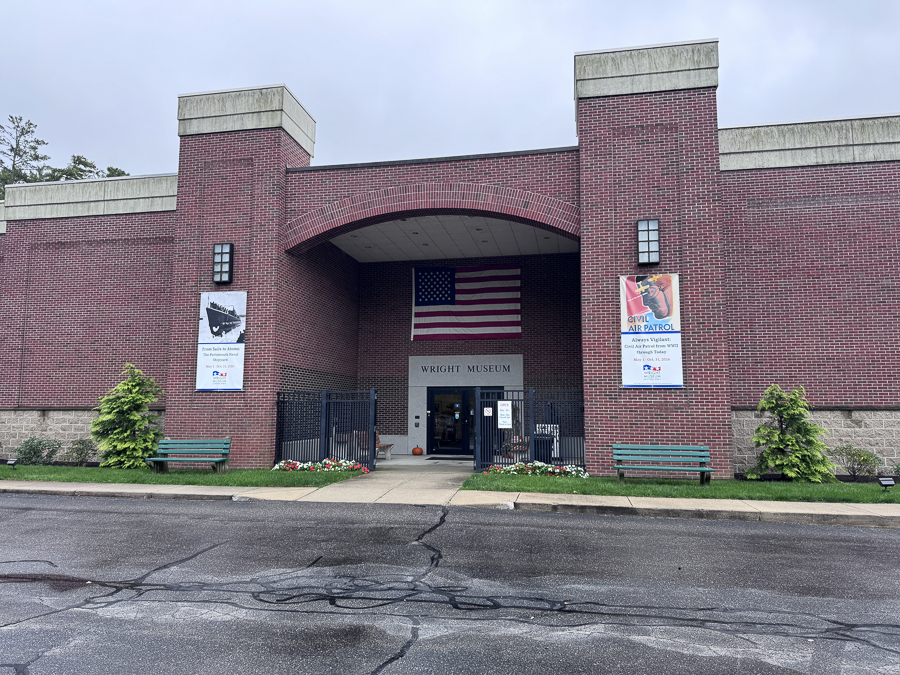
The Wright Museum is a history museum in Wolfeboro, New Hampshire, devoted to the years 1939–1945 and the ways World War II affected both Americans at home and people serving overseas.
• Address: 77 Center Street, Wolfeboro, NH
• Founded: Opened in 1994
• Focus: The American home front, military service, and the wider context of the war
What you'll see: Period artifacts and photographs, vehicles and military equipment, and recreated or themed displays about subjects such as rationing, wartime production, communications, and everyday life during the 1940s. The museum also presents changing exhibits and educational programs.
The museum is designed for visitors interested in more than battles and weapons: it looks at how the war shaped families, communities, and American society.
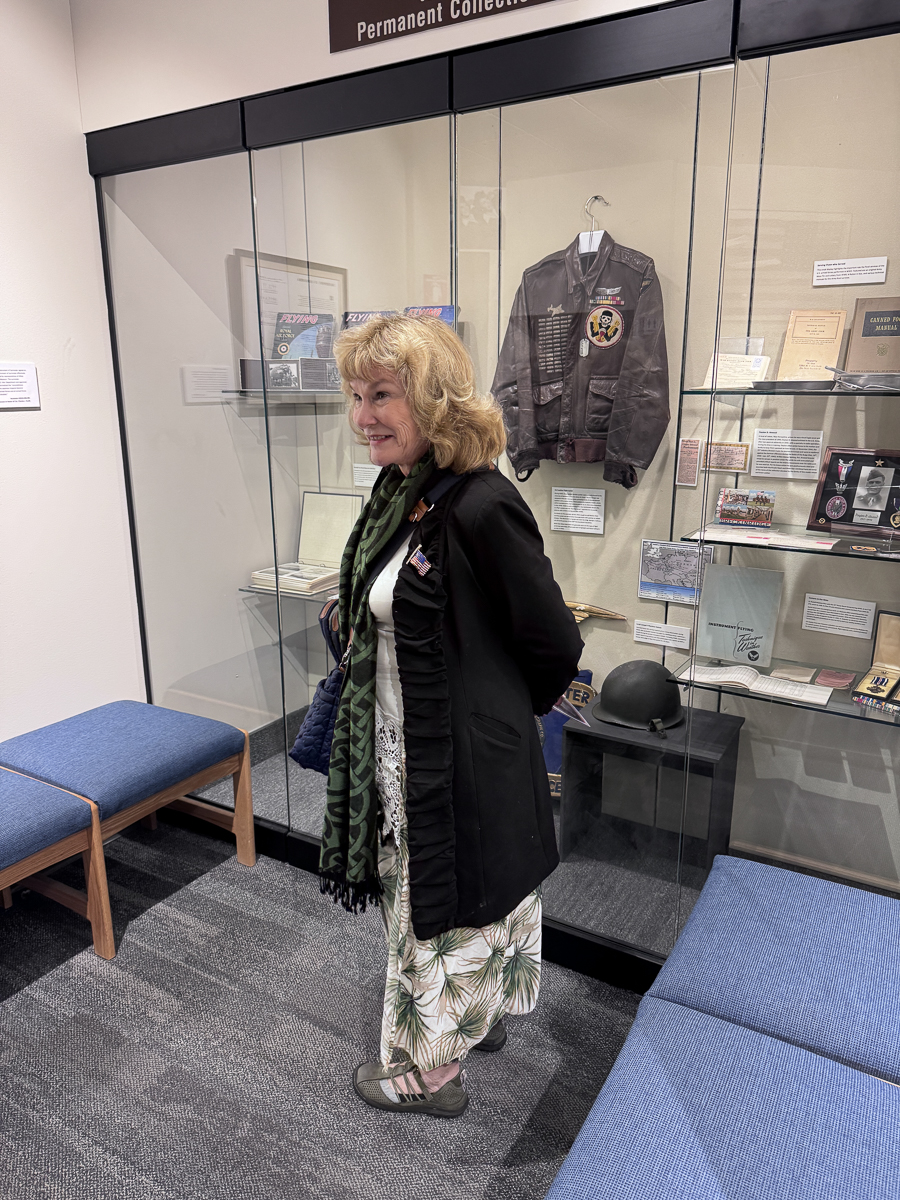
The displays were excellent
saith Mary
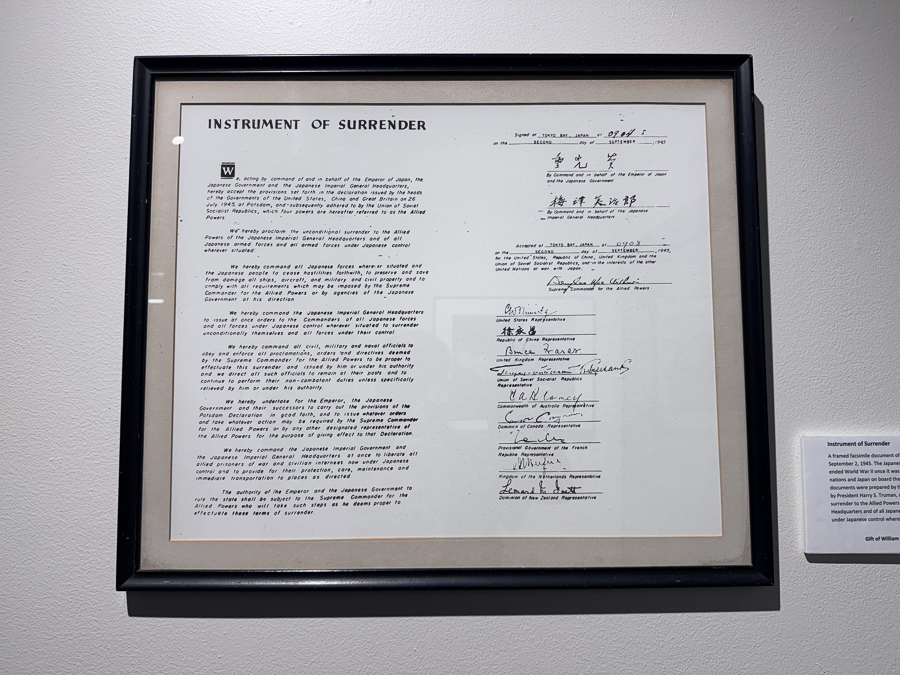
A copy of the surrender document from Japan!
The document formally accepted the Potsdam Declaration and ordered Japan's armed forces to surrender. In substance, it said:
• Japan accepted the declaration's terms and unconditionally surrendered its military forces to the Allied Powers.
• Japanese forces were to stop fighting, protect property, and obey the orders of the Allied Supreme Commander.
• Japanese commanders were ordered to surrender themselves and the forces under their command.
• Japanese officials were to carry out Allied orders and continue their duties unless told otherwise.
• Allied prisoners of war and civilian internees were to be released and cared for.
• The Emperor and Japanese Government's authority to govern would be subject to the Allied Supreme Commander.
A central passage reads: "We hereby proclaim the unconditional surrender to the Allied Powers of the Japanese Imperial General Headquarters and of all Japanese armed forces and all armed forces under Japanese control wherever situated."
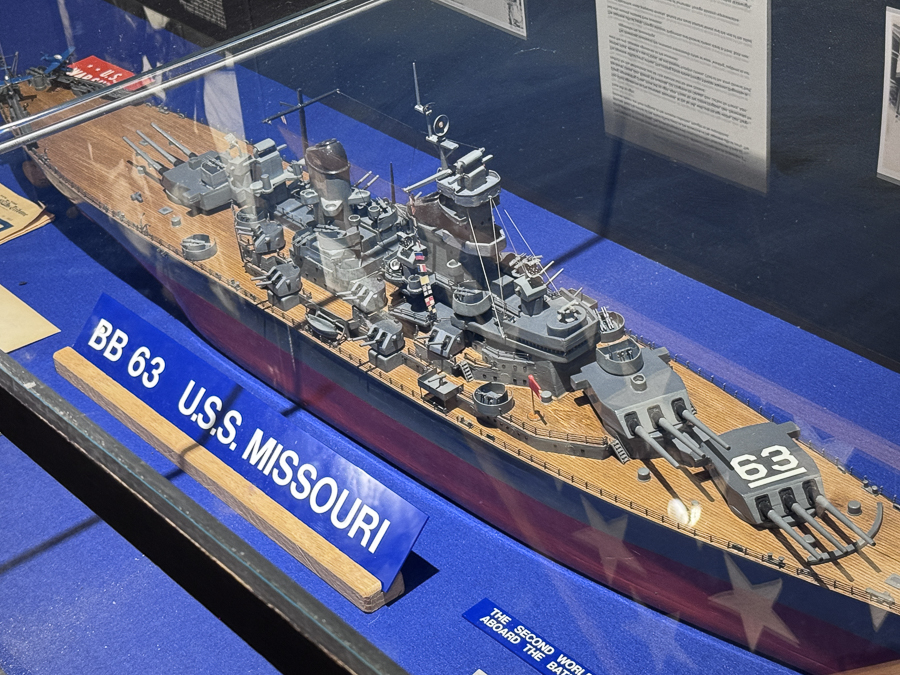
The instrument was signed aboard the USS Missouri on September 2, 1945.
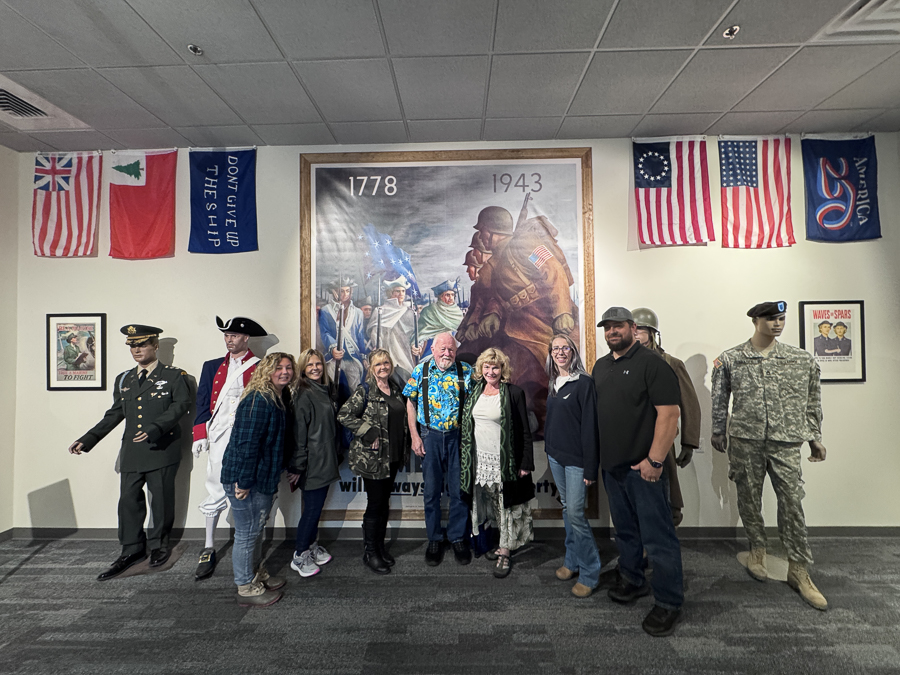
Before we entered the main part of the museum!
Cassie, Colleen, Robin, Paul, Mary, Sarah, and Jon

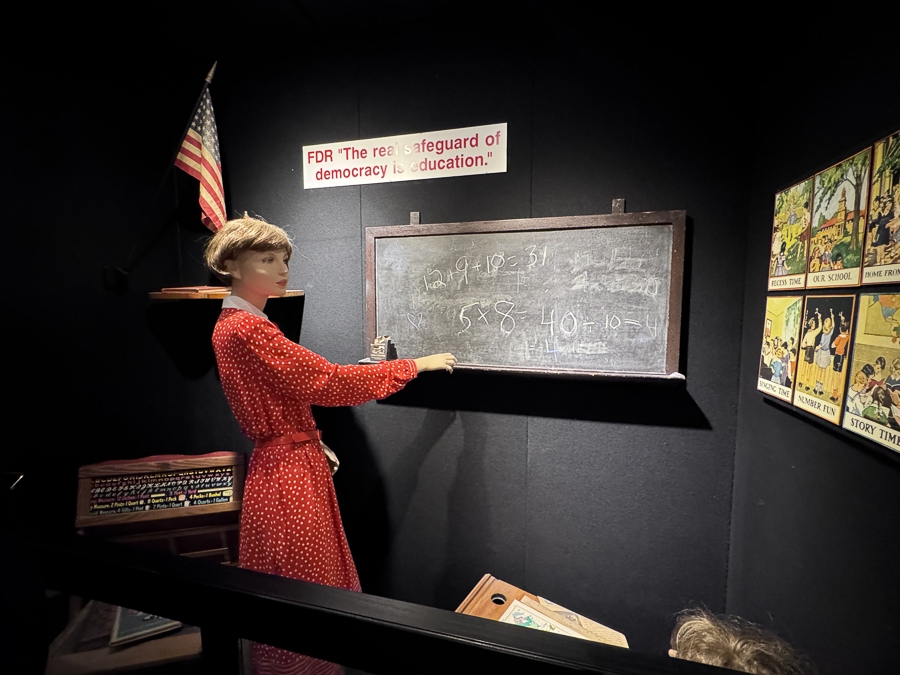
I remember having ink wells on our desks in school!
Sheaffer Skrip is Sheaffer's long-running fountain-pen ink line, introduced in the early 20th century. It's an everyday, water-based dye ink, generally suitable for modern fountain pens.
• What it's like: Usually a dependable, moderately flowing ink. Shading, drying time, and how much it feathers or spreads depend on the color, pen, and paper.
• Colors and formats: Skrip has been sold in bottles and Sheaffer-style cartridges. The color selection has changed over time, and availability varies by country.
• Vintage bottles: Older Skrip bottles are collectible; some have a built-in reservoir intended to make filling easier when the ink level is low.
• Using older ink: Be cautious with vintage or long-opened bottles. Avoid ink with visible mold, unusual clumps, or a strong off smell, and don't mix it with another ink in the bottle. If you're unsure, test it in a pen that's easy to clean.
It's a good option for regular writing, though it generally isn't waterproof.
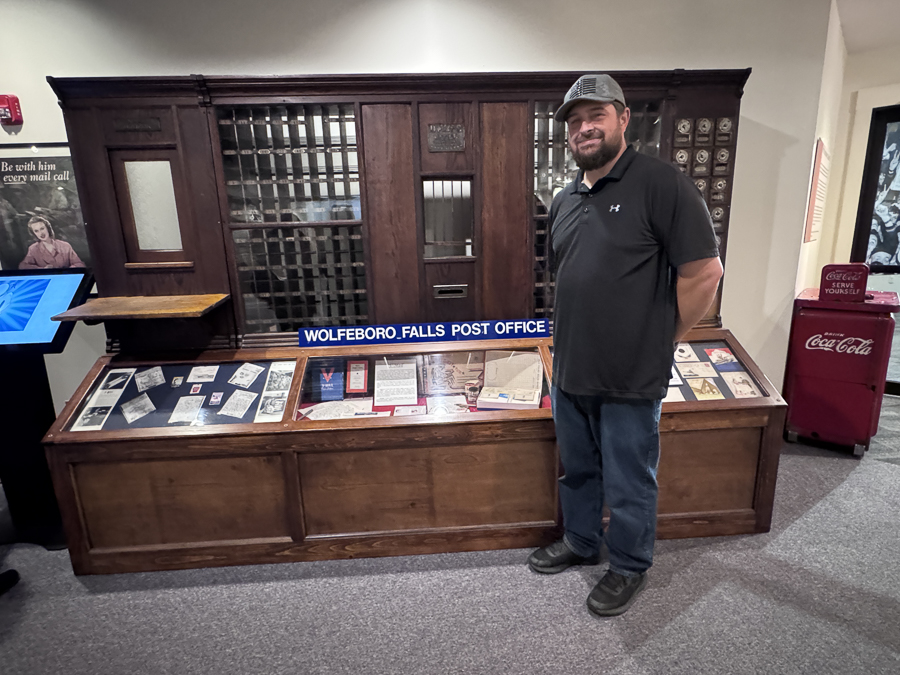
Jon goes postal!

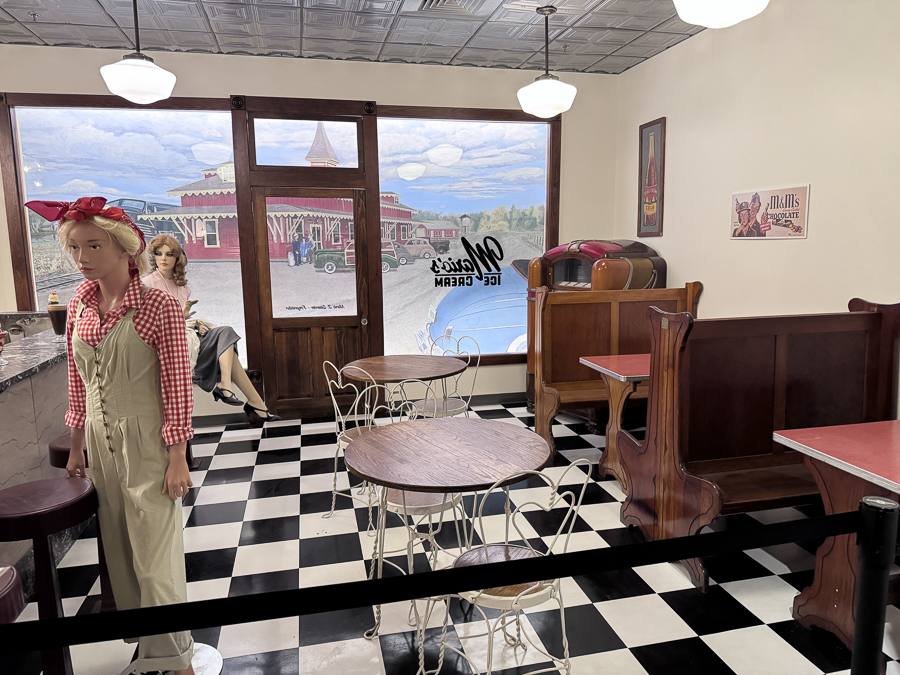
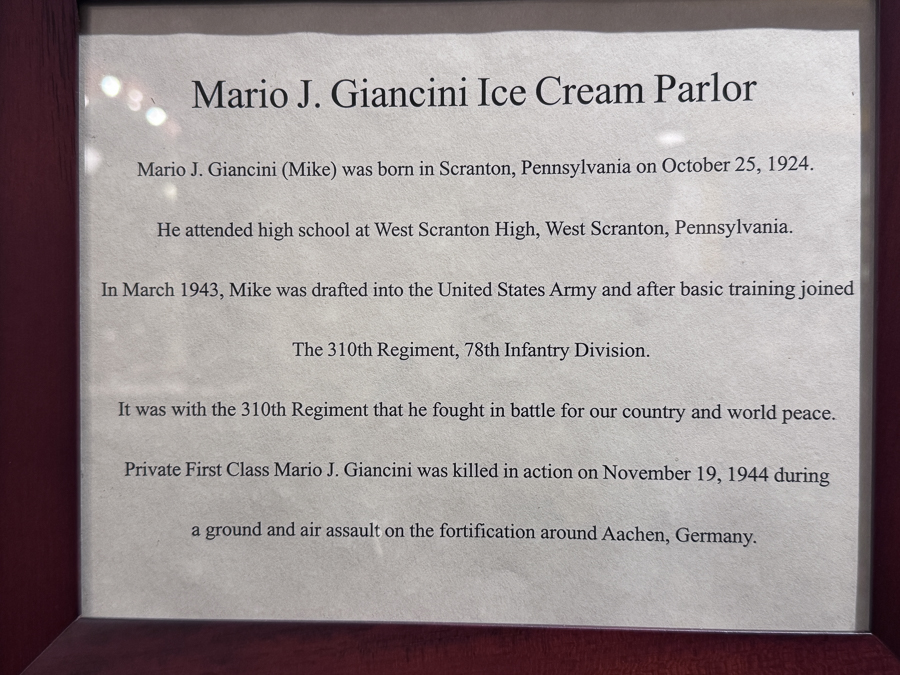
Ice Cream anyone??
In the 1930s, an American ice-cream parlor might be a small independent shop, a confectionery, or a soda fountain inside a drugstore. The classic soda fountain—where a soda jerk mixed drinks and served sundaes—had been popular since the late 19th century and remained a familiar neighborhood institution.
What they looked and felt like: Some had old-fashioned marble counters and mirrored back bars; newer or renovated places might feature chrome, glass-block details, geometric patterns, and streamlined Art Deco styling. Customers sat at the counter or at small tables, and servers often wore white uniforms and paper hats. The atmosphere was social and informal: people stopped in after school, on dates, or after shopping.
What they served: Alongside scoops and cones, menus commonly offered sundaes, banana splits, milkshakes, malted milks, and ice-cream sodas.
Soda fountains also sold drinks such as egg creams and flavored phosphates, plus light meals and sweets. Exact menus varied by region and shop.
The Great Depression shaped the experience. Ice cream remained an appealing treat, but customers were price-conscious, and a modest soda or single scoop could be a relatively inexpensive indulgence. Parlors were not all alike: a stylish downtown shop differed from a neighborhood drugstore counter, and access was affected by racial segregation and local customs, especially in the Jim Crow South.
So the 1930s parlor was both a place to buy a treat and a small social hub—part of a long soda-fountain tradition, with newer Art Deco design appearing alongside older fixtures.
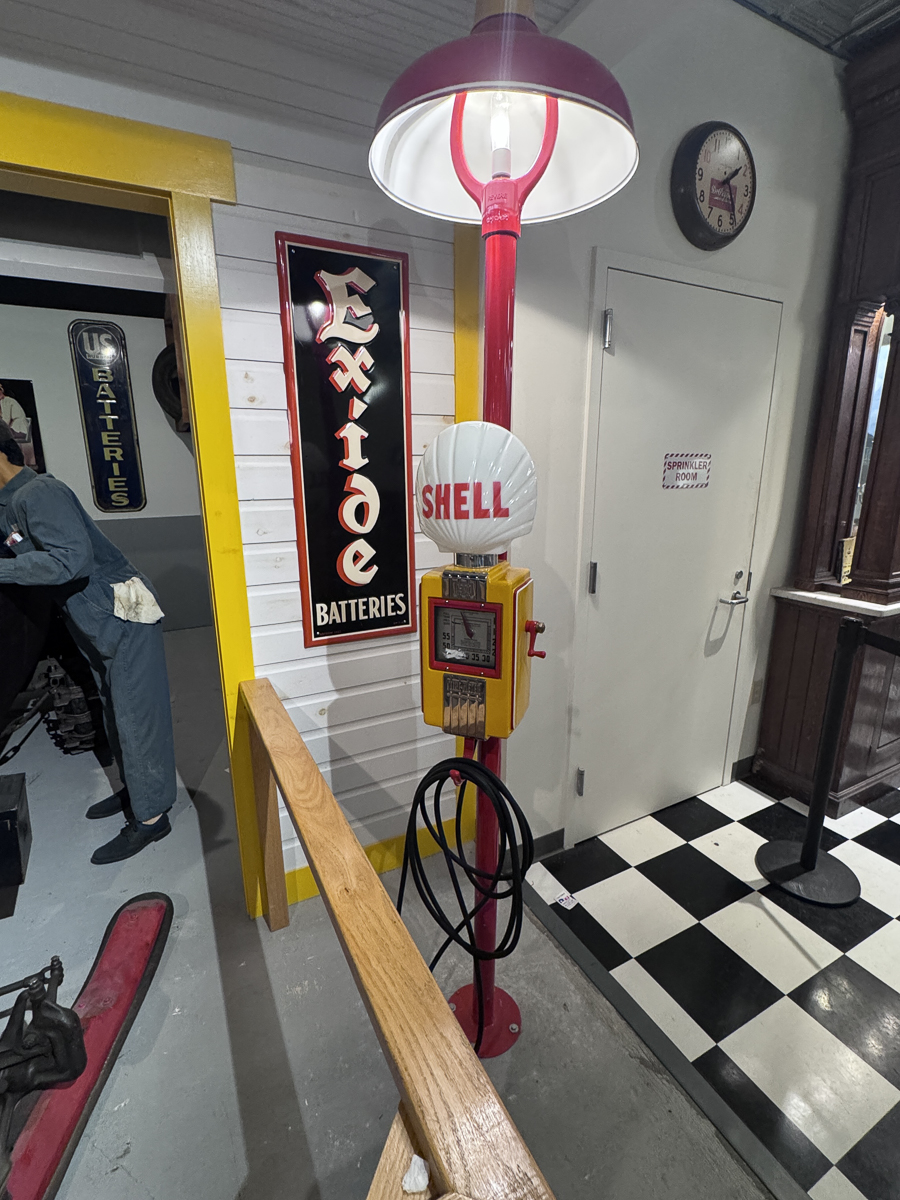
Shell has been around for a long time!
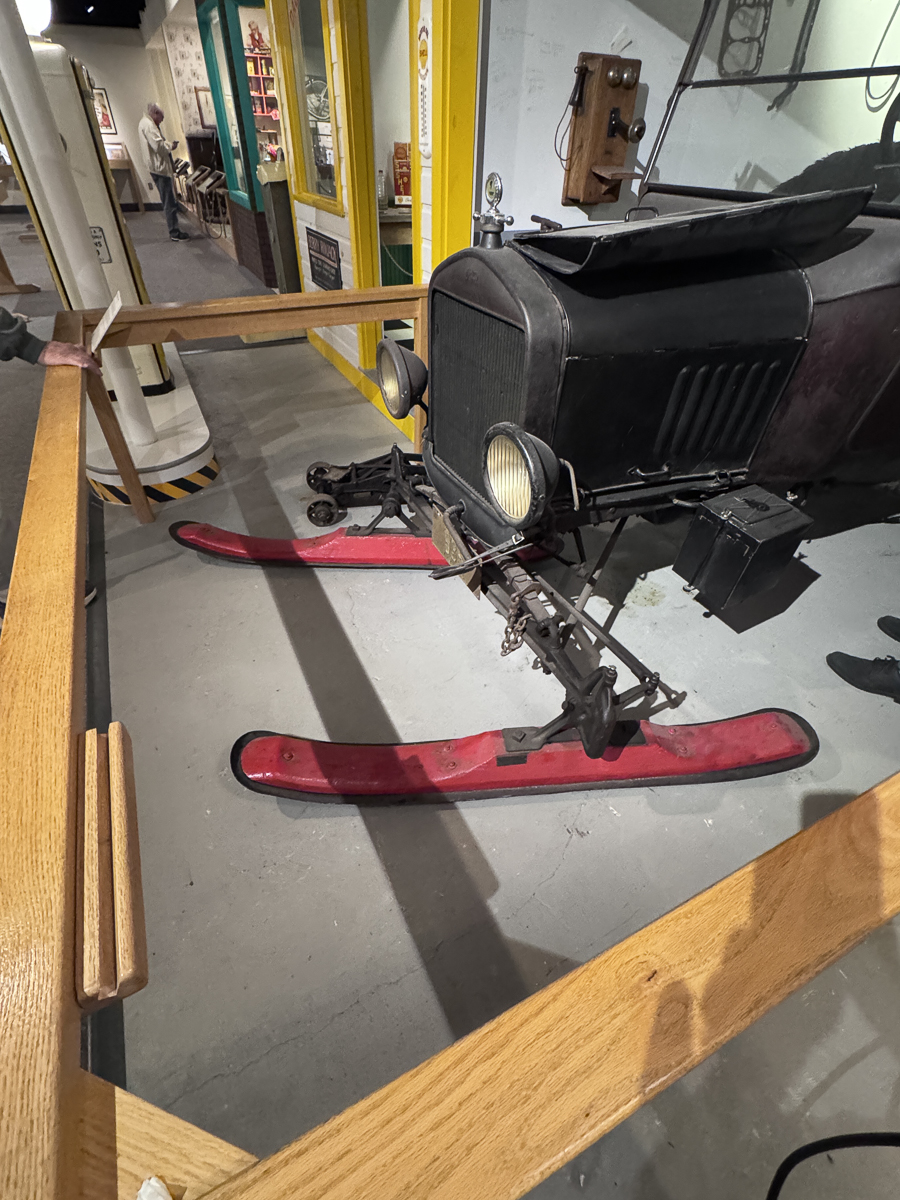
Good old American knowhow!!
 Model-T Snowmobile in 1913


Dig the back "tires"
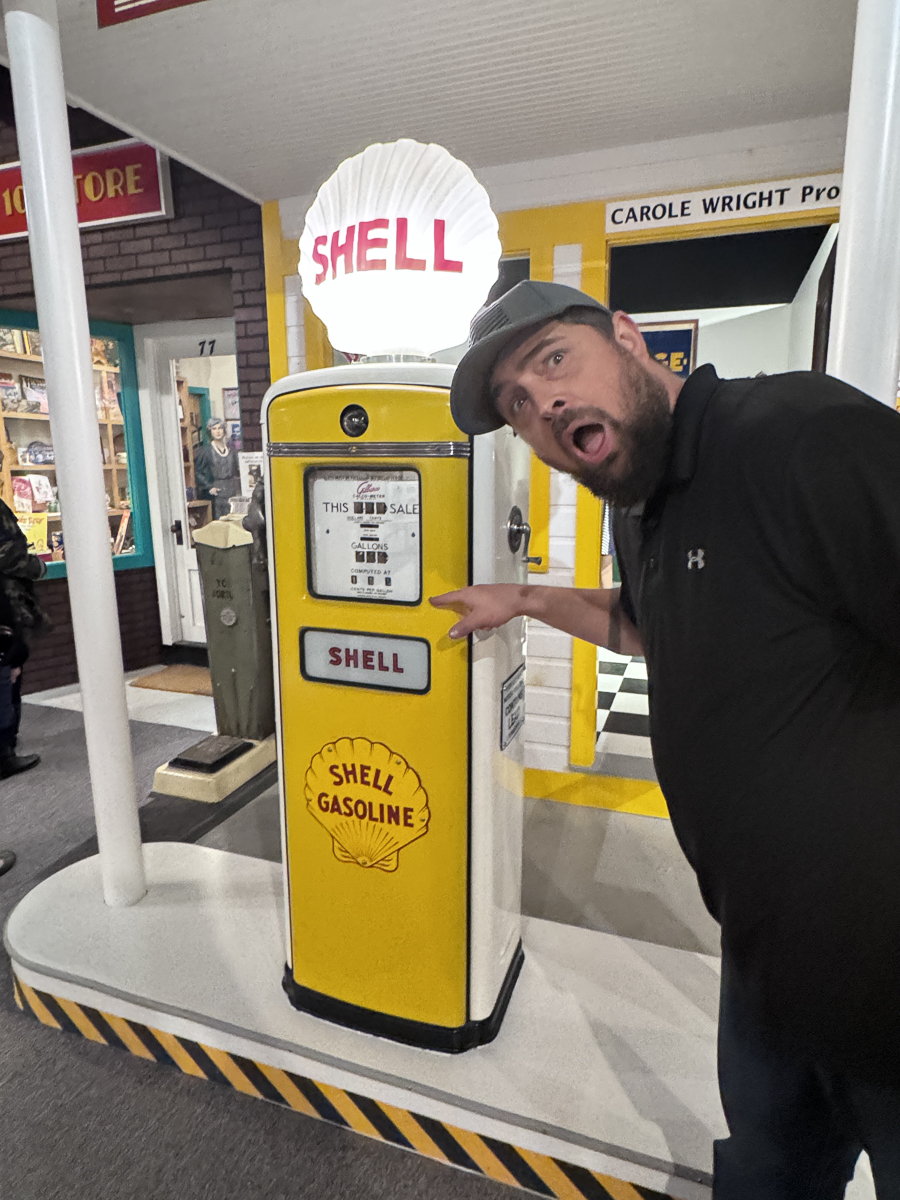
Jon was shocked at the prices
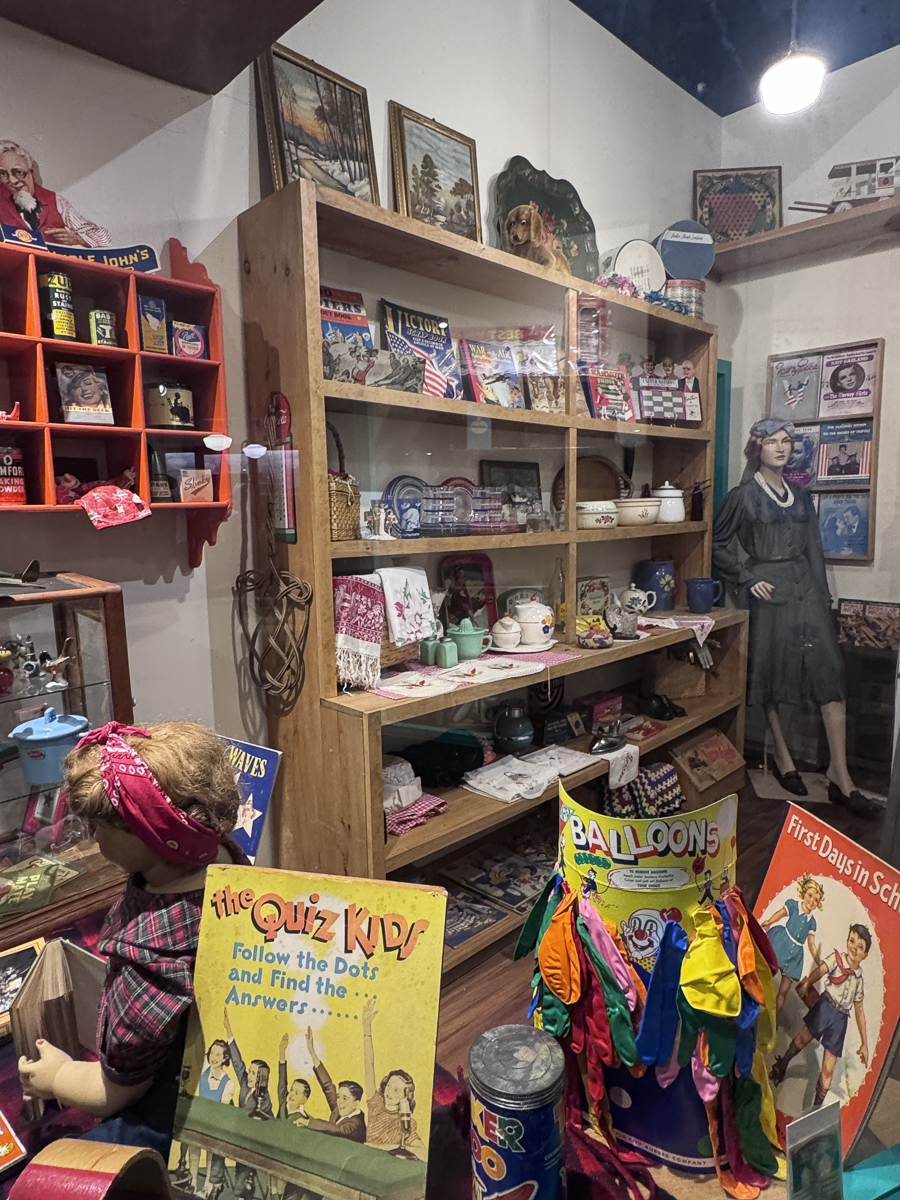
Everyone loved the toy stores!
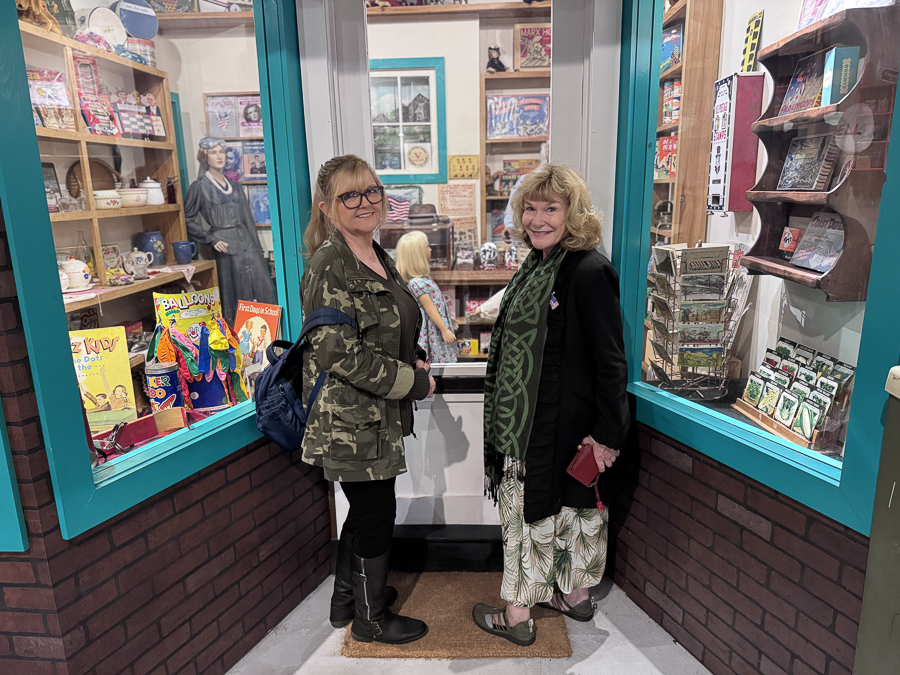
"Lets go inside!!"
Robin and Mary almost broke in!!

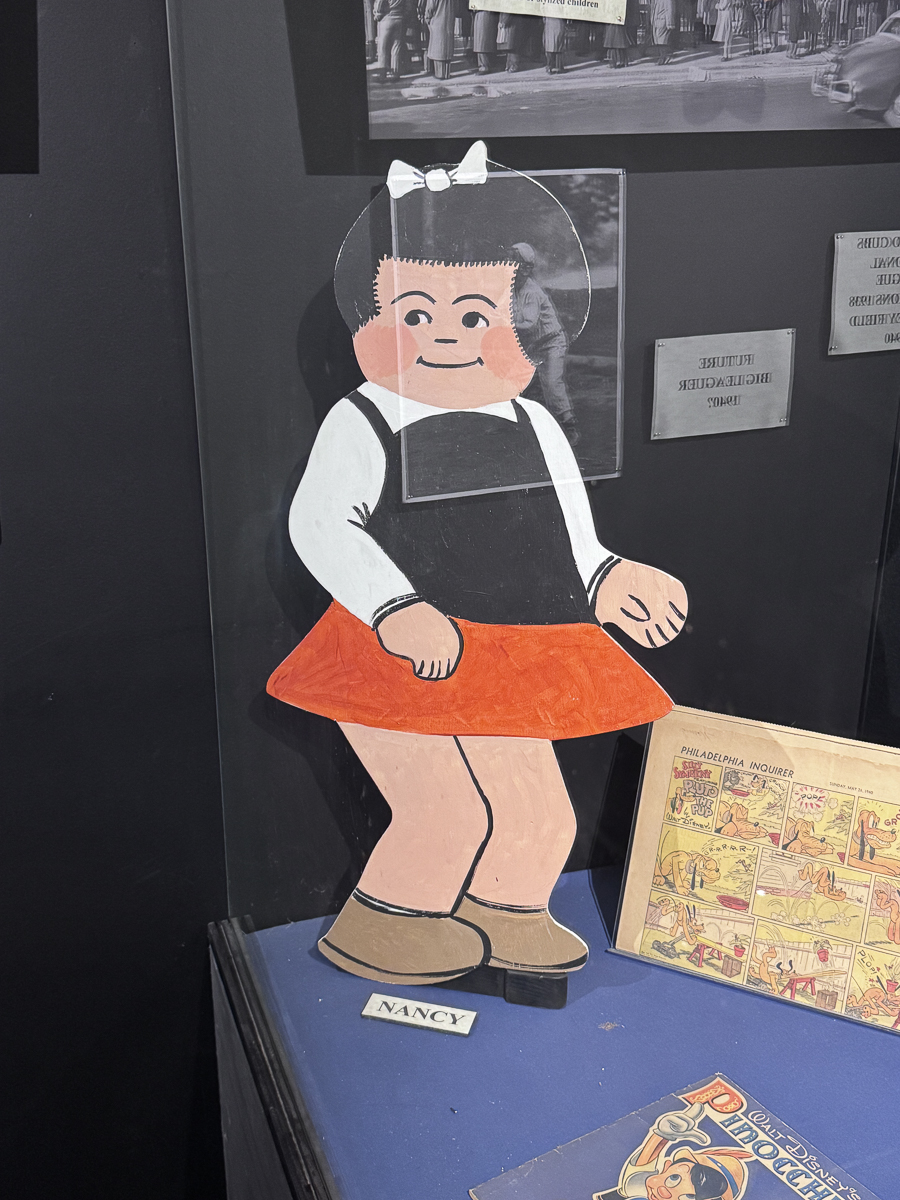
I remember cutout dolls and plastic scissors.
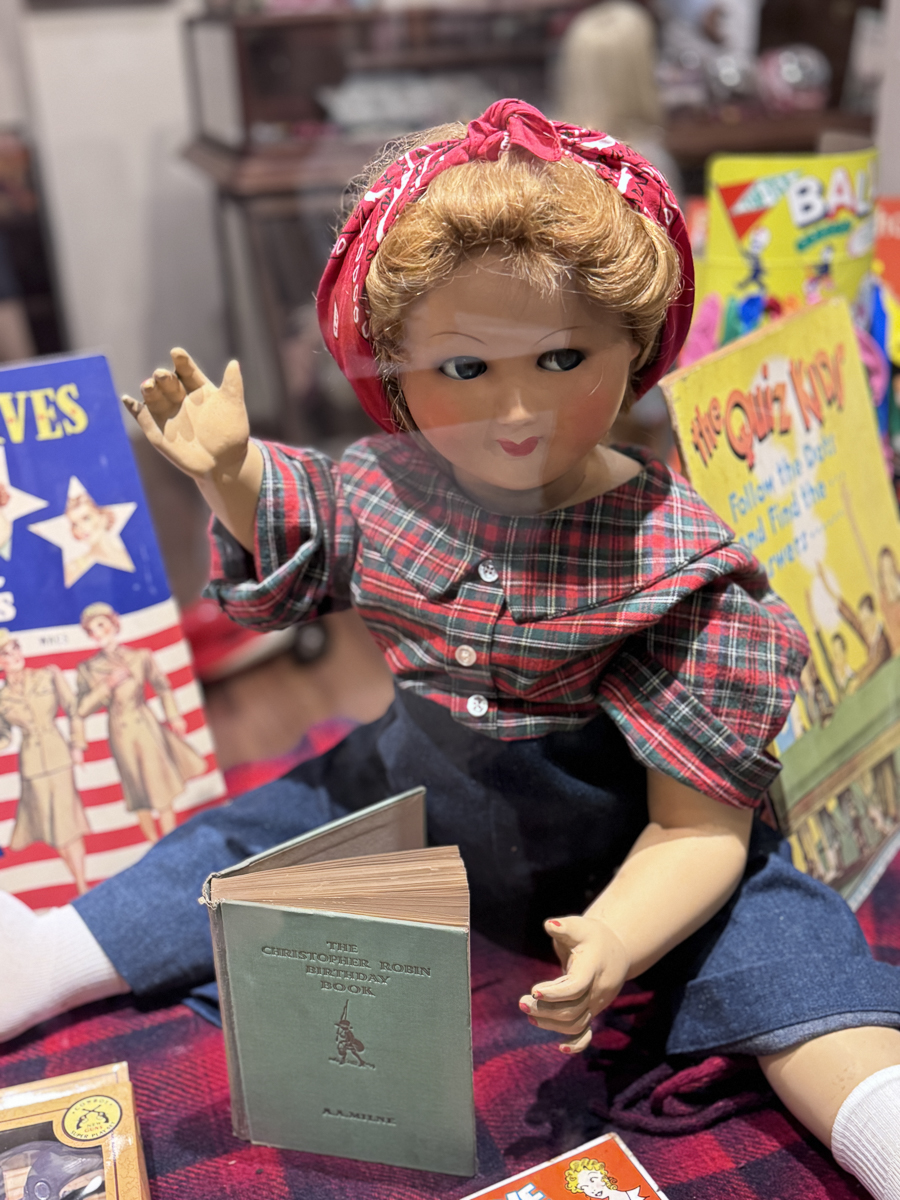
Dolls were all the rage in the old days!
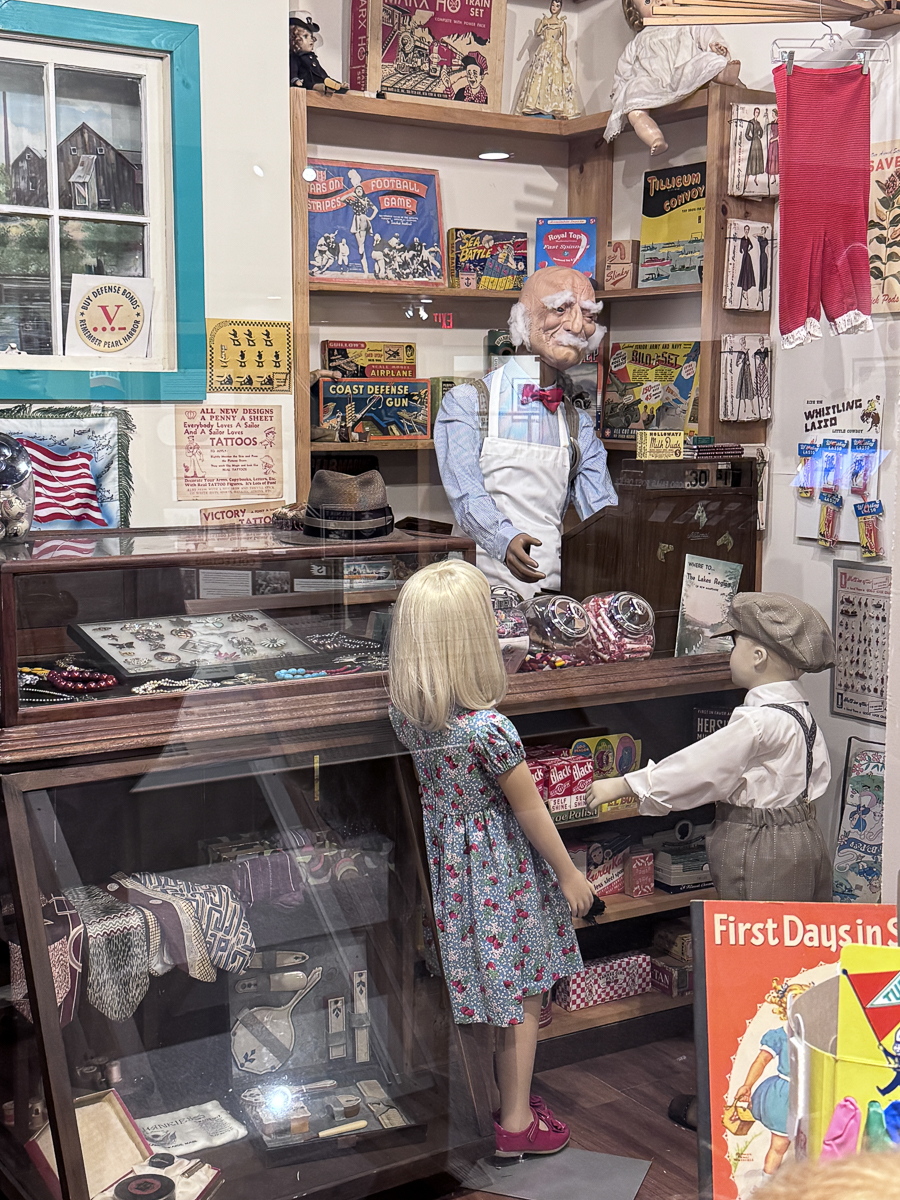
The neighborhood shopkeeper was always friendly!


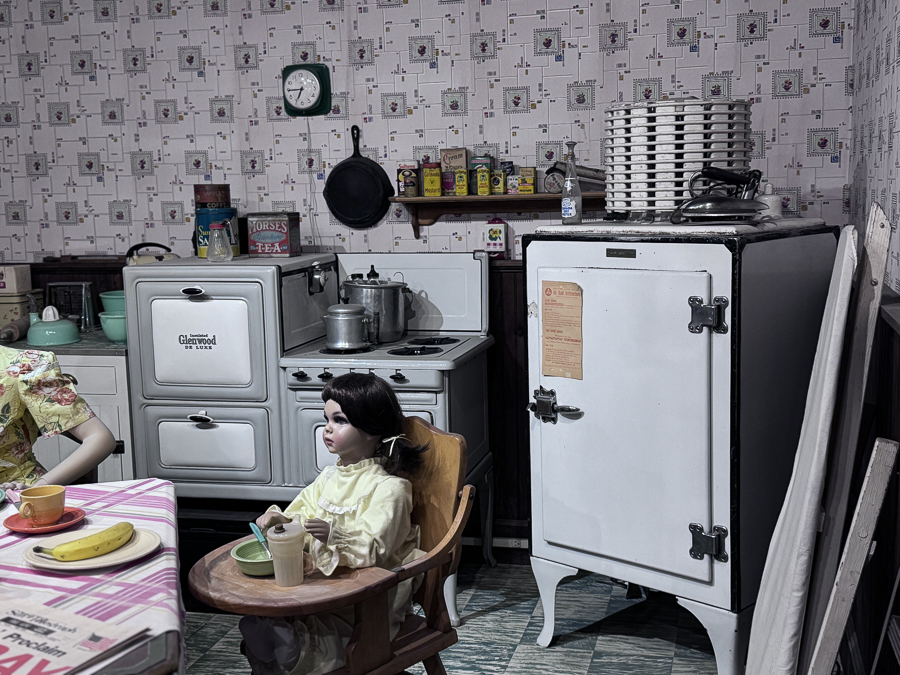
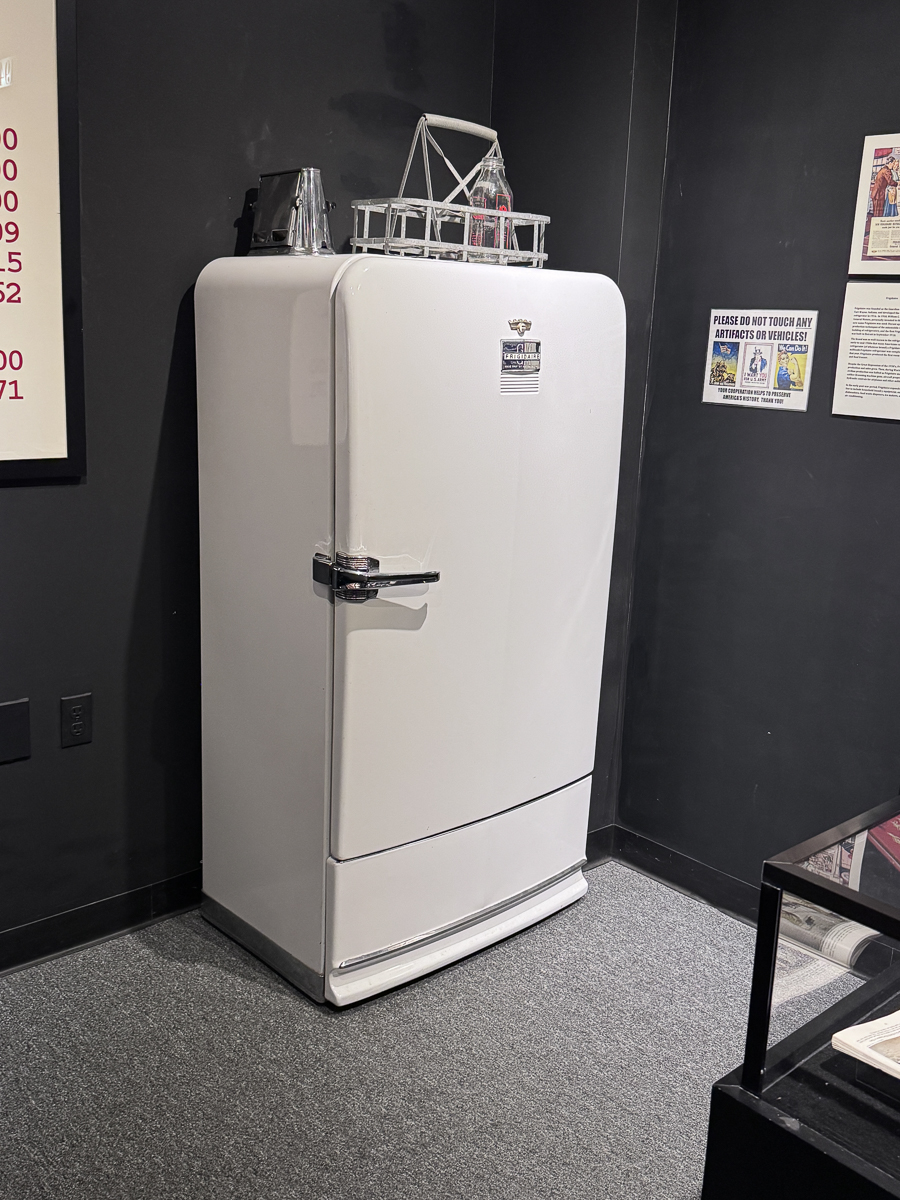
The first refrigerators

My mother had one of these! Made ironing easy!
Gladiron was a brand name associated with household ironing machines—often called ironer or mangle machines. Rather than pressing clothes by hand with a small iron, the machine used heated rollers to smooth larger items such as sheets and tablecloths. Home models reflected the early-20th-century push to make laundry work easier, though they were bulky appliances and not found in every household.
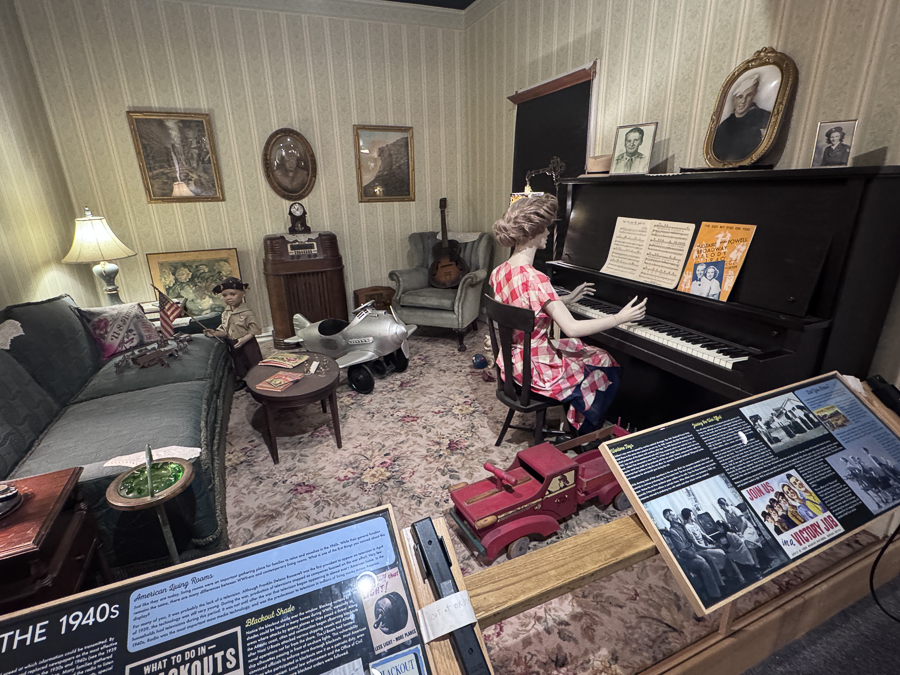
It was a different time!
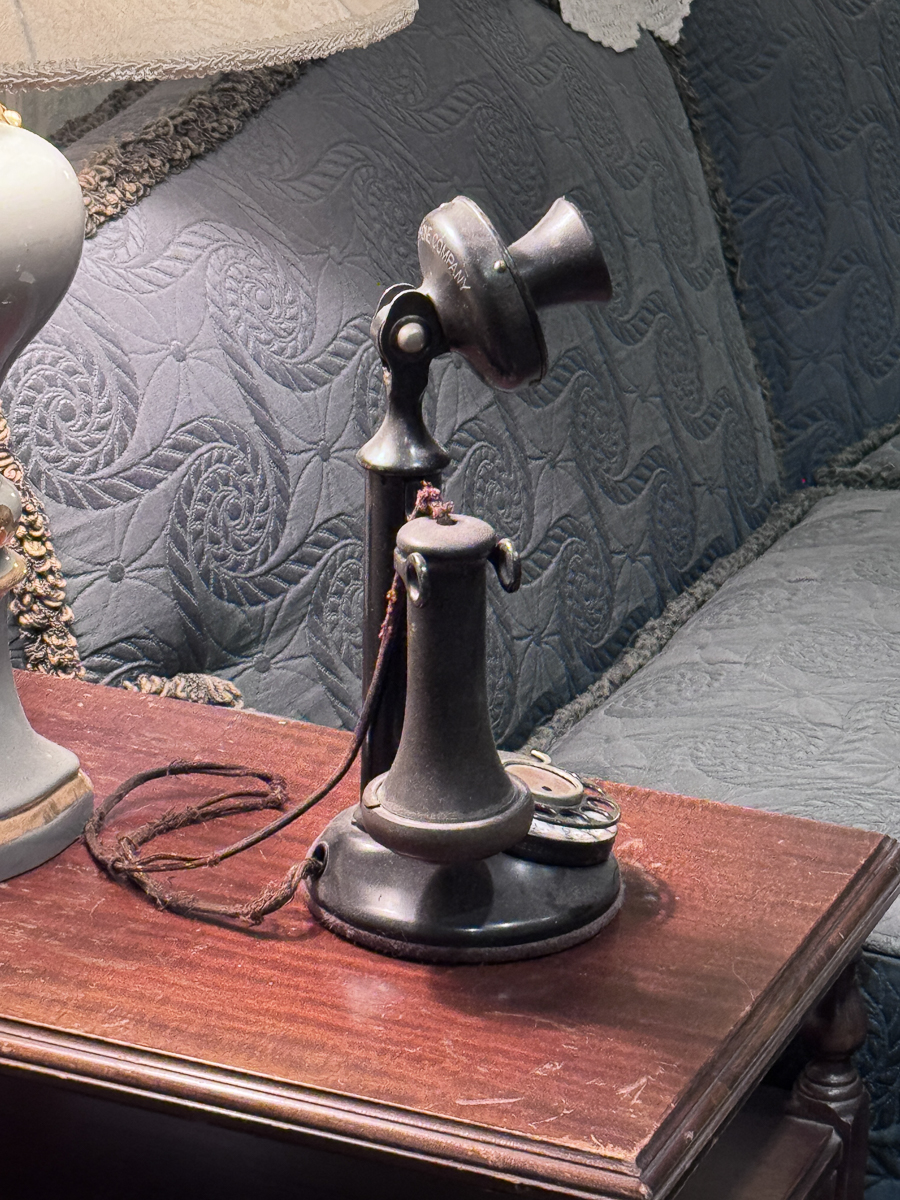
Remember these?
During World War II, blackouts in the United States were local safety measures, not a continuous nationwide shutdown of lights. They were meant to make towns and coastlines harder to see from enemy aircraft or ships and to help people practice for possible air raids.
Where and when: Coastal communities—especially on the West Coast after Pearl Harbor in December 1941—held blackout drills or imposed restrictions. On the East Coast in 1942, concern about German submarines led some coastal areas to dim lights that could silhouette ships at sea.
What people did: They turned off outdoor lights, covered windows with dark curtains or blackout material, and sometimes dimmed streetlights and businesses. Air-raid wardens checked neighborhoods and helped enforce local rules.
How widespread: Rules varied by place and changed over time. Many blackouts were temporary drills or local precautions; the entire United States was not kept dark throughout the war.
Why they faded: The feared large-scale air raids on the continental U.S. did not occur, and blackout restrictions were relaxed or ended as the immediate threat eased.
A well-known episode was the "Battle of Los Angeles" in February 1942: after reports of a possible enemy aircraft, Los Angeles imposed a blackout and anti-aircraft guns fired into the night sky. No enemy attack was found; the incident is generally understood as a wartime scare and mistaken alarm.


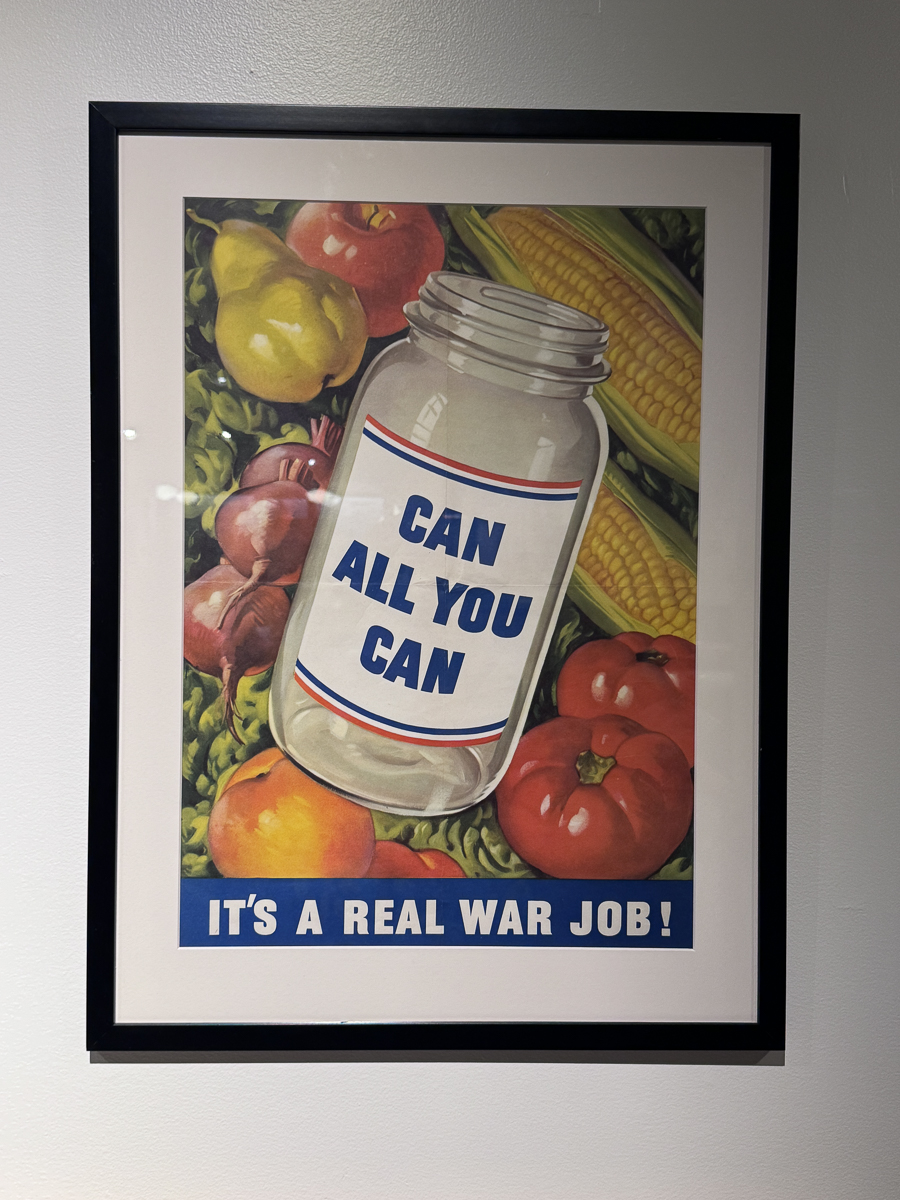

I remember Victory Gardnes as my aunts had them in their front yard well into the 1950s
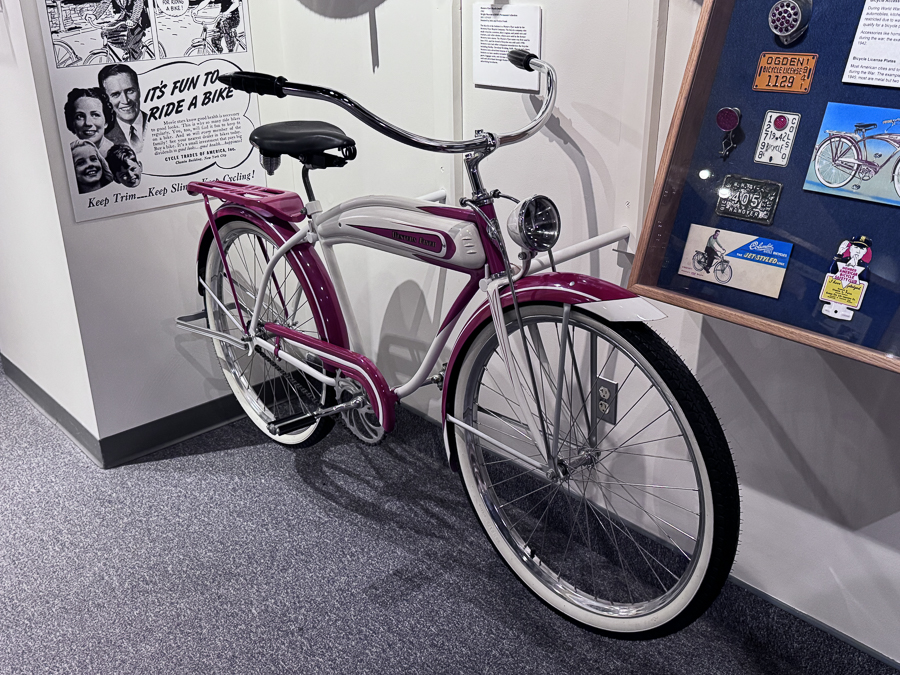
Schwinn bikes were all the rage!
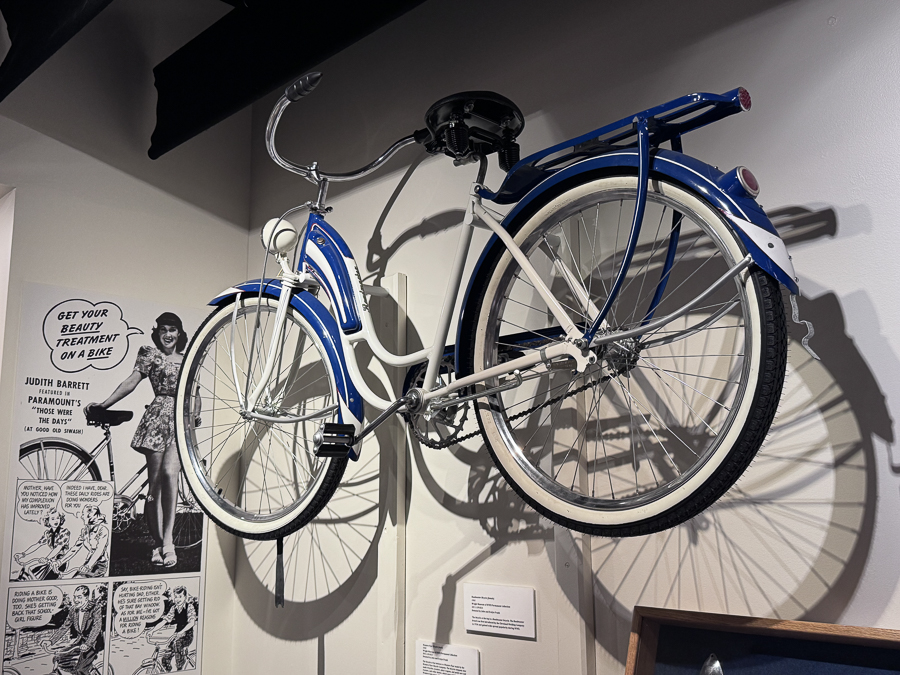
Mine was red and I rode it for 100,000 miles!!!
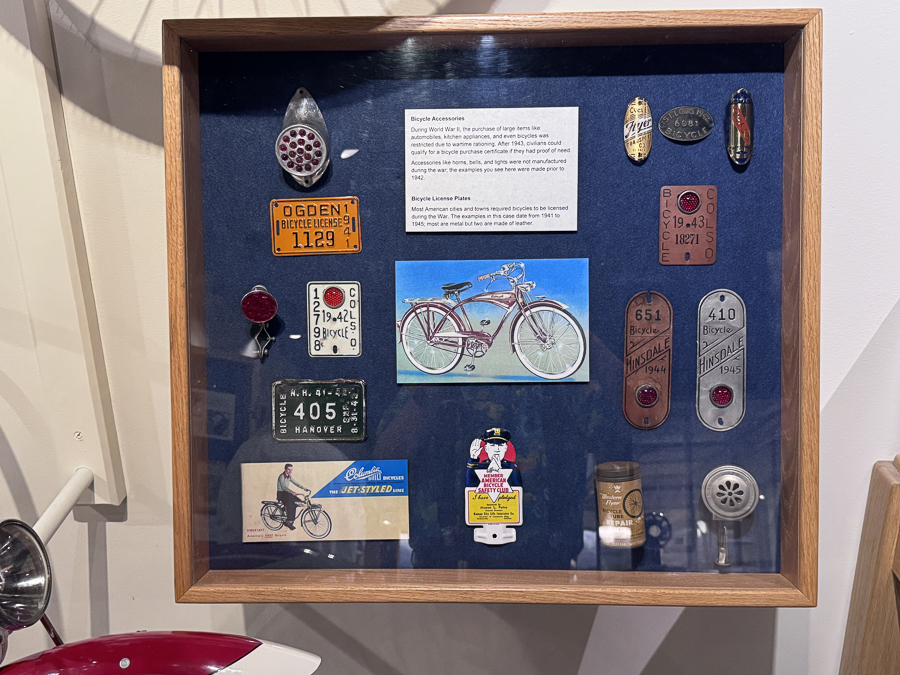
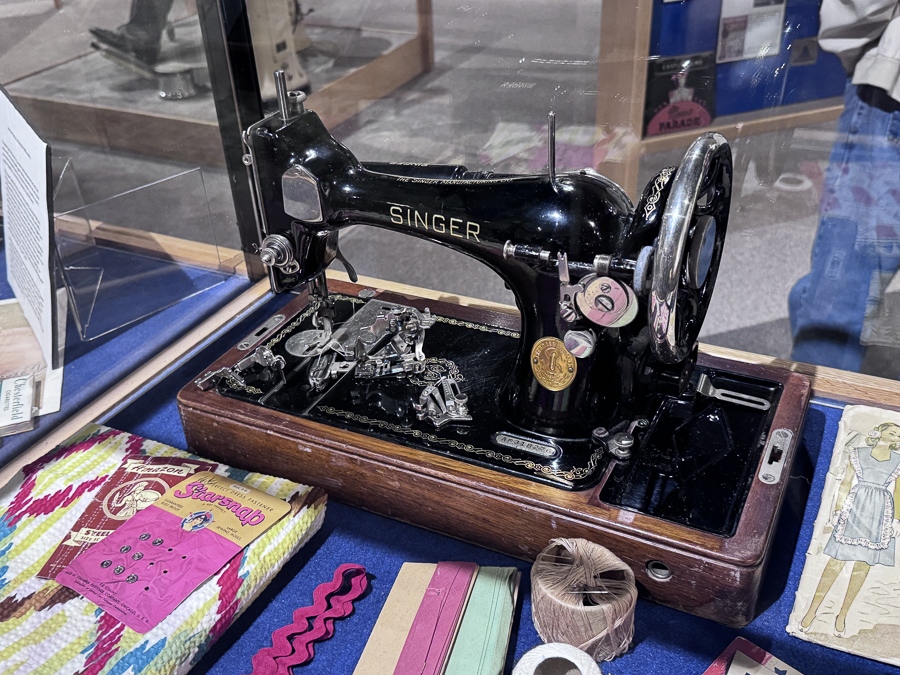 Mom had a Singer sewing machine just like this one!
Singer sewing machines from the 1940s are often sturdy, black cast-iron models. Common examples include the 15, 66, 99, and 201; the compact 221 Featherweight was also made during this era. Wartime production was affected by World War II, so some machines were made before the war and others after production resumed.
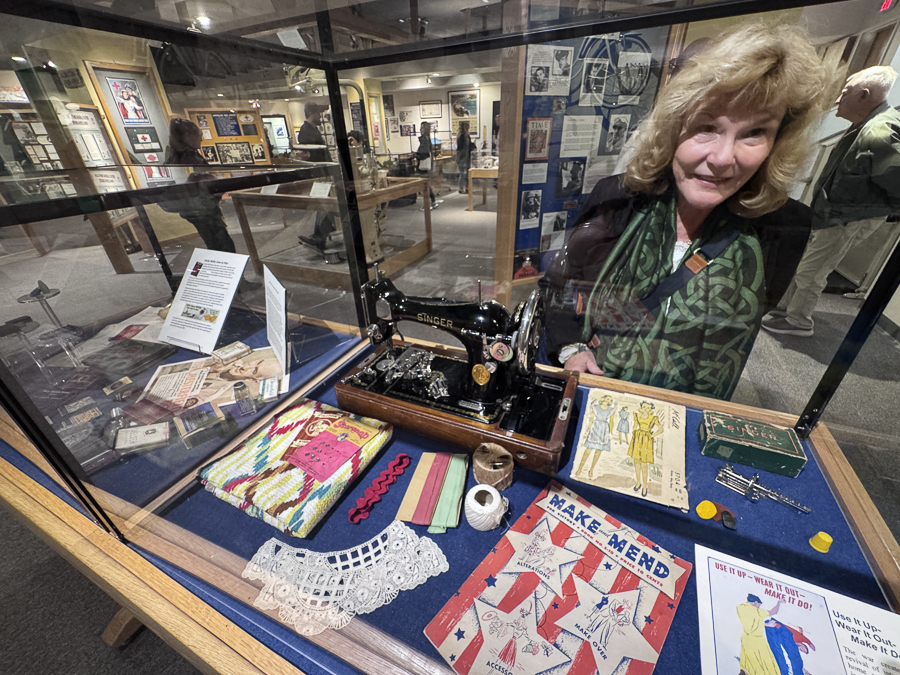 Those were the days
, Mary remembers.
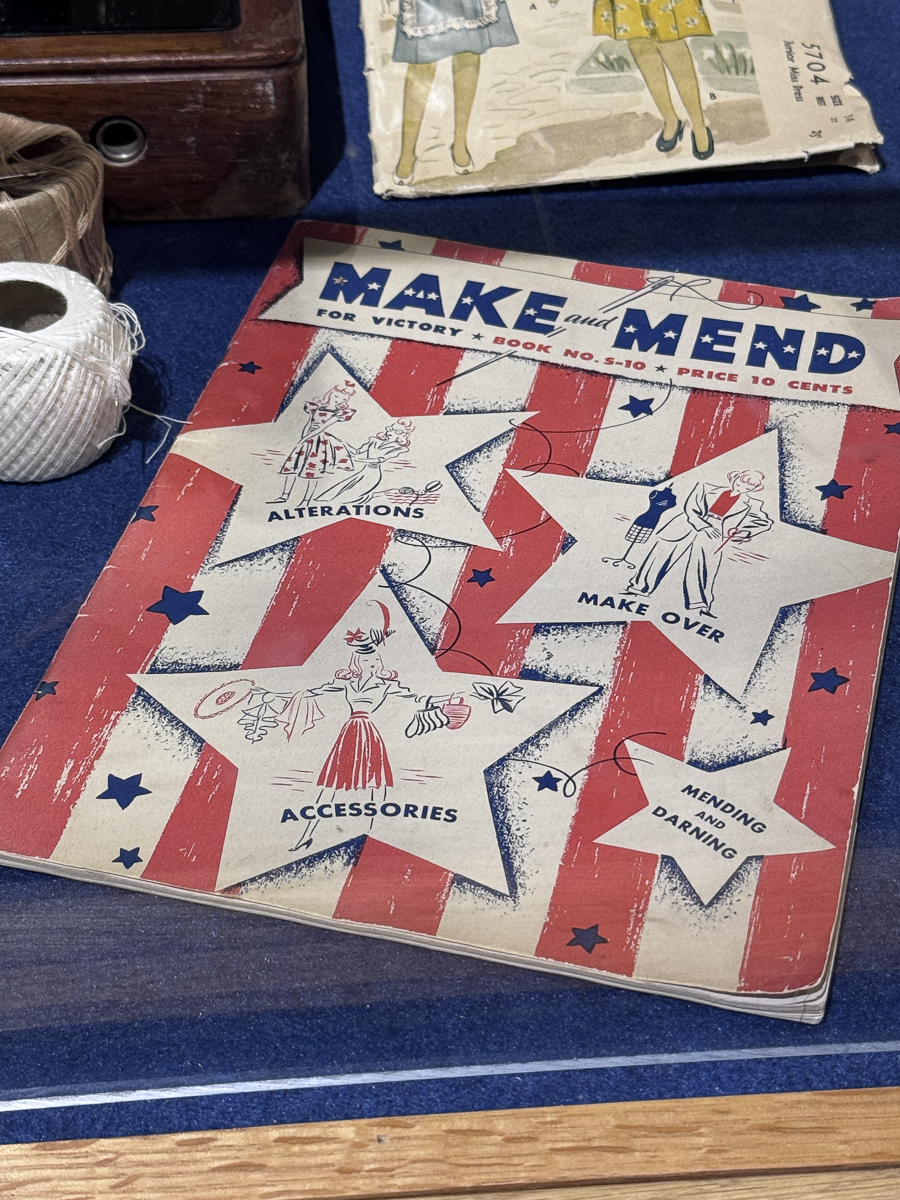
"Make Do and Mend" was a British WWII slogan encouraging people to repair and reuse clothing.
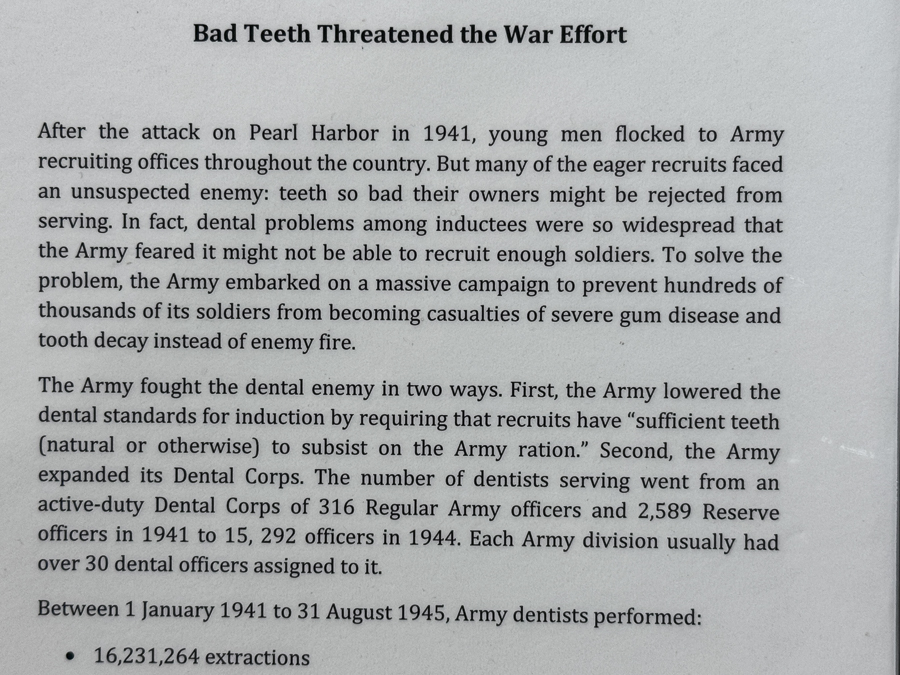
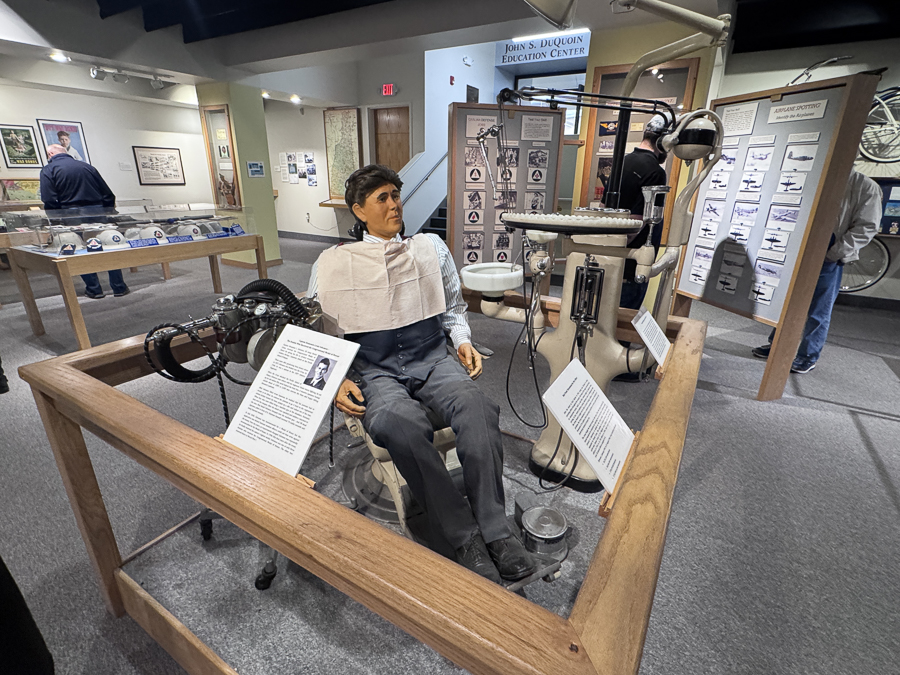
Ouch!!!
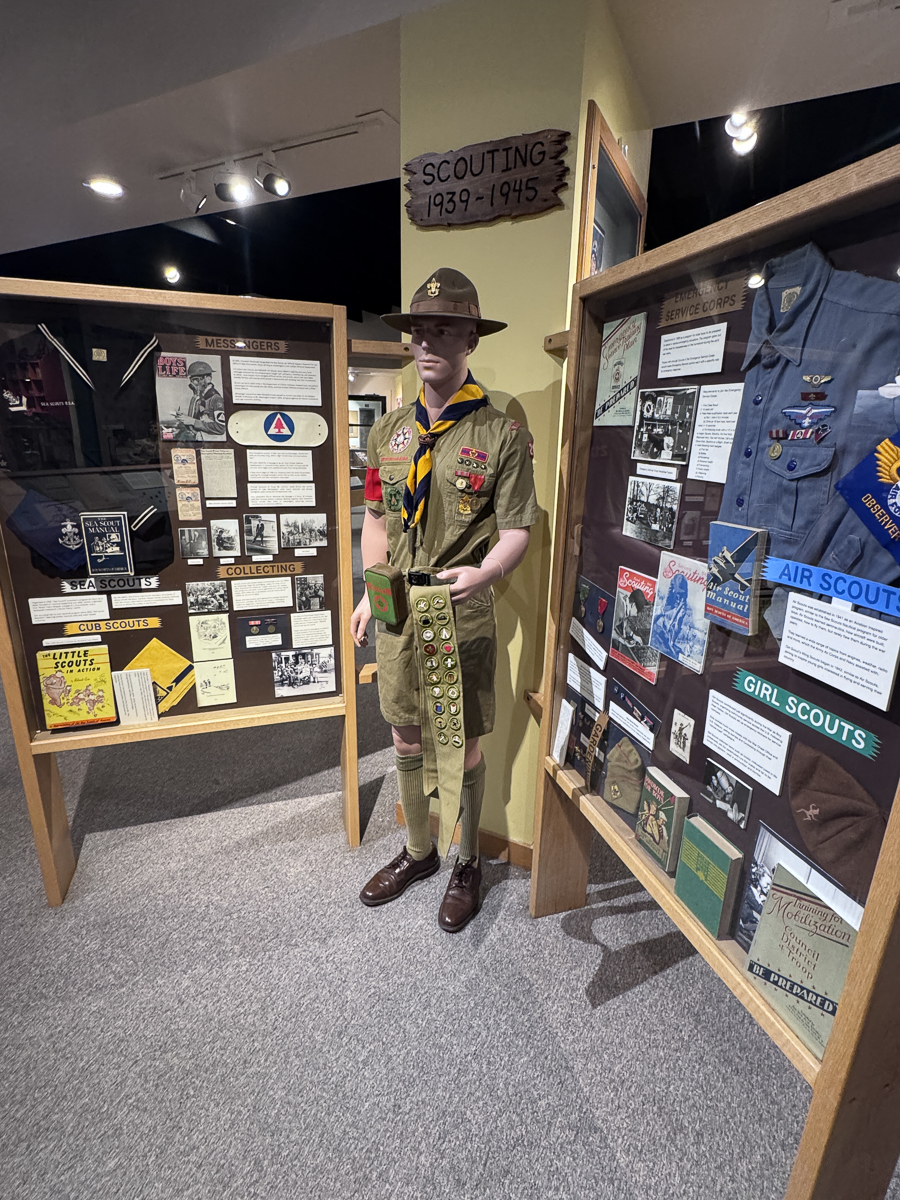
Scouting was cool before the liberals allowed girls into the Boy Scouts!
The Boy Scouts of America began admitting girls because many families wanted siblings to take part in the same activities, and the organization wanted to give girls access to its outdoor, leadership, and skills programs.
Girls could join Cub Scouts starting in 2018 and the older program—then called Scouts BSA—from 2019. They joined separate girls' packs or troops rather than automatically joining boys' units. The Girl Scouts remained a separate organization. In 2025, the Boy Scouts of America changed its name to Scouting America.
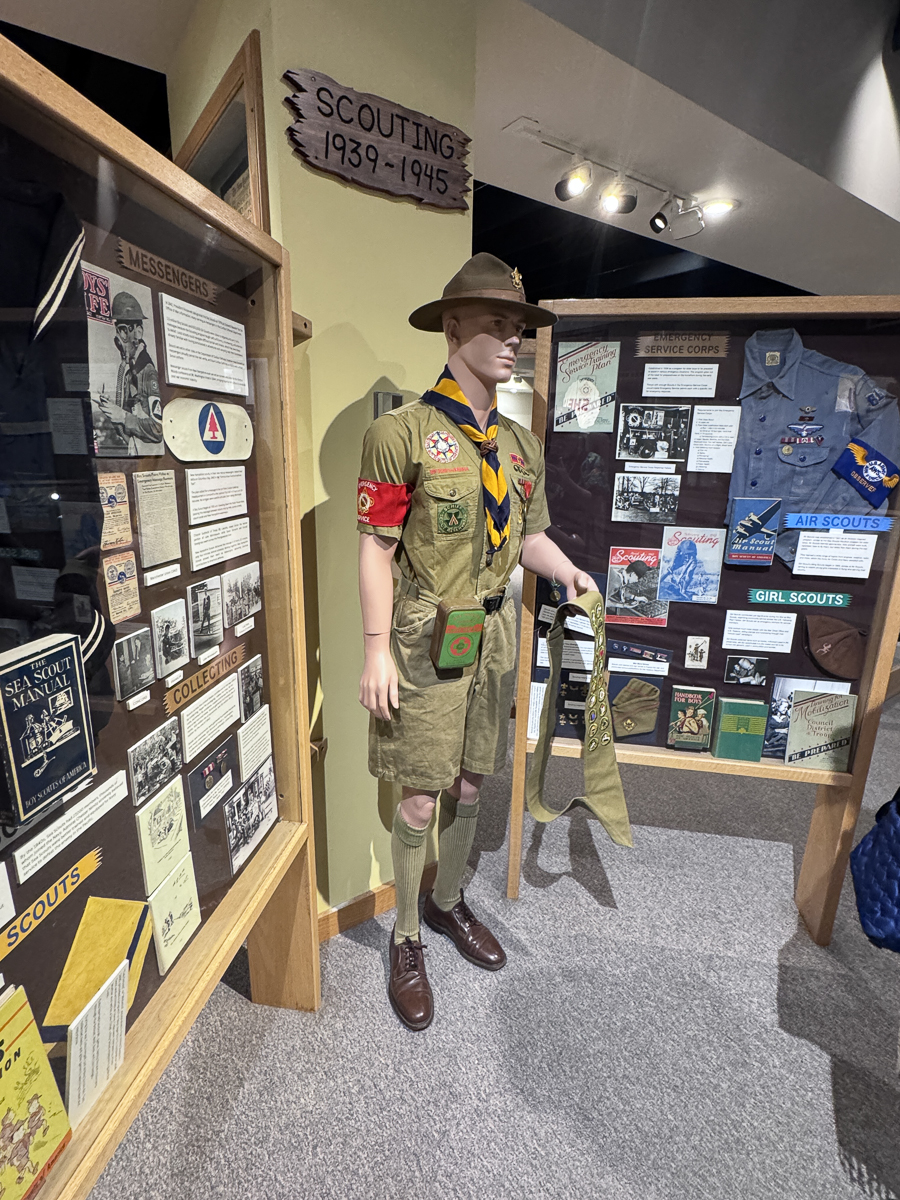
The good old days!

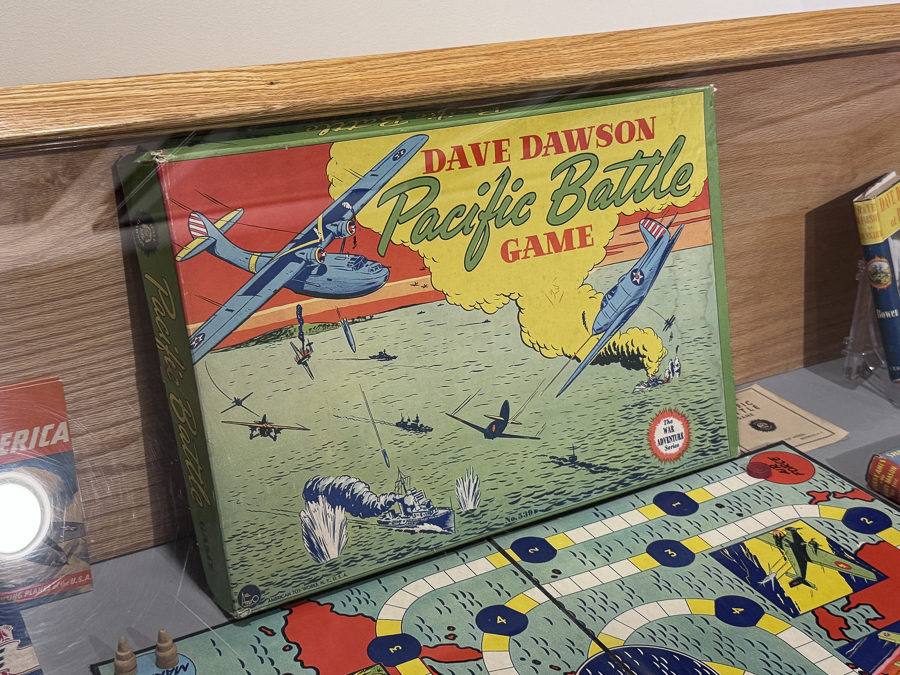
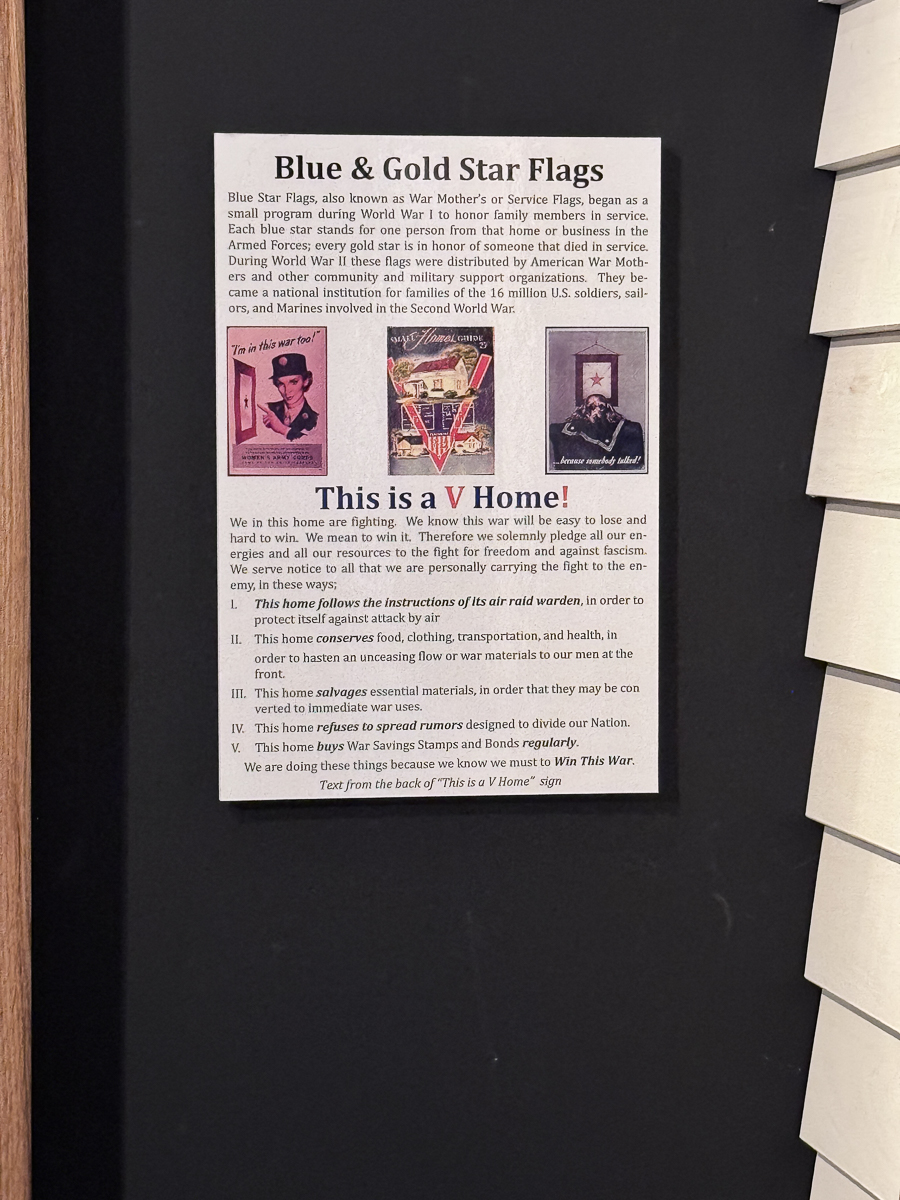
Mom and Dad bought War Stamps!


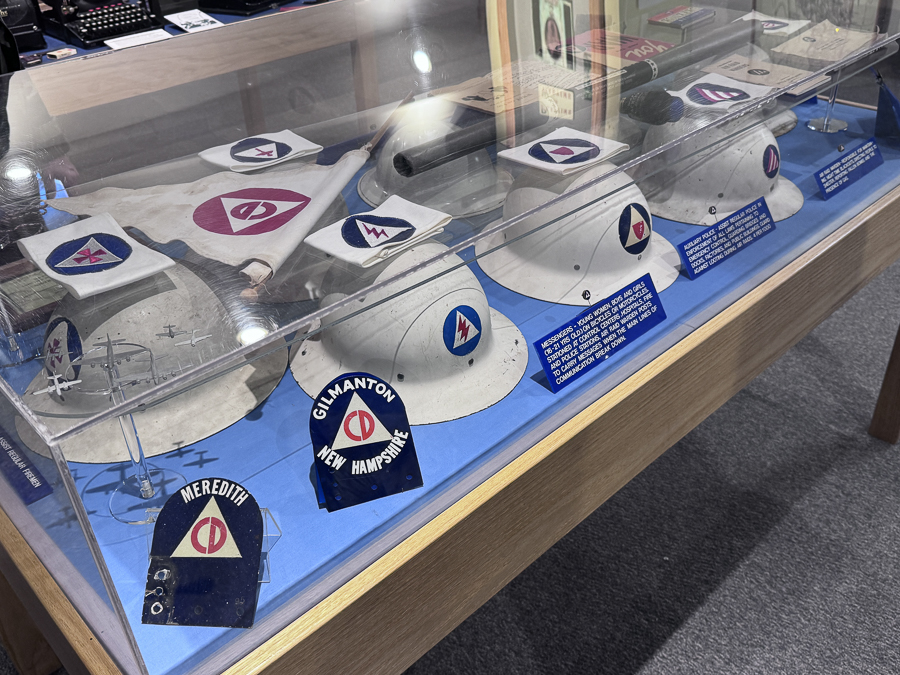

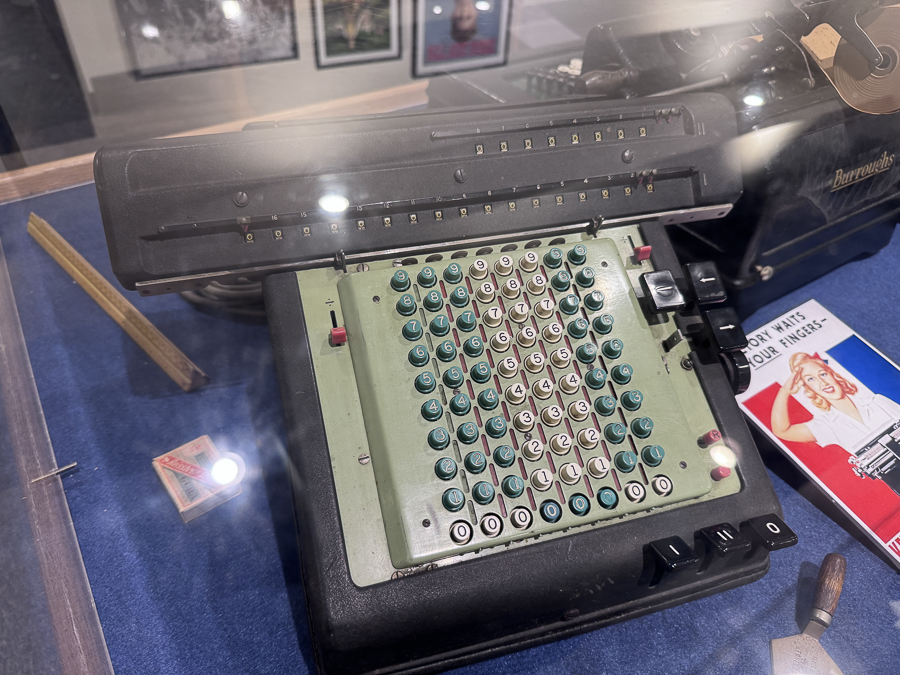
We had these at North American Aviation in the late 1960s
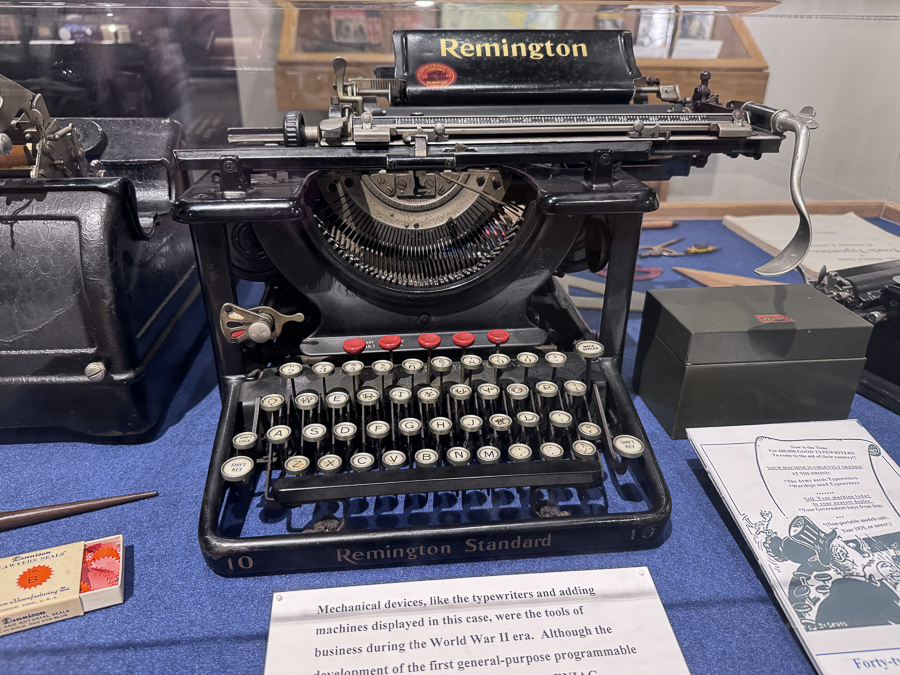
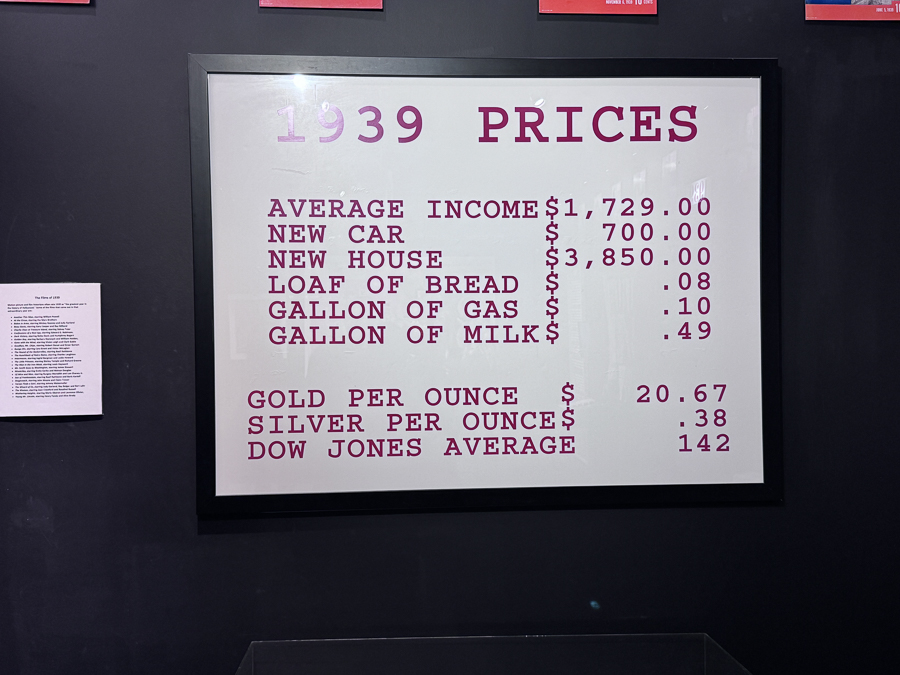
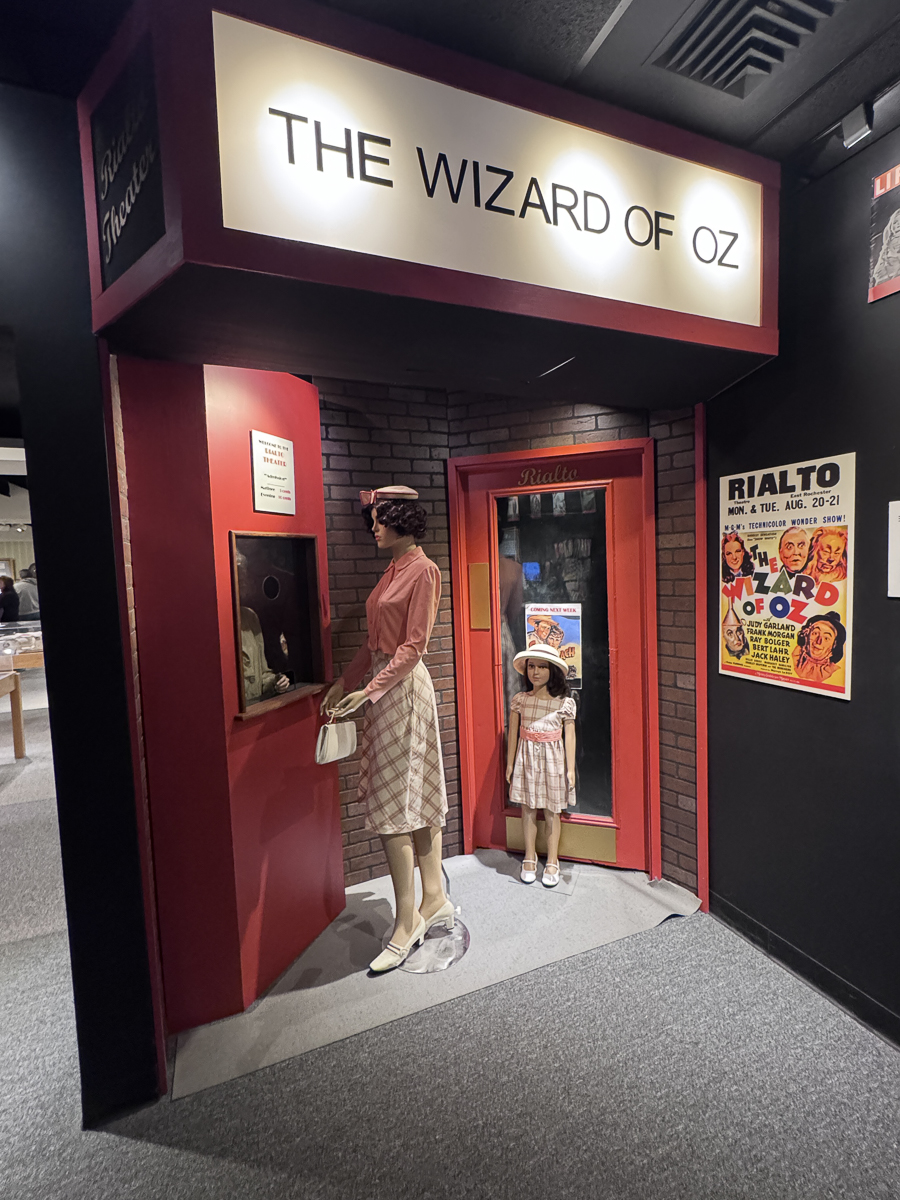

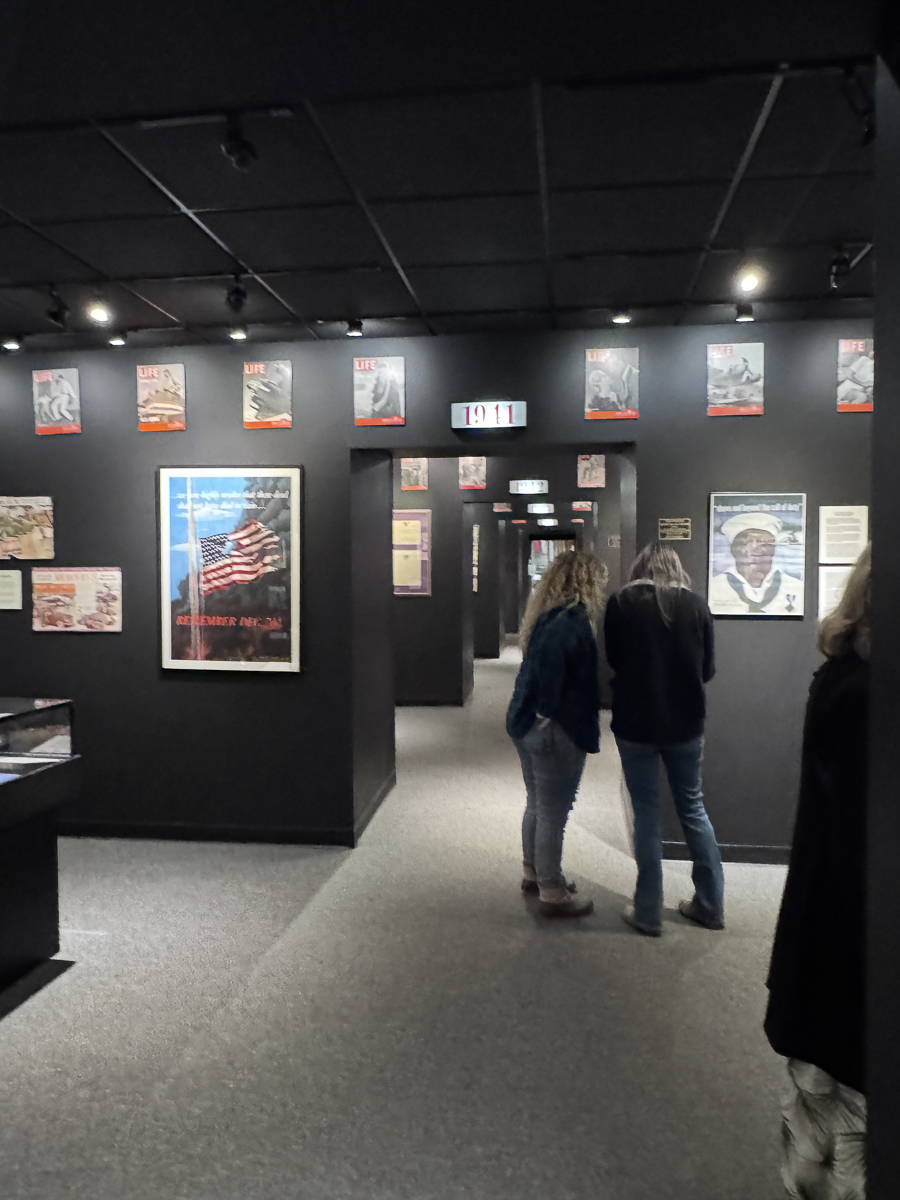


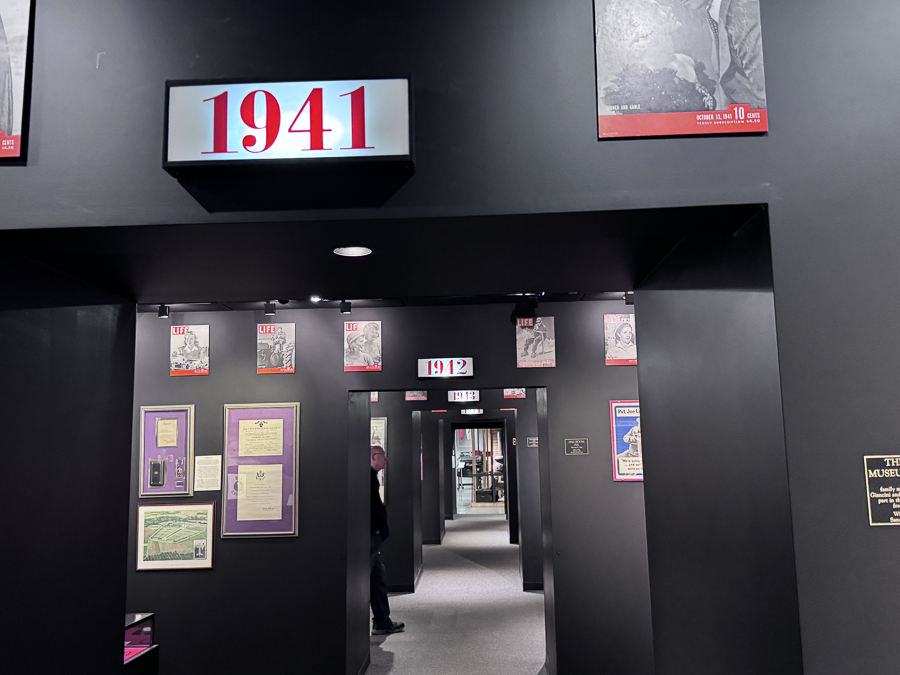


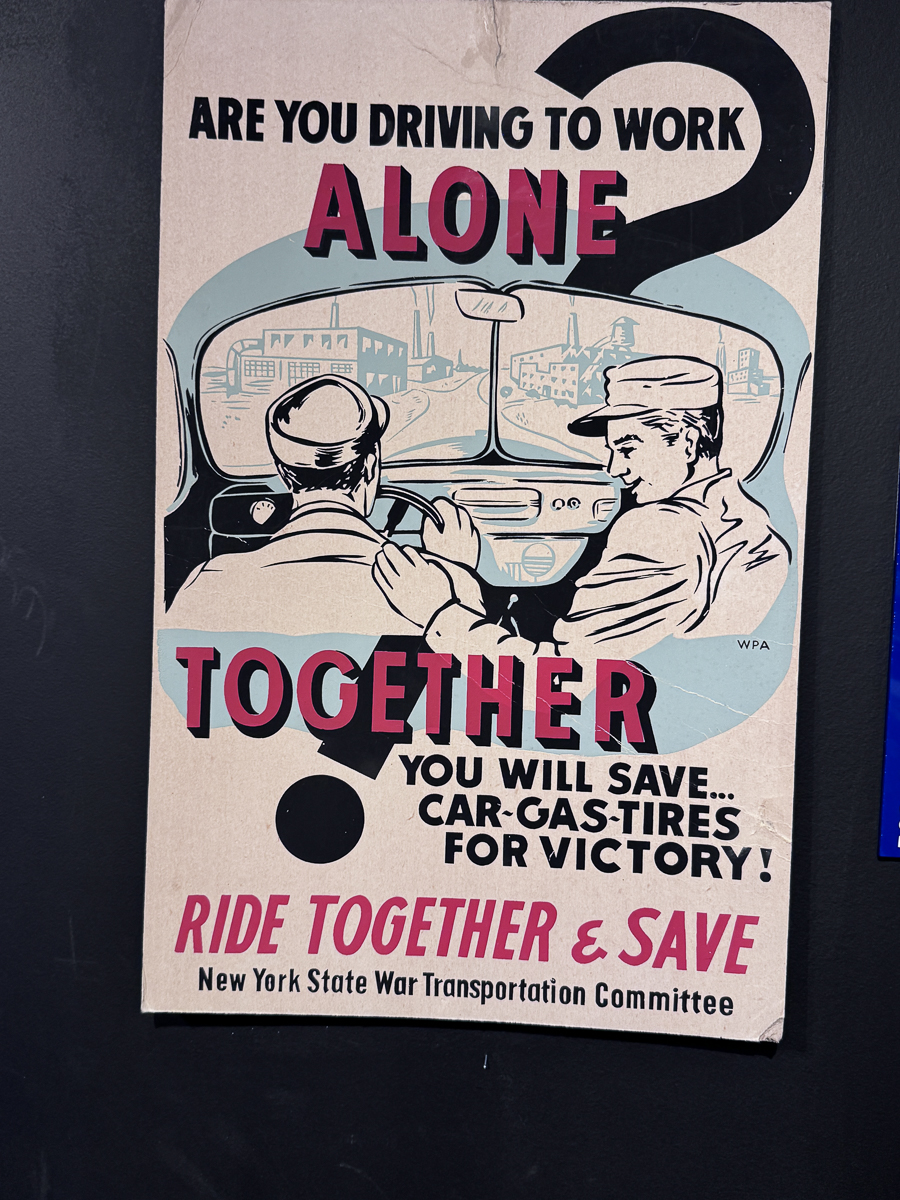
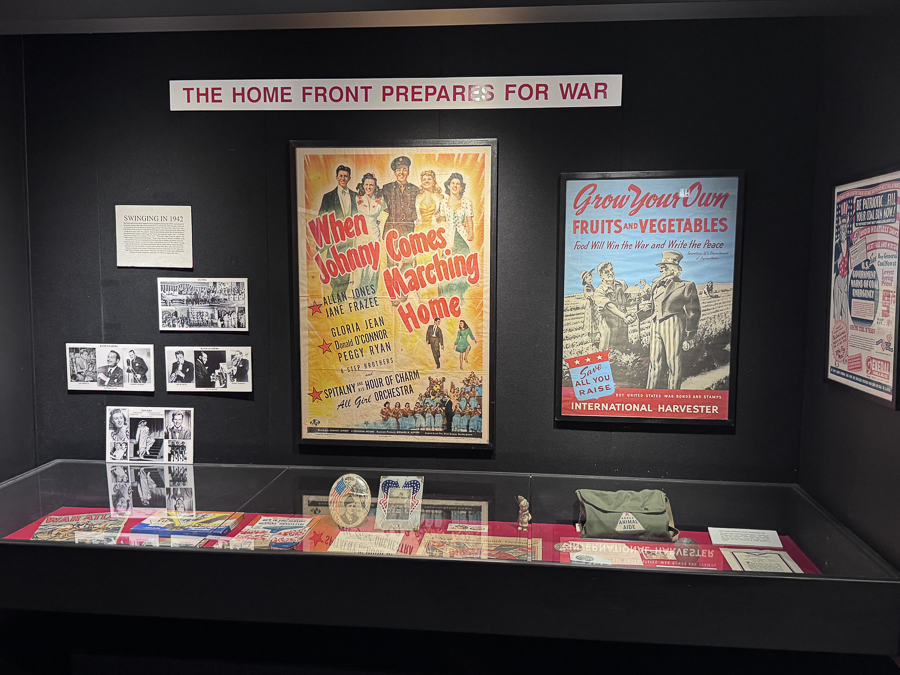
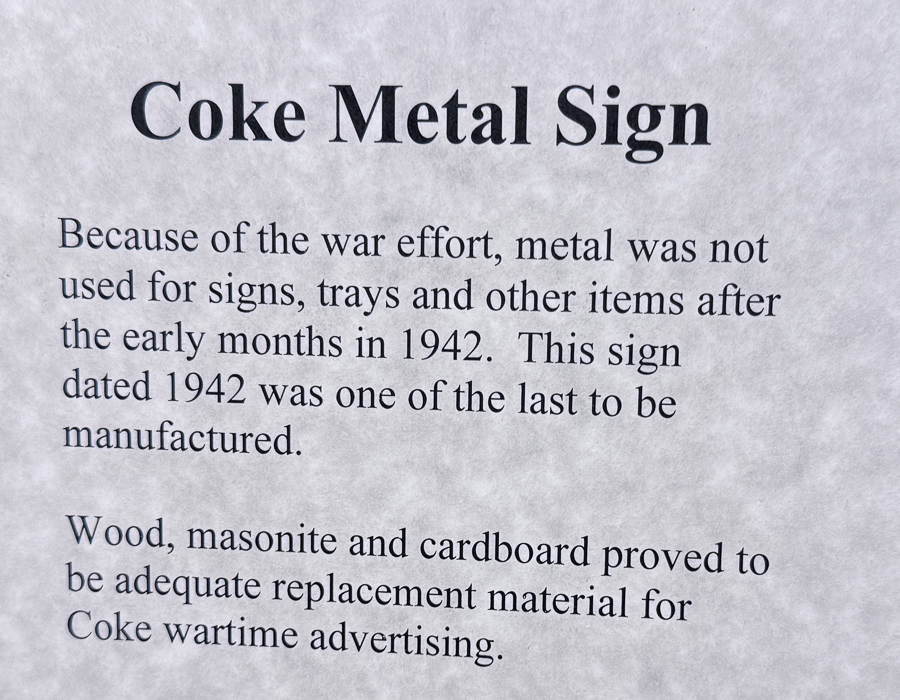
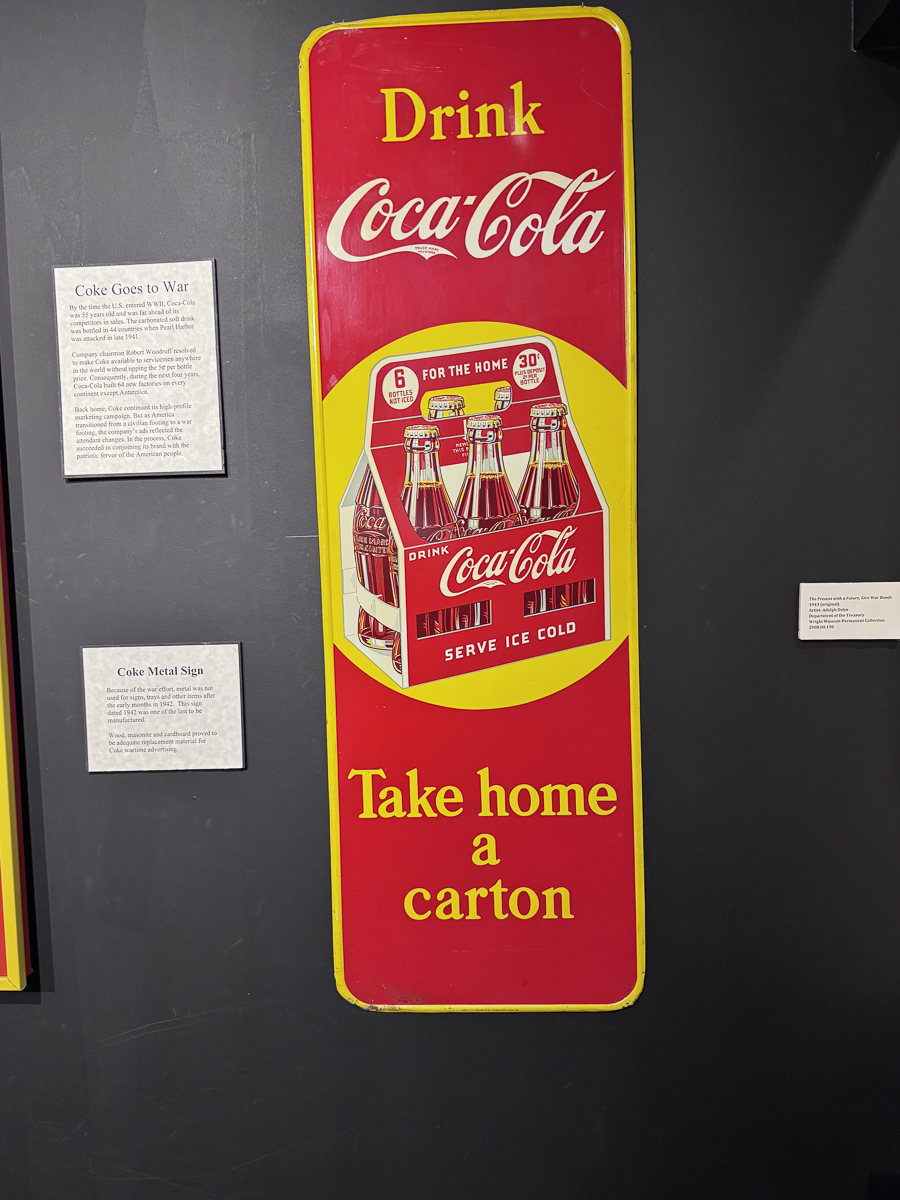

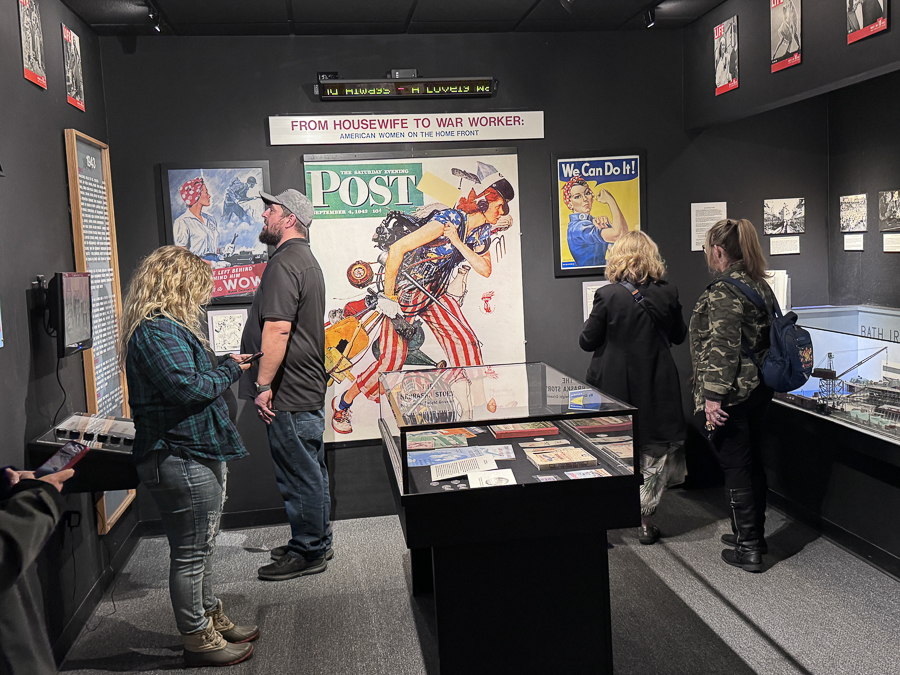
Cassie, Jon, Mary, and Sarah view the displays

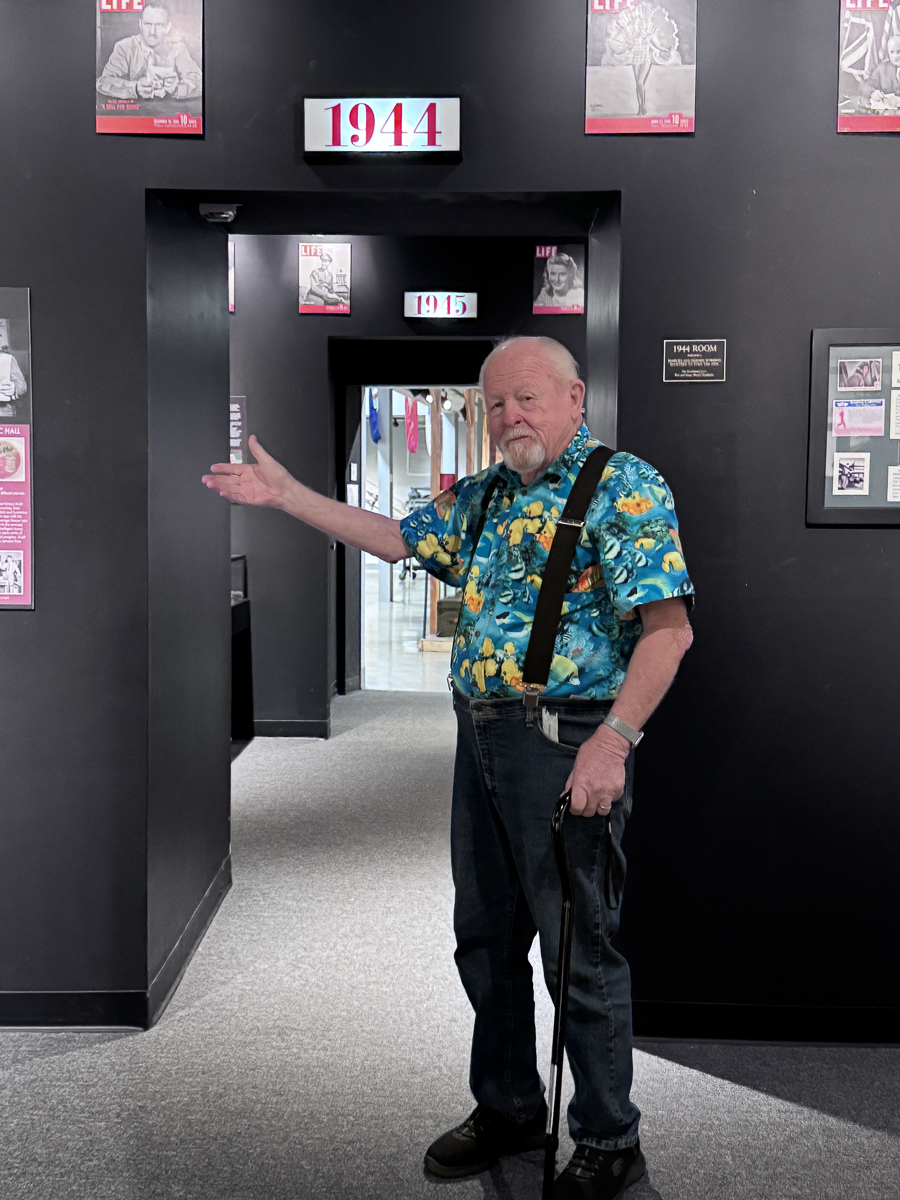
Paul remembers it well!!!
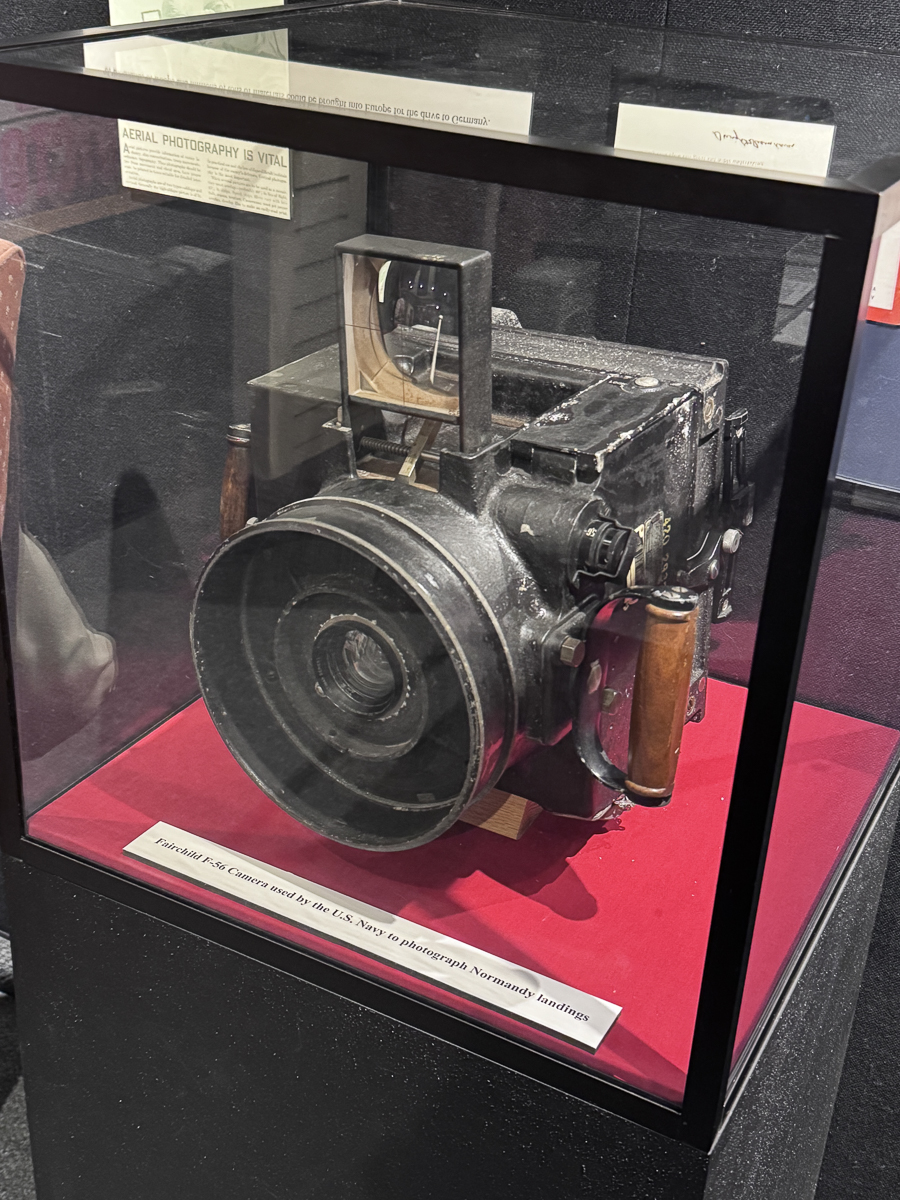
The Fairchild F-56 was a specialized aerial camera, built to take photographs from aircraft—not a consumer camera. Cameras of this kind were used for aerial surveying, mapping, and military reconnaissance. It belongs to the wider history of Fairchild's aerial-imaging work. In the early 20th century, Sherman Fairchild helped develop cameras and aircraft equipment for making accurate aerial photographs. Fairchild later became a major supplier of aerial cameras, including models used for mapping and military work. The F-56 was part of that lineage of aircraft-mounted equipment.
Down girls!!!!
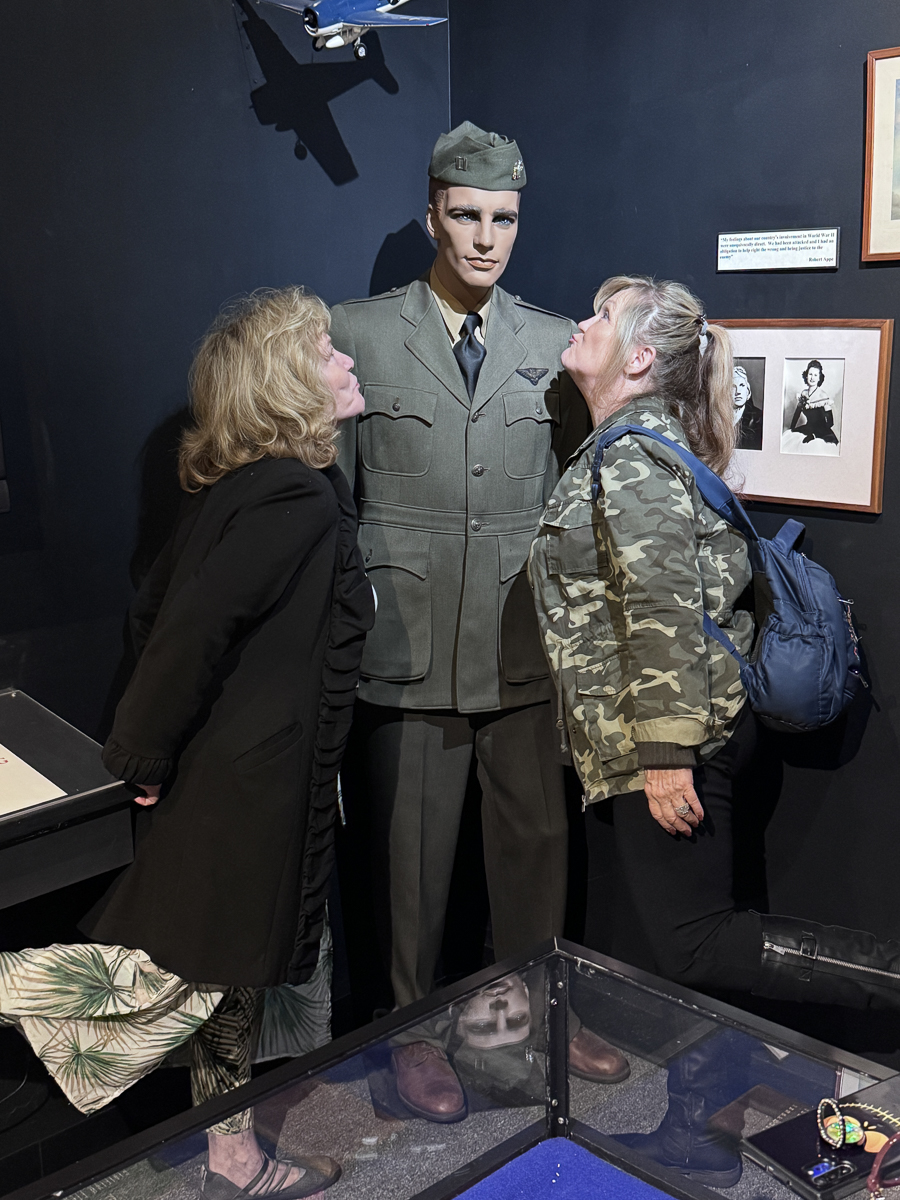
Mry and Robin attack the soldier!



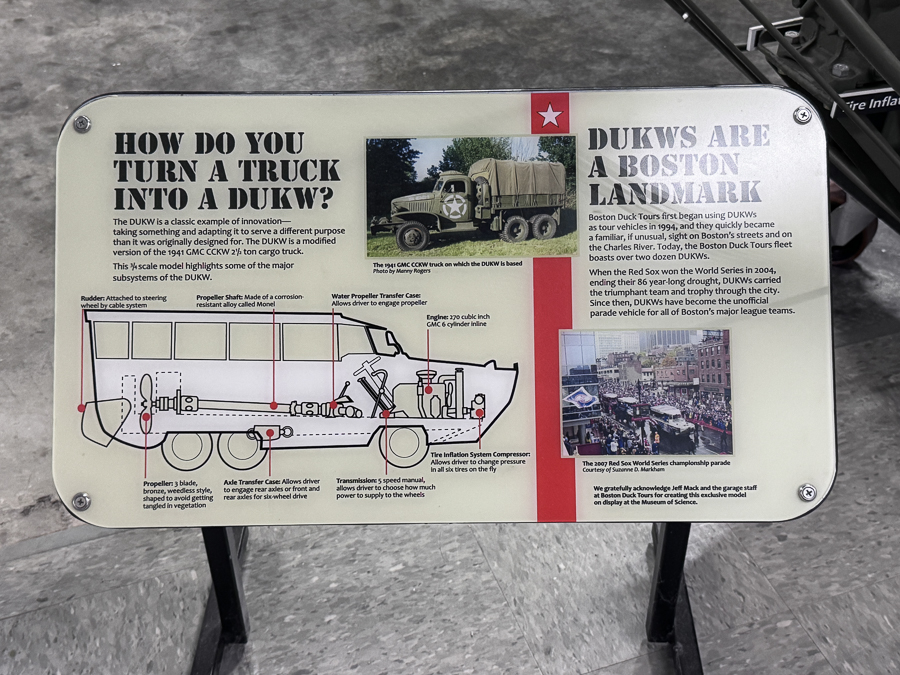
The DUKW—pronounced "duck"—was an American amphibious cargo truck designed to carry supplies and troops from ships offshore, across the water, and onto land. It combined a truck with a small boat, allowing cargo to be unloaded where ports or docks were unavailable.
Development
The U.S. Army needed a vehicle that could support amphibious landings. Developed in 1942 by General Motors' Yellow Truck & Coach division, with help from naval architects and government researchers, the DUKW was based on the Army's 2½-ton, six-wheel-drive truck. Its watertight hull, propeller, and water rudder let it travel afloat; once ashore, it could drive like a regular truck.
The designation followed a military vehicle naming system: D indicated a 1942 design, U meant utility, K meant all-wheel drive, and W referred to its two rear axles.
Wartime service
DUKWs first saw major combat service during the Allied invasion of Sicily in July 1943. They proved especially useful in amphibious operations, ferrying ammunition, fuel, food, and other supplies from landing ships to shore. They could also carry troops and evacuate wounded soldiers.
They were used extensively in the Normandy landings in June 1944, and in campaigns across the Mediterranean and Pacific. In Europe, they helped move supplies across rivers and around damaged or congested ports. Their ability to travel both afloat and over rough ground made them valuable wherever conventional transport routes had been disrupted.
Strengths and limitations
A DUKW could carry about 2½ tons of cargo. It was versatile and could often deliver supplies directly to troops rather than requiring them to unload boats by hand. But it was not a true landing craft: rough seas could swamp or capsize it, particularly when it was heavily loaded. DUKWs therefore worked best in suitable sea conditions and with support from landing ships and shore crews.
Approximately 21,000 DUKWs were built during the war. After 1945, many served with military and civilian organizations, including in disaster relief. Their distinctive shape and amphibious role also made them popular as tourist vehicles in later years.
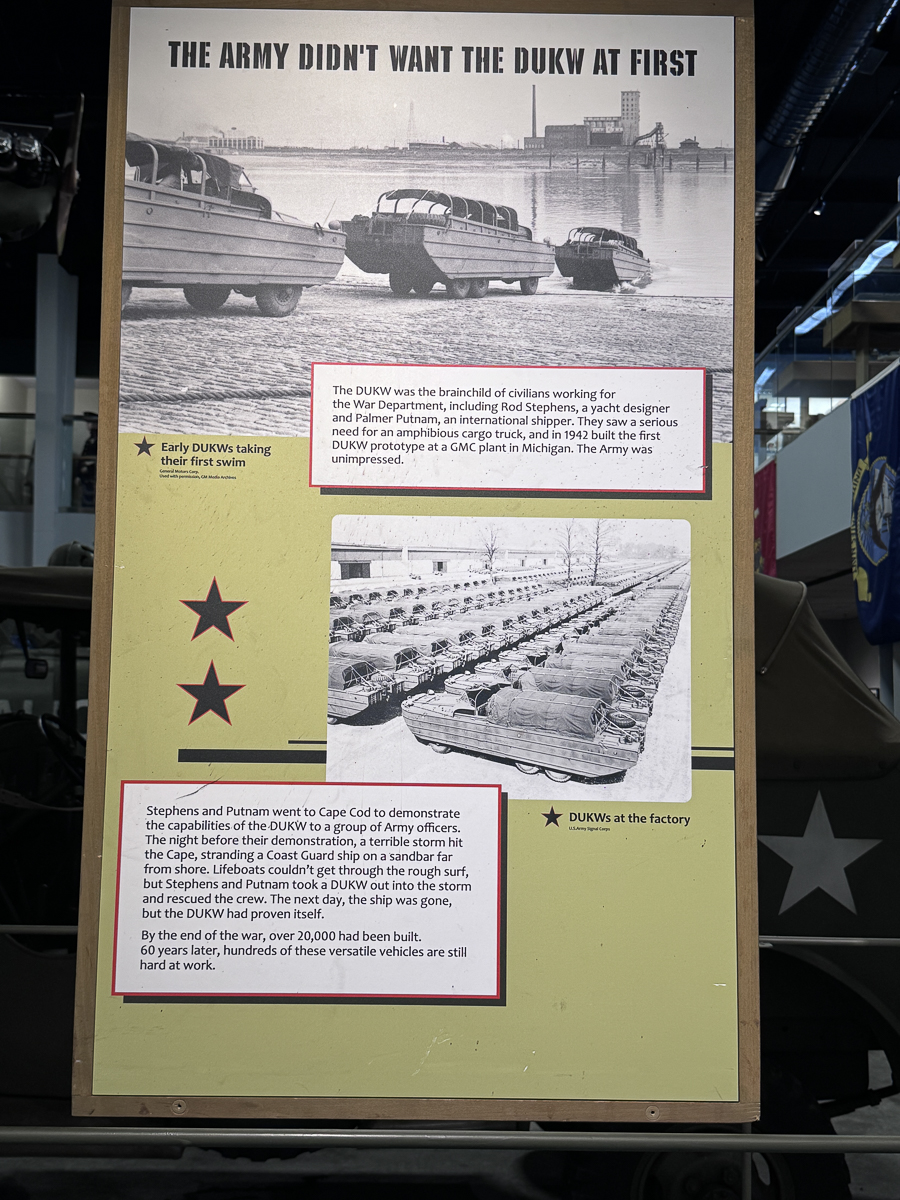
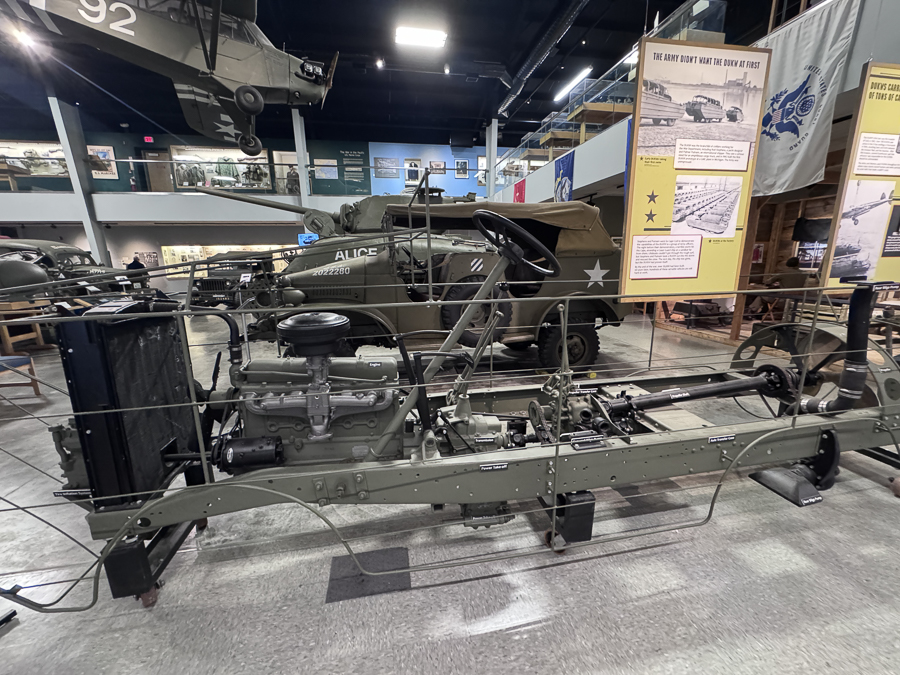
The business end of a DUKW


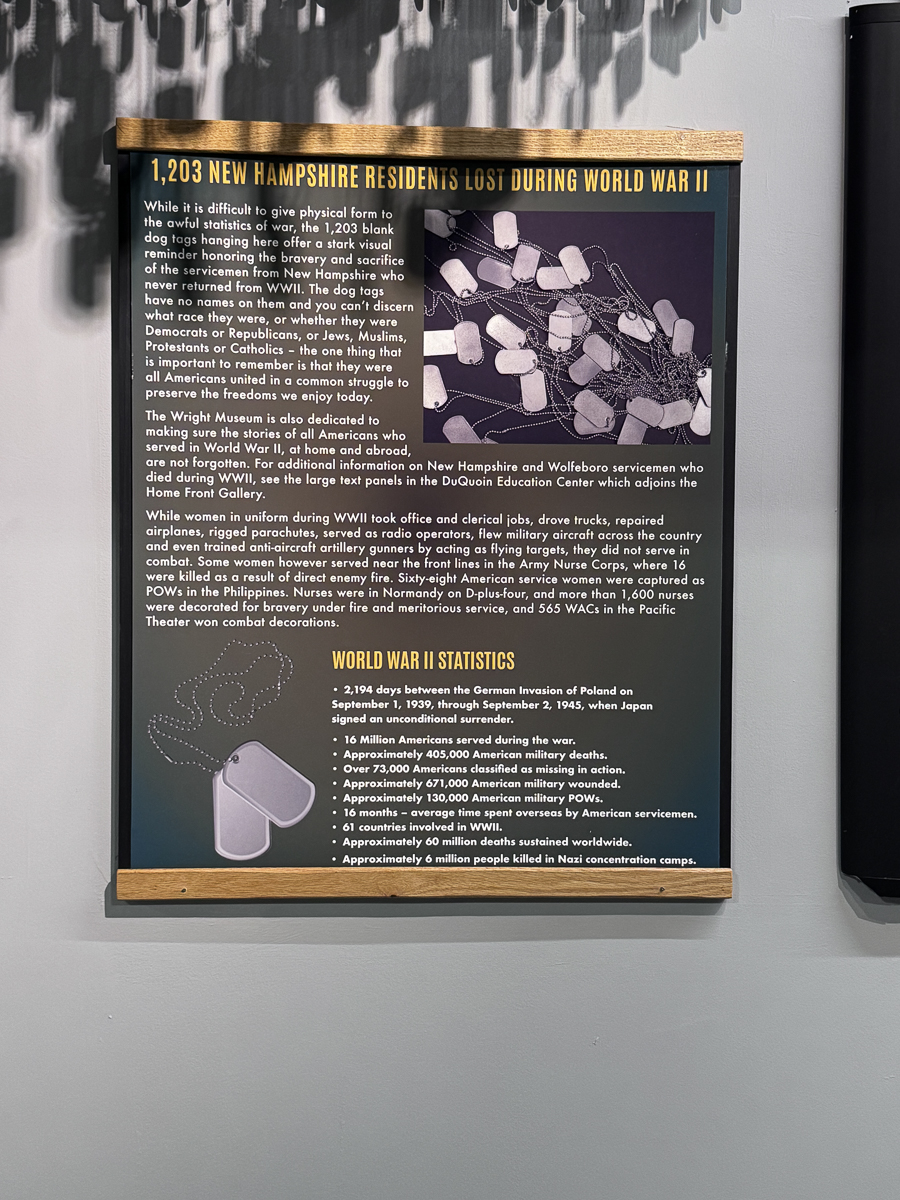
The Dog Tags represent men lost on Iwo Jima
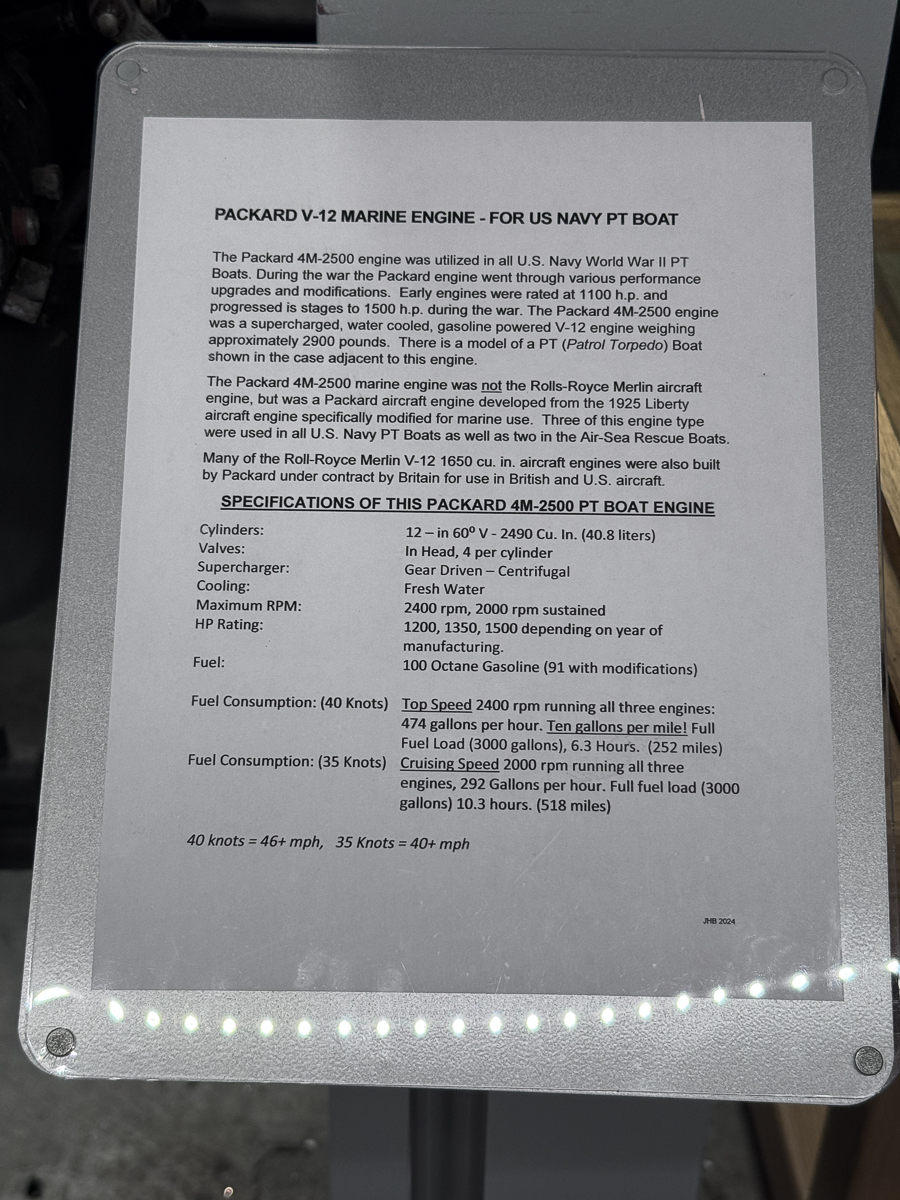

Packhard engines were hard to beat!!


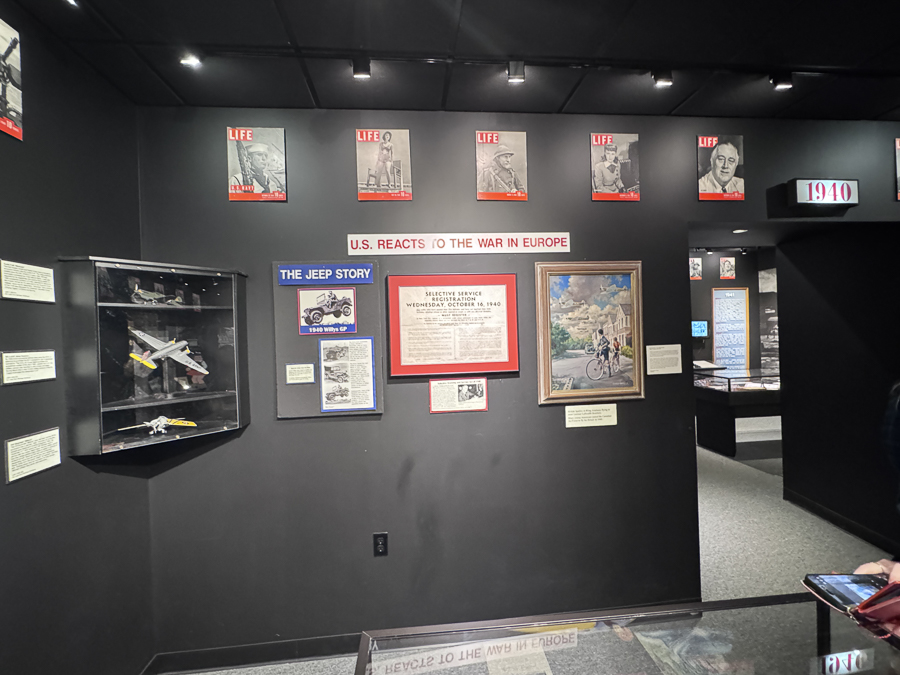
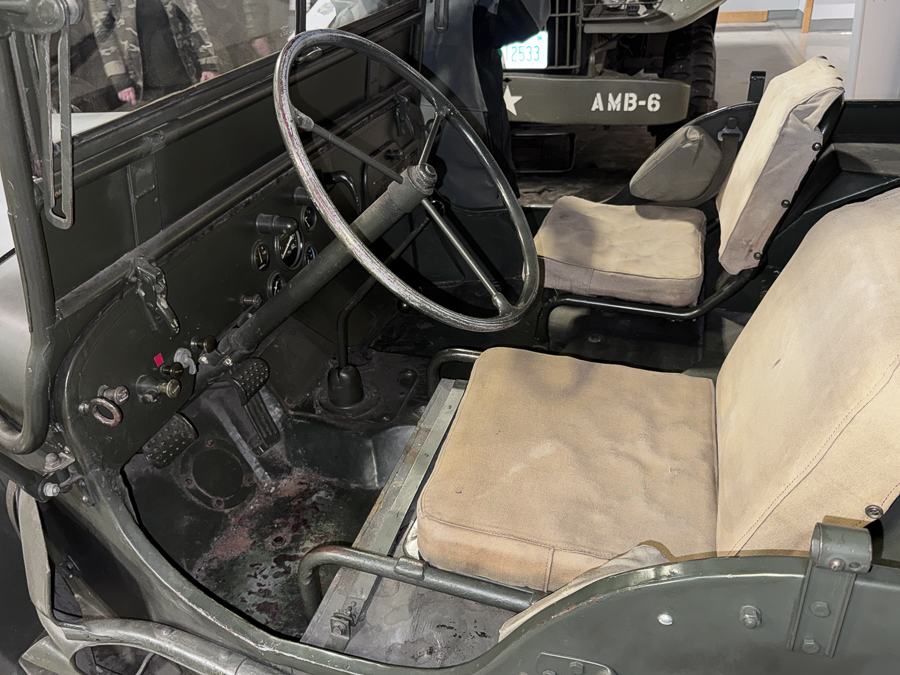
The Army Jeep was a small, lightweight four-wheel-drive vehicle that became one of the most recognizable machines of World War II. The U.S. Army wanted a fast, rugged vehicle for reconnaissance and general transport—and needed it quickly as war expanded in Europe.
From competition to standard vehicle
In 1940, the Army invited automakers to submit designs for a four-wheel-drive reconnaissance vehicle. Three companies took part:
• American Bantam developed the first prototype, the Bantam Reconnaissance Car.
• Willys-Overland created the Quad, powered by its strong "Go Devil" engine.
• Ford built the Pygmy.
Bantam delivered its prototype first, but the Army needed production at a scale Bantam could not manage. The Army shared the design information with Willys and Ford, and both companies refined and manufactured the vehicle. Willys' powerful engine and design improvements helped shape the final model.
The standardized wartime versions were the Willys MB and the very similar Ford GPW. Together, Willys and Ford built more than 600,000 Jeeps during the war.
A vehicle for nearly every job
The Jeep's compact size and ability to travel over rough terrain made it useful across many theaters of war. Soldiers used it for:
• Reconnaissance and patrols
• Carrying officers, troops, and supplies
• Delivering messages and operating radios
• Towing small trailers and light artillery
• Transporting wounded personnel
Jeeps also served with Allied forces through the Lend-Lease program. Their reliability and versatility made them especially valuable where roads were poor or damaged.
The name and legacy
The origin of the word "Jeep" is debated. One popular explanation links it to the Army abbreviation "GP," but the precise history is uncertain. The name became widely established during the war.
After World War II, Willys adapted the design for civilian use, creating the CJ ("Civilian Jeep") line. The Army continued using later military versions, including the M38 and M38A1. The Jeep's wartime success helped establish the basic idea of the rugged four-wheel-drive utility vehicle for generations to come.

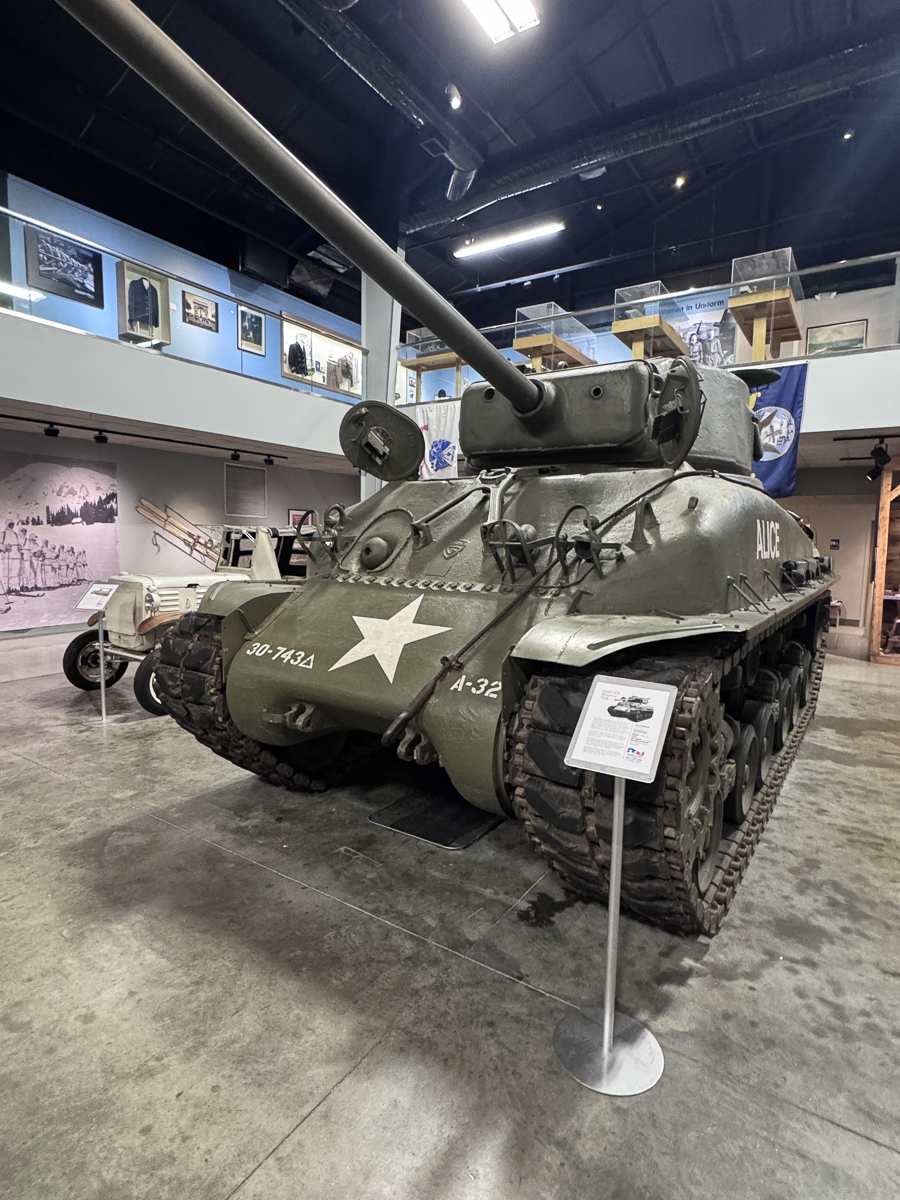
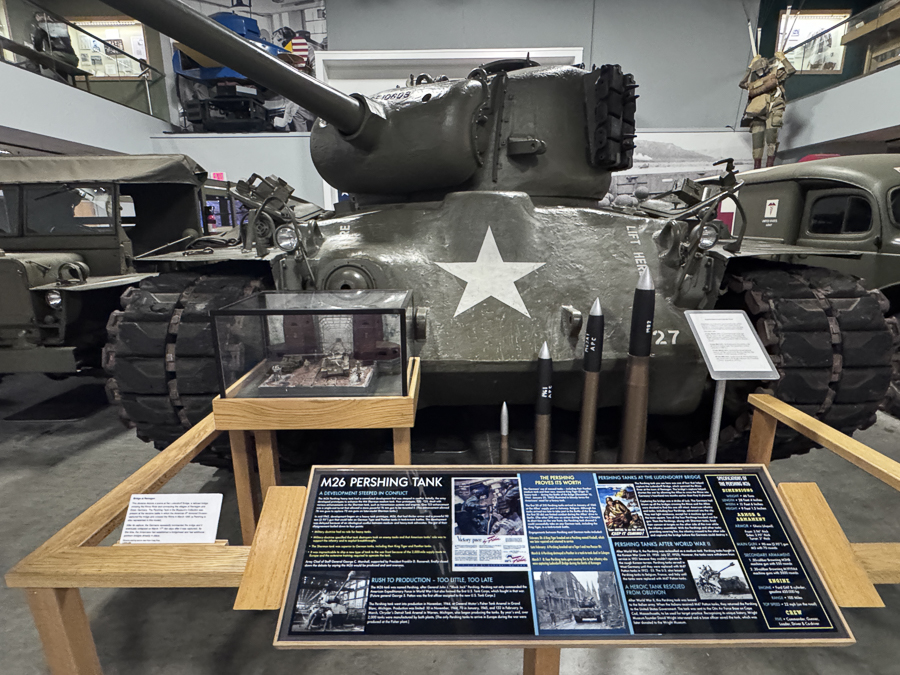
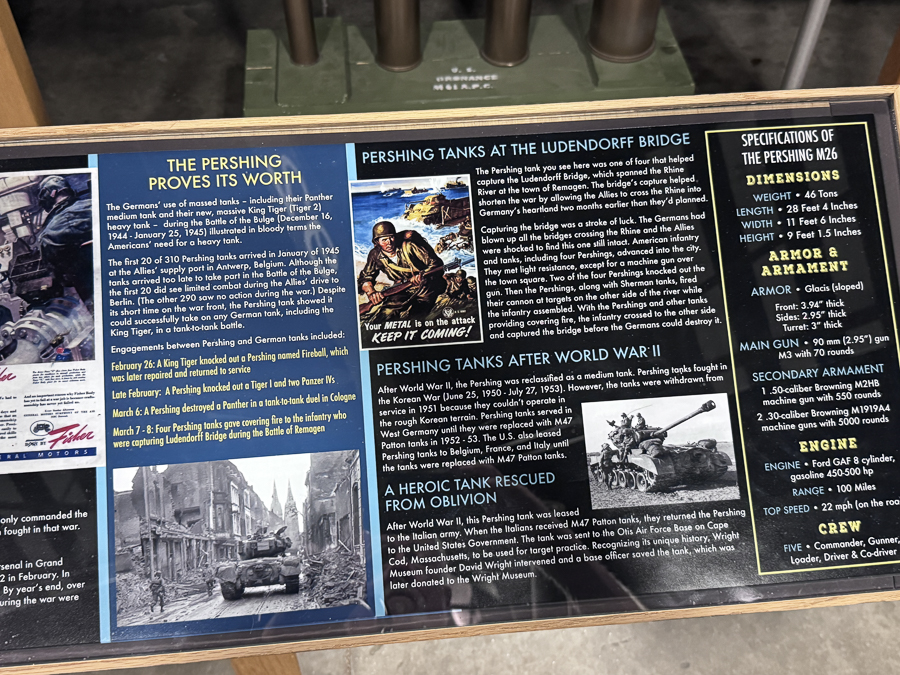
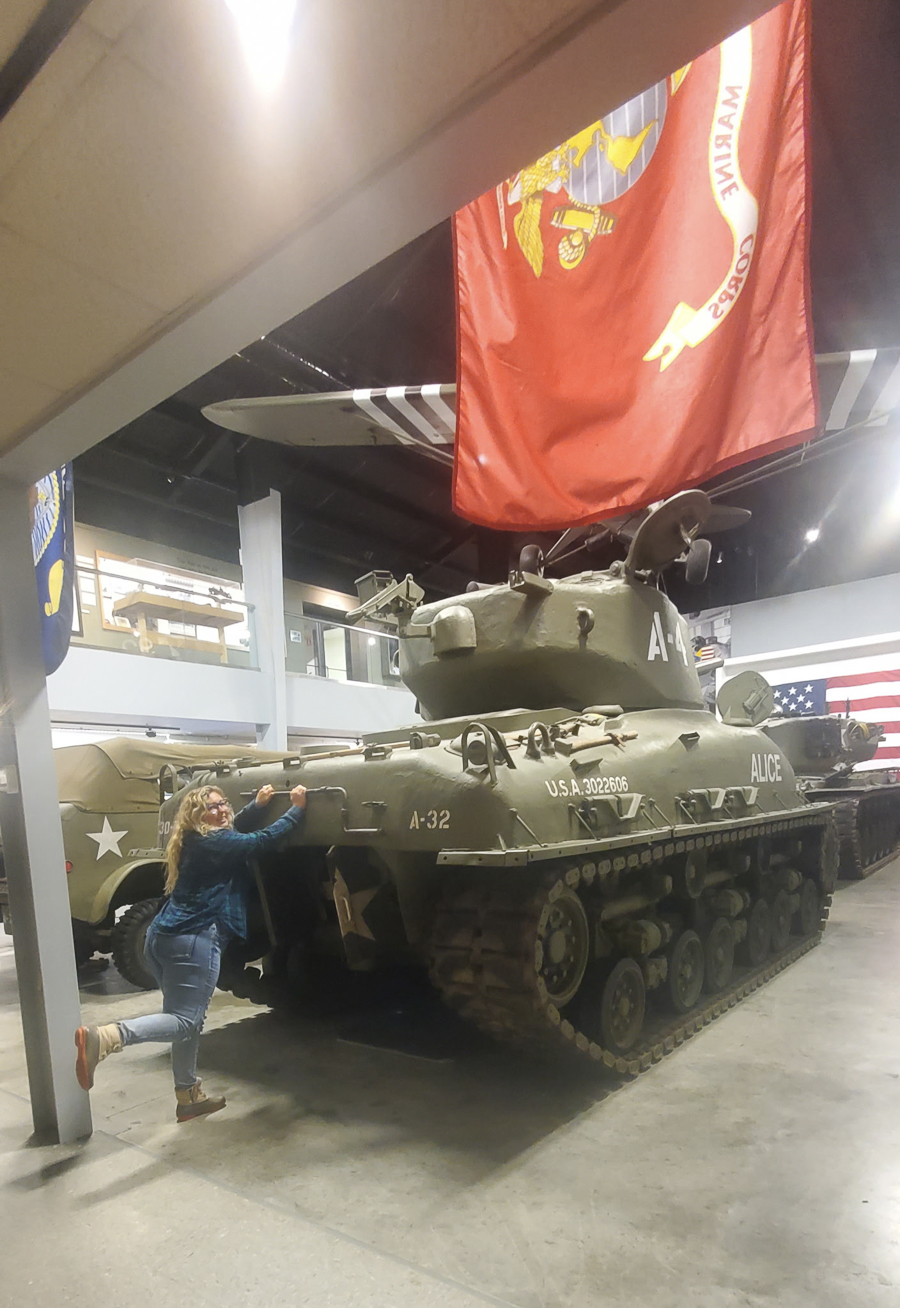
The M26 Pershing was an American tank developed during World War II to counter heavily armored German tanks such as the Tiger and Panther. Armed with a powerful 90 mm gun, it was a major improvement over the Sherman—but it reached the battlefield only near the end of the war in Europe.
Development
The Pershing grew out of a series of experimental American tanks begun in 1942. The Army initially prioritized producing large numbers of the M4 Sherman, which was reliable and easier to manufacture. But battlefield reports from Europe showed that the Sherman's 75 mm gun could struggle against some German tanks at long range.
The Army's response was the T26E3, which combined heavier armor with a 90 mm gun. It was standardized as the M26 in 1945 and named for General John J. Pershing, commander of the American Expeditionary Forces in World War I. It was first classified as a heavy tank, then reclassified as a medium tank in 1946.
Design and armament
The Pershing carried a 90 mm M3 cannon, capable of engaging heavily armored targets. It also had thicker armor than the Sherman, a wide track, and a torsion-bar suspension that provided a smoother ride over rough ground.
Its main drawback was mobility. The tank's engine and transmission were based on components related to those used in the Sherman, and the heavier Pershing was comparatively slow and mechanically demanding.
Service in World War II
The first Pershings reached Europe in early 1945. They saw combat in small numbers during the final months of the war, including in Germany. Their 90 mm guns proved effective against German armor, though their late arrival meant they had little opportunity to influence the overall course of the war.
Korea and later development
The M26 saw much more extensive combat during the Korean War, beginning in 1950. Its gun and armor were useful against North Korean T-34-85 tanks, but the Pershing's limited mobility and mechanical reliability were challenges on Korea's steep, rough terrain.
The Army later improved the design with a more powerful engine and other changes, producing the M46 Patton. The M46 replaced many Pershings in Korea and helped begin the American Patton tank series.
Legacy
The M26 Pershing arrived too late to become a decisive World War II tank, but it marked an important step in American armored development. Its 90 mm gun and heavier protection influenced the next generation of U.S. tanks, while its shortcomings helped drive the development of faster, more reliable successors.

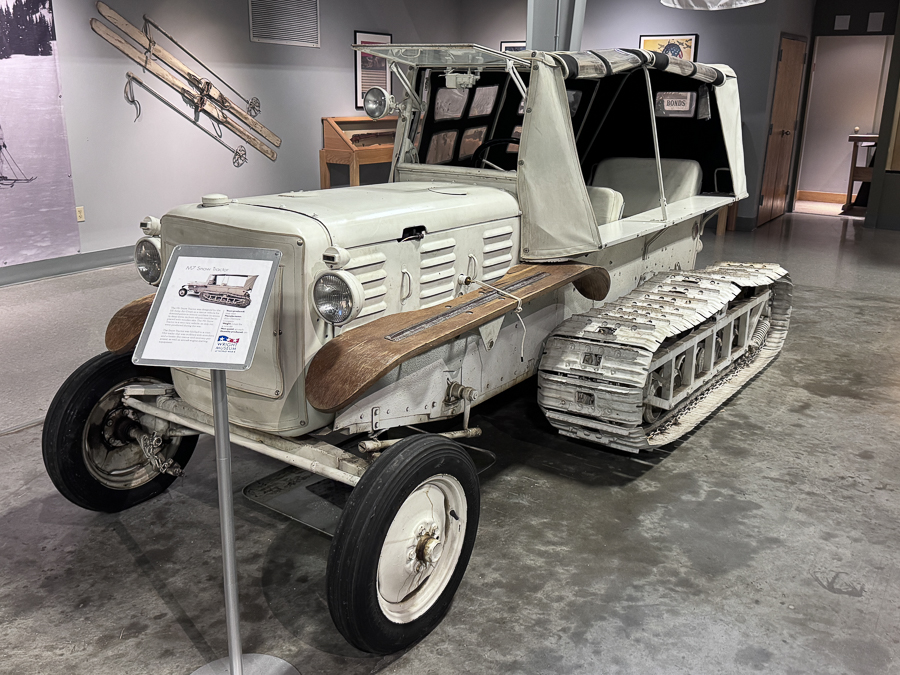
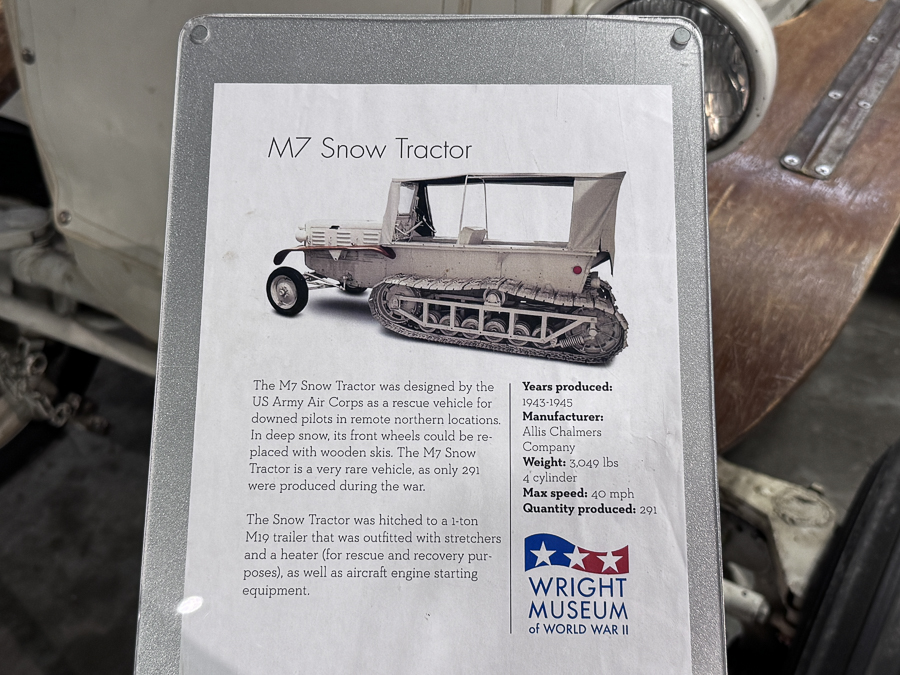
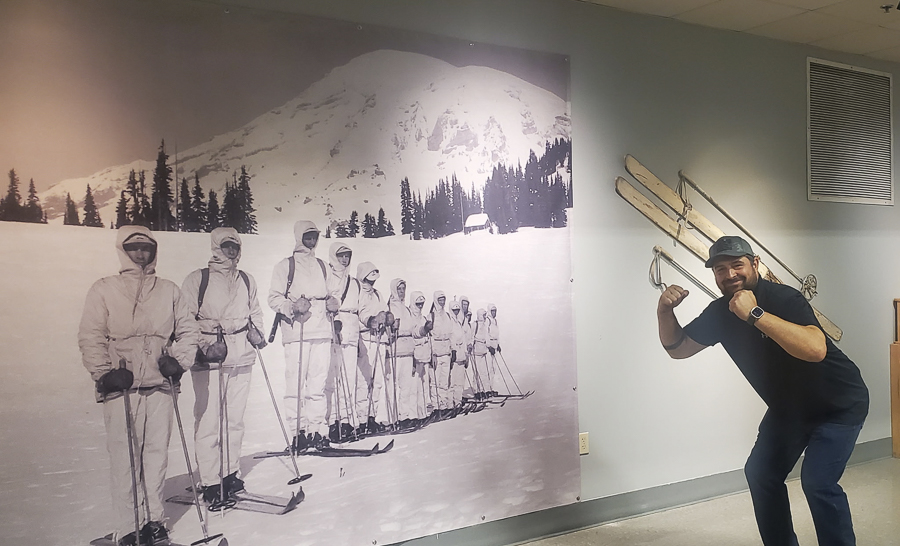
The M7 Snow Tractor was a specialized U.S. military vehicle designed to carry people and supplies over deep snow. It is sometimes confused with other wartime tracked vehicles, but it was a four-track snow machine associated with Tucker, the company that later became known for its Sno-Cat snow vehicles.
Development and design
During World War II, the U.S. military needed vehicles that could operate in places where ordinary trucks and tanks struggled—especially in Alaska and other snow-covered regions. Tucker's design used four independently driven tracks to spread the vehicle's weight and provide traction on snow. The tracks could also be steered, helping the vehicle maneuver in conditions where wheeled vehicles were ineffective.
Military use
The M7 was intended for transport and support duties, rather than combat. It could carry personnel, equipment, or supplies across snow and rough terrain. It was a niche vehicle: useful in specialized conditions, but not produced or used on the scale of more familiar wartime vehicles such as the M29 Weasel.
Legacy
The M7 reflected a broader wartime effort to develop practical Arctic and snow-going transport. Tucker continued developing four-track snow vehicles after the war, and the company's later Sno-Cats became widely used for exploration, transport, and work in snowy regions.
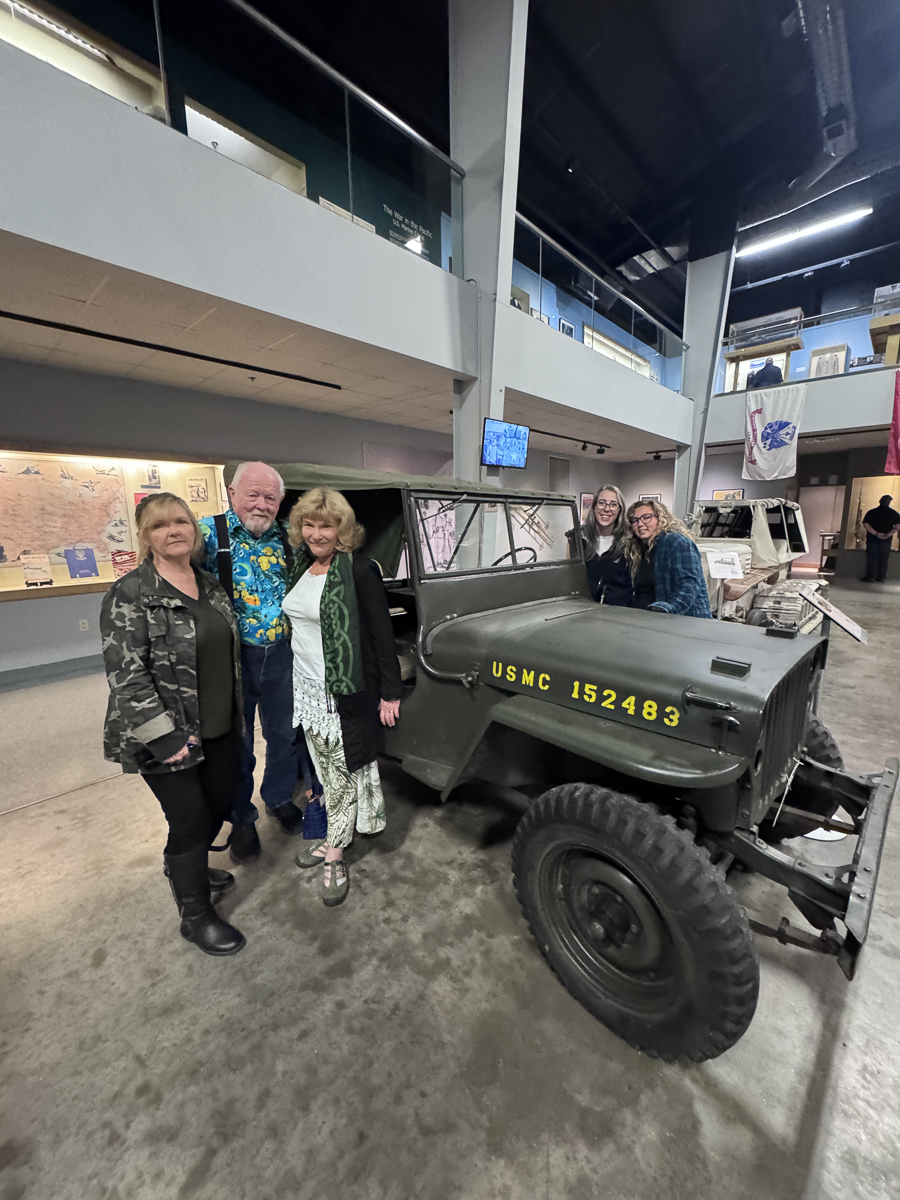
We had fun roaming around the displays!
Robin, Paul, Mary, Sarah, and Cassie
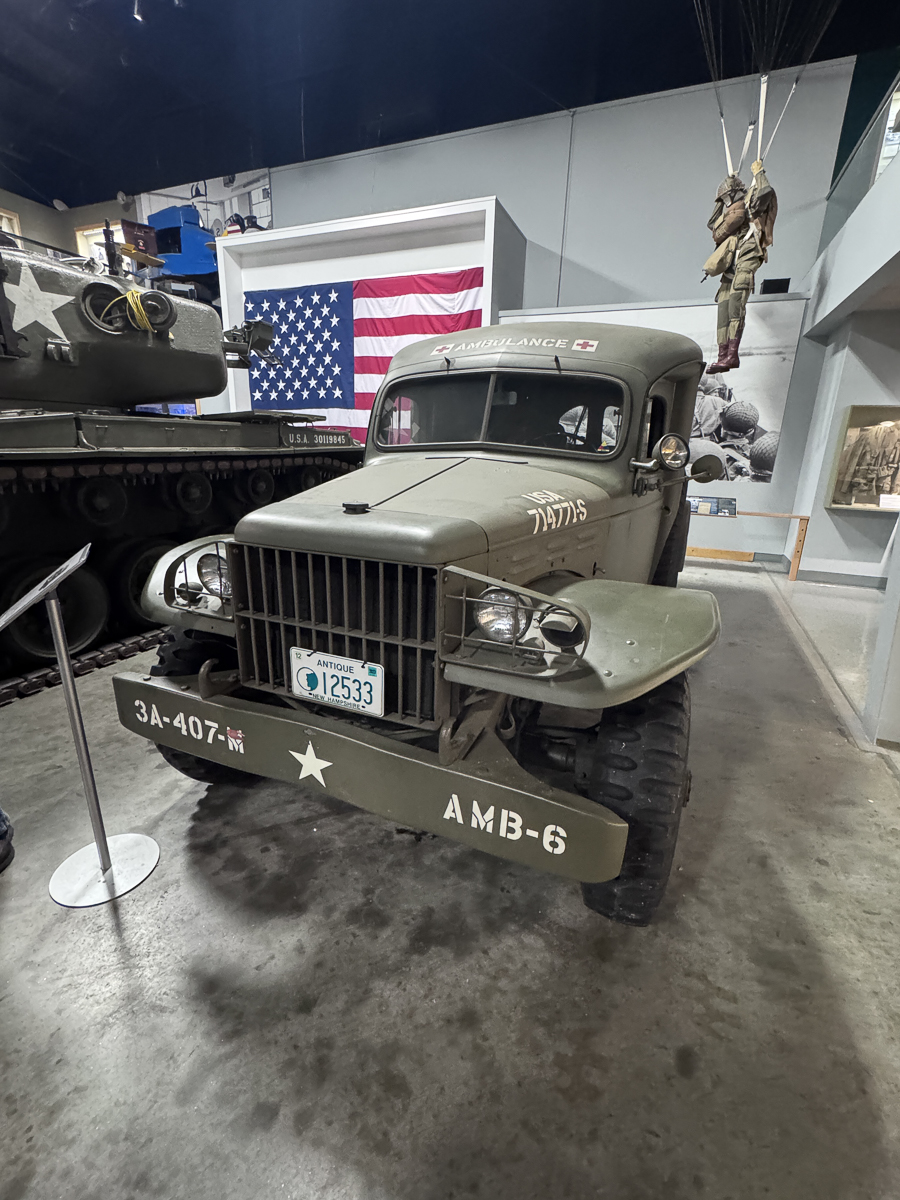
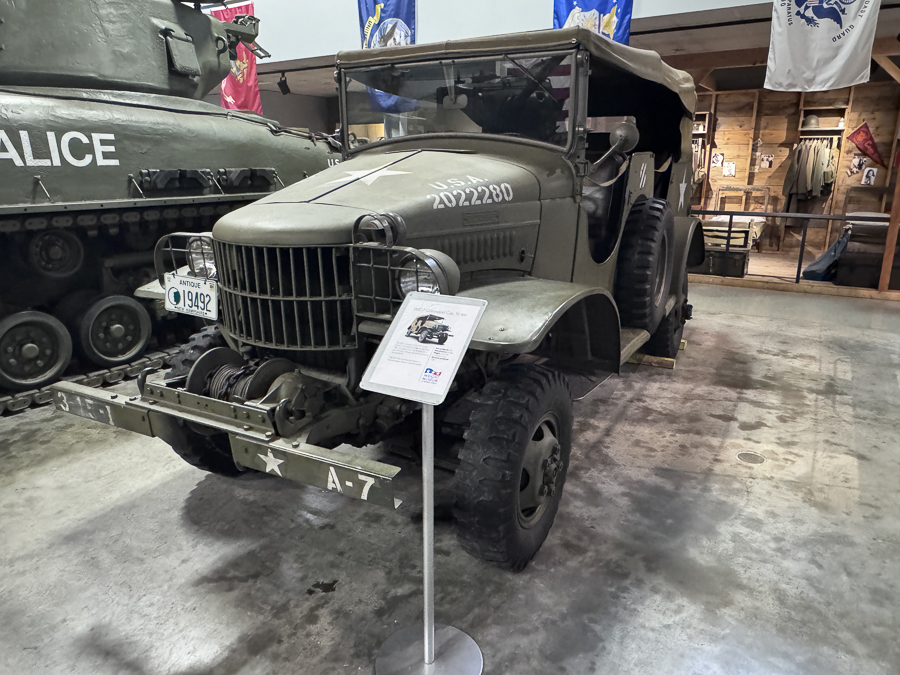
The Dodge WC-7 was a U.S. Army ½-ton, four-wheel-drive command and reconnaissance vehicle produced early in World War II. It belonged to Dodge's expanding WC family of military trucks, developed from the company's earlier military vehicles and built for duties ranging from personnel transport to communications and recovery.
Design and role
The WC-7 had an open, four-door body designed to carry officers and staff over rough terrain. Its folding windshield and removable or folding canvas top suited it to field use. Unlike the closely related WC-6, the WC-7 was equipped with a front-mounted winch, useful for pulling the vehicle—or others—out of mud and snow.
It was a light transport and command vehicle, not an armored combat car. Typical specifications included a six-cylinder Dodge engine, four-wheel drive, and a manual transmission. Details varied somewhat by production configuration.
Service and replacement
The WC-7 served during the early years of U.S. wartime mobilization, when the Army was ordering a wide variety of vehicle types. As military vehicle designs were standardized and production shifted toward larger ¾-ton trucks, the ½-ton WC models gave way to newer vehicles. Later Dodge command cars, particularly the WC-56 and winch-equipped WC-57, are more commonly seen in photographs and surviving collections.
The WC-7 is sometimes mistaken for those later command cars, but it was a distinct, earlier ½-ton model. Its place in history is as part of the transition from prewar military trucks to the more standardized vehicle fleet of World War II.

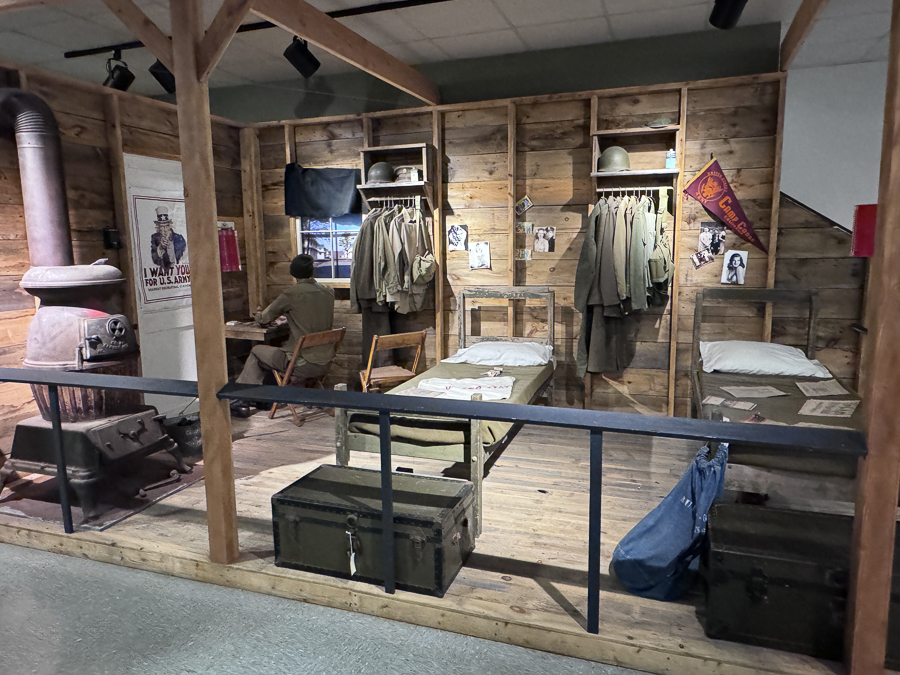
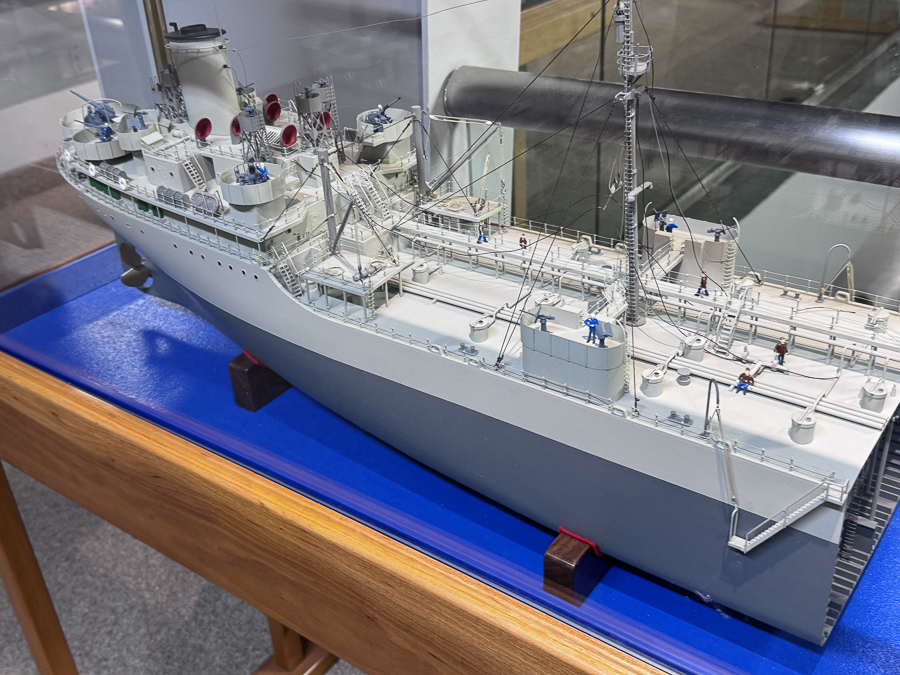
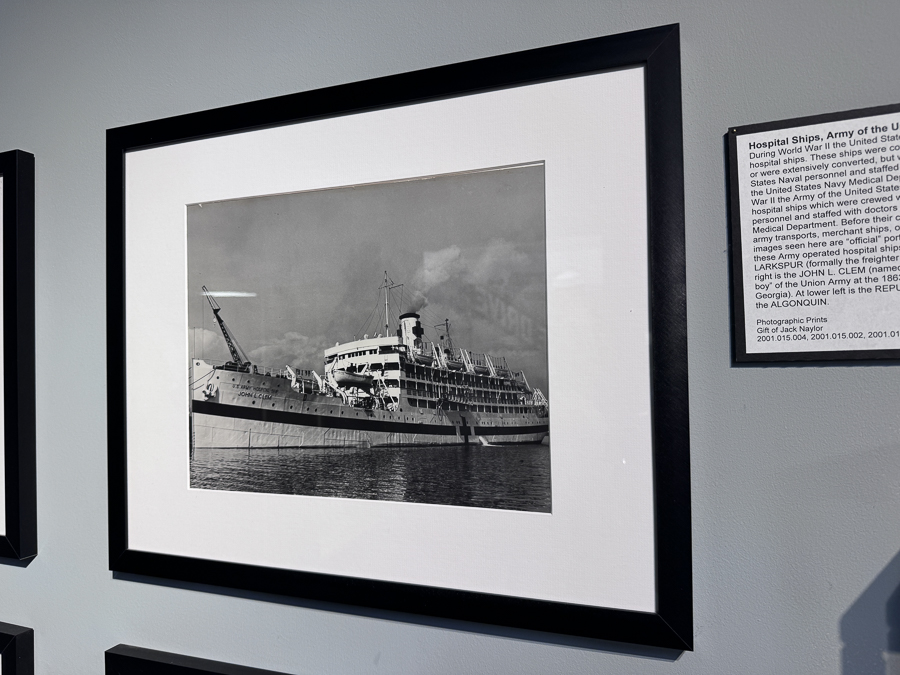
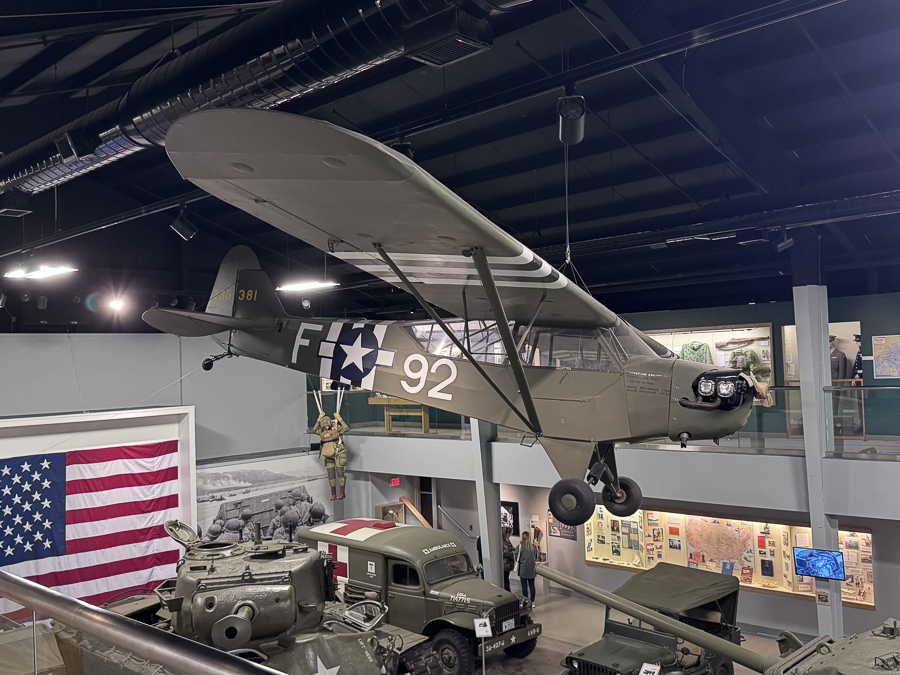
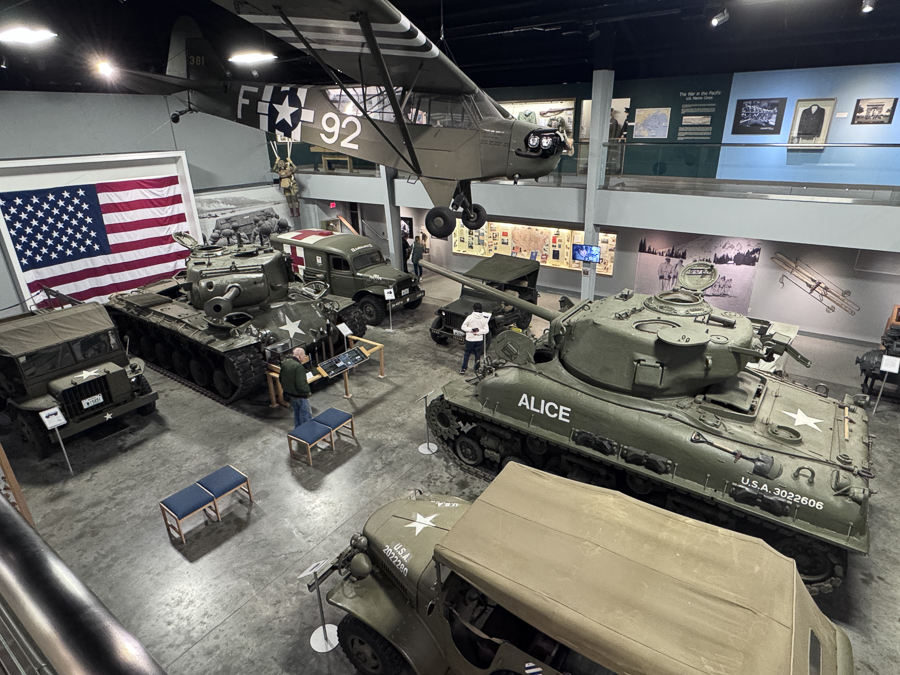
Typical WWII Barracks



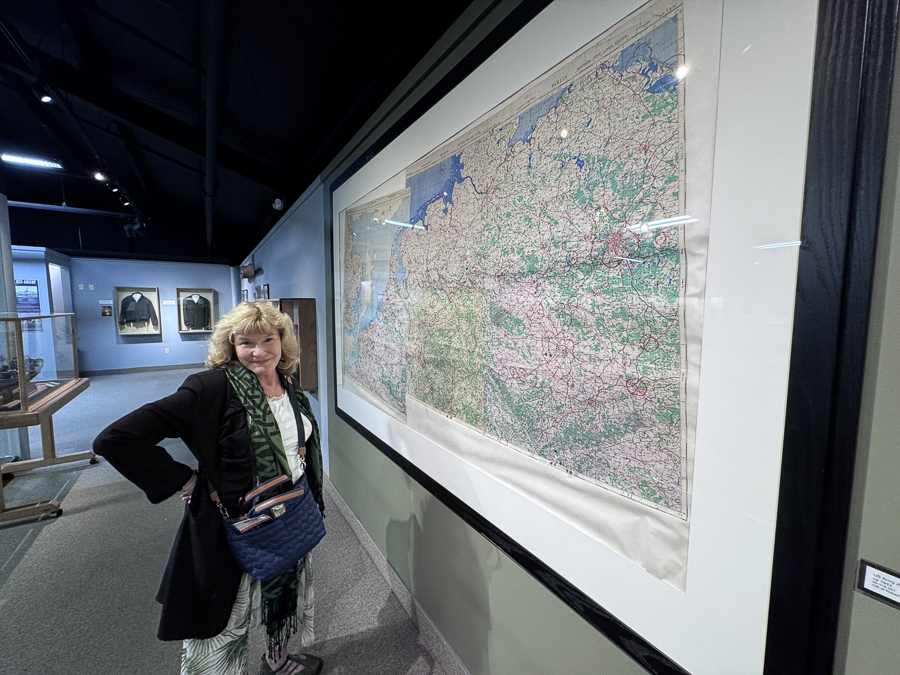
Mary studies the map!


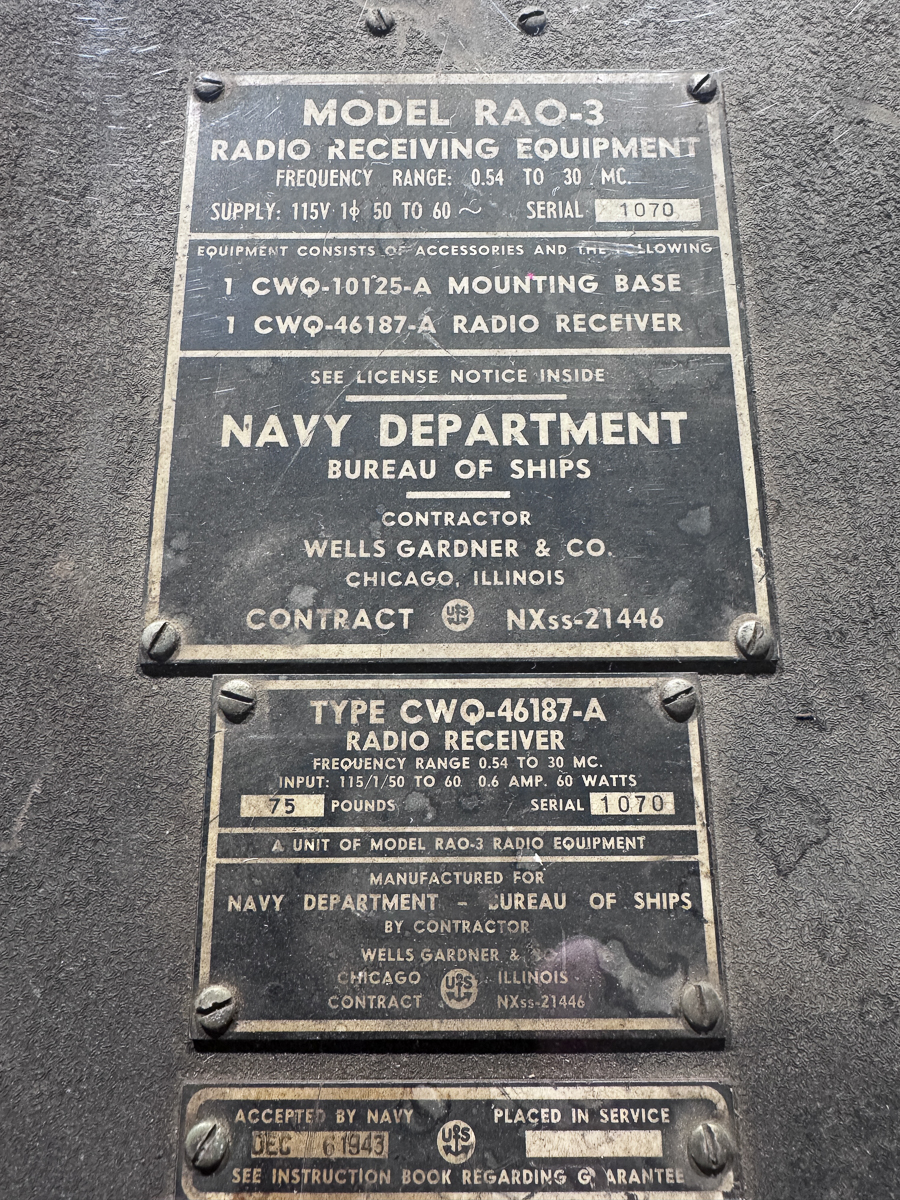
The RAO-3 was part of the U.S. Navy's prewar and World War II aircraft-radio equipment. In the Navy's designation system, R means receiver; the RAO series was associated with aircraft radio installations. The RAO-3 received radio signals—it was not a transmitter or a complete two-way radio set. In service, it worked as one component of an aircraft installation that also included transmitting equipment, controls, antennas, and power supplies.
Its role was to let aircrews receive communications and radio signals, including high-frequency traffic used for longer-range communication. Equipment of this kind mattered especially as Navy aircraft took on longer patrol and reconnaissance missions. The RAO-3 belongs to a period when aircraft-radio systems were evolving quickly, and models and installations varied.
During the war, more standardized equipment—including the AN/ARC-5 family—became widely used in Navy aircraft. The RAO-3 is therefore best understood as part of the earlier generation of Navy airborne radio receivers, rather than as a later standardized set.

The Wicked Loon is a restaurant in Lincoln, New Hampshire, in the White Mountains. It appears to be a relatively recent addition to the town's dining scene, rather than a long-established historic inn or restaurant.
Publicly available accounts give limited detail about its founding and ownership, so I can't confidently provide a precise opening date or a full timeline.
Its story is closely tied to Lincoln's role as a gateway to White Mountain tourism: the town serves visitors heading to nearby outdoor attractions and ski areas, and restaurants there often cater to both locals and travelers. The name combines a New England-flavored "wicked" with the loon, a familiar northern New England bird.

Come on Dad, we are all hungry!!!
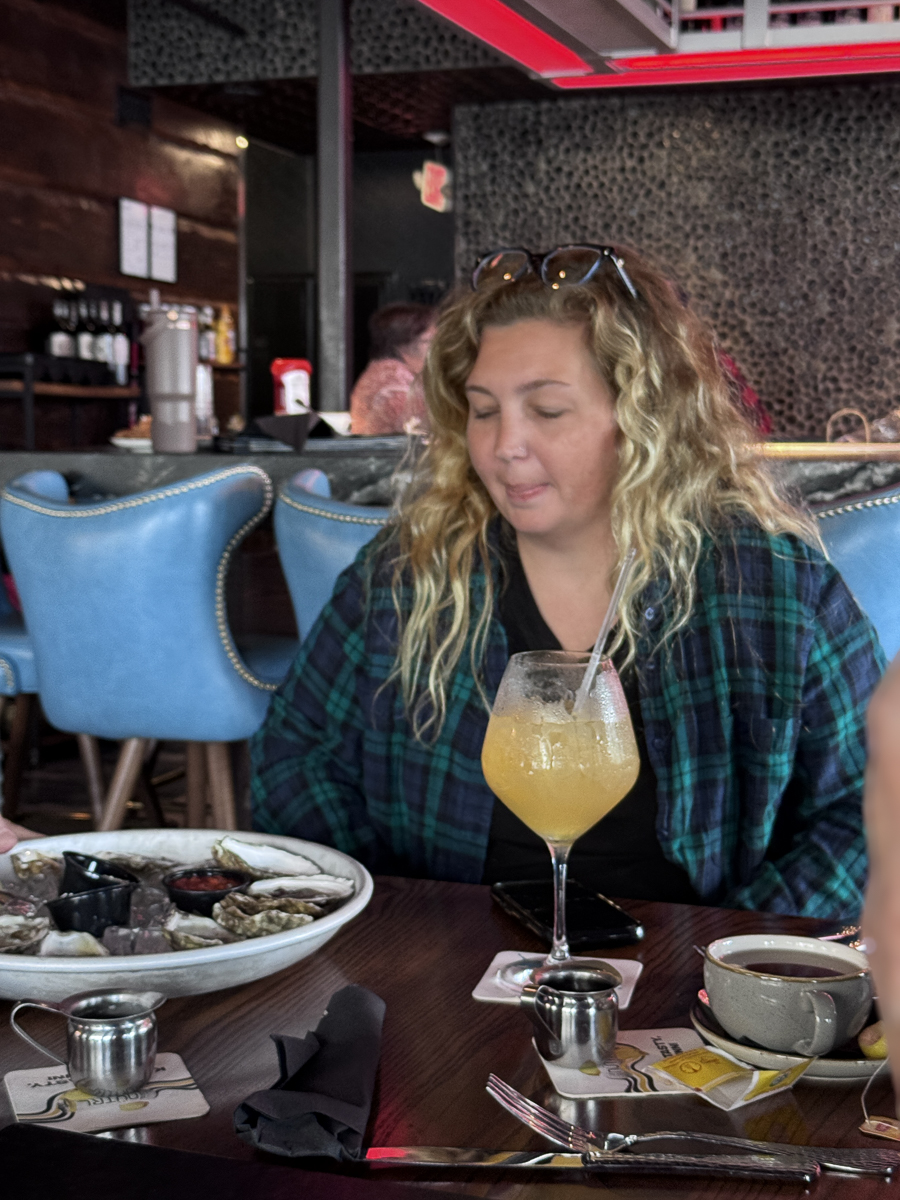
Cassie studies the oysters!

Oysters on the half shell!

Jon, Cassie, and Colleen... Cassie, stop that!!!
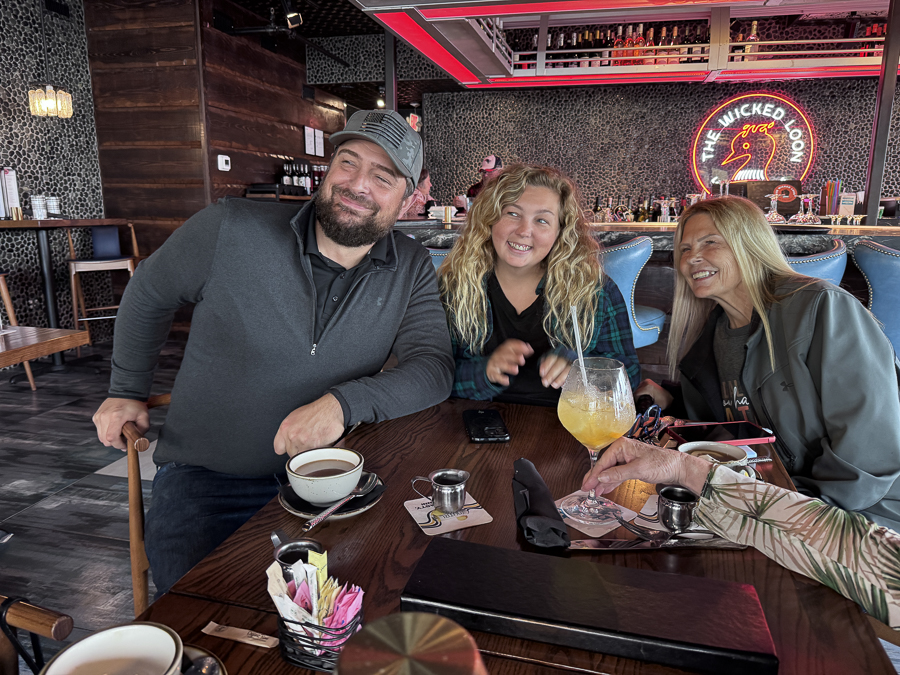
Better!

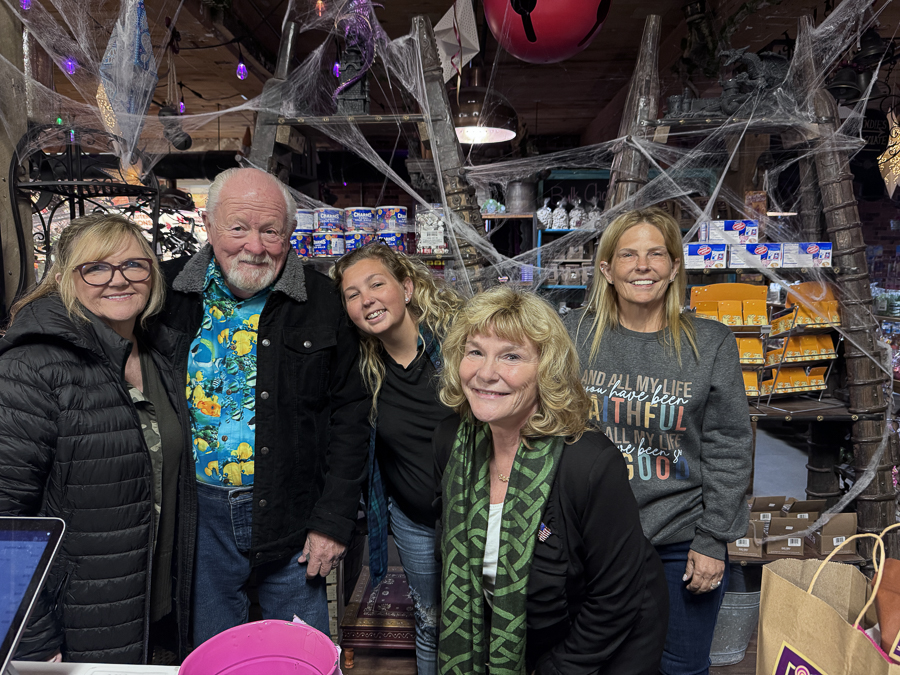
Robin, Sarah, Job, Cassie, Colleen, Mary and old Paul
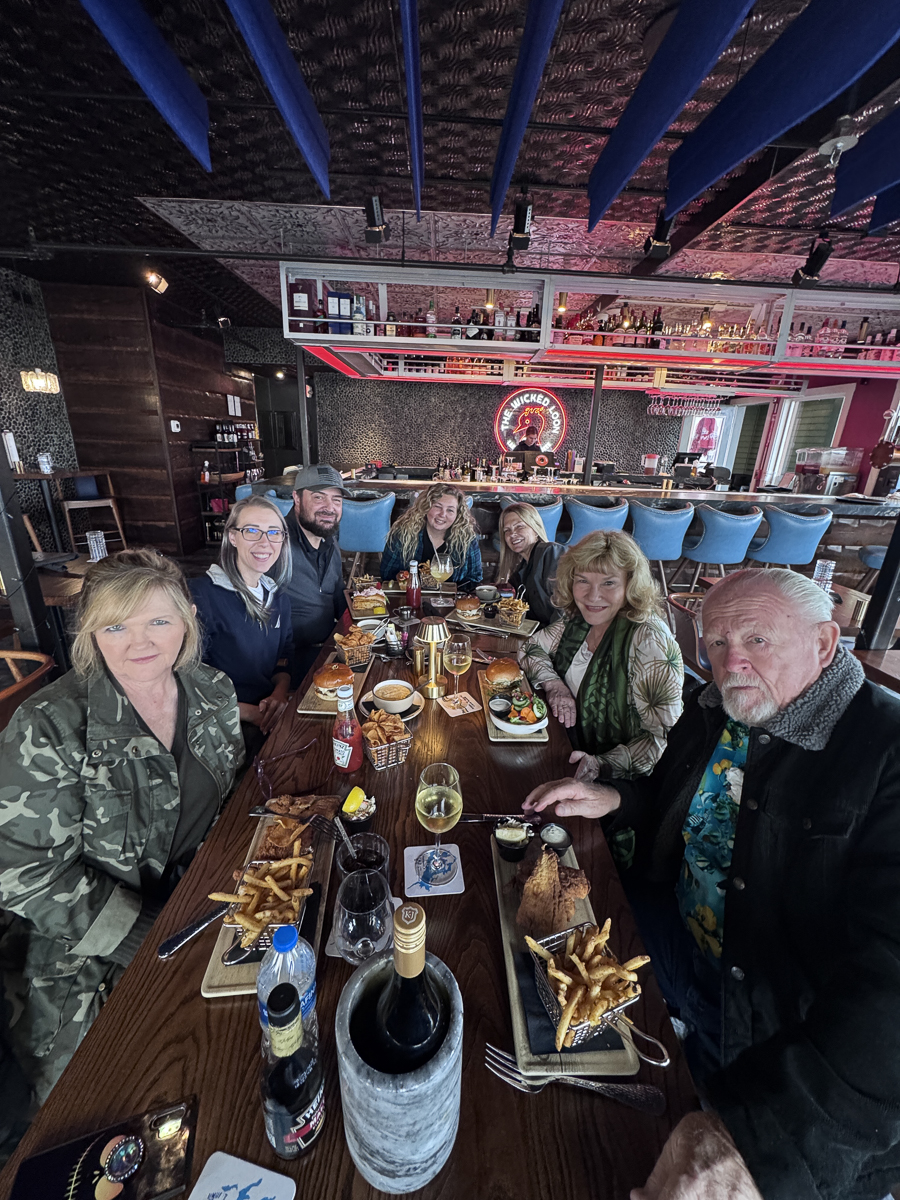
Robin, Sarah, Job, Cassie, Colleen, Mary and old Paul

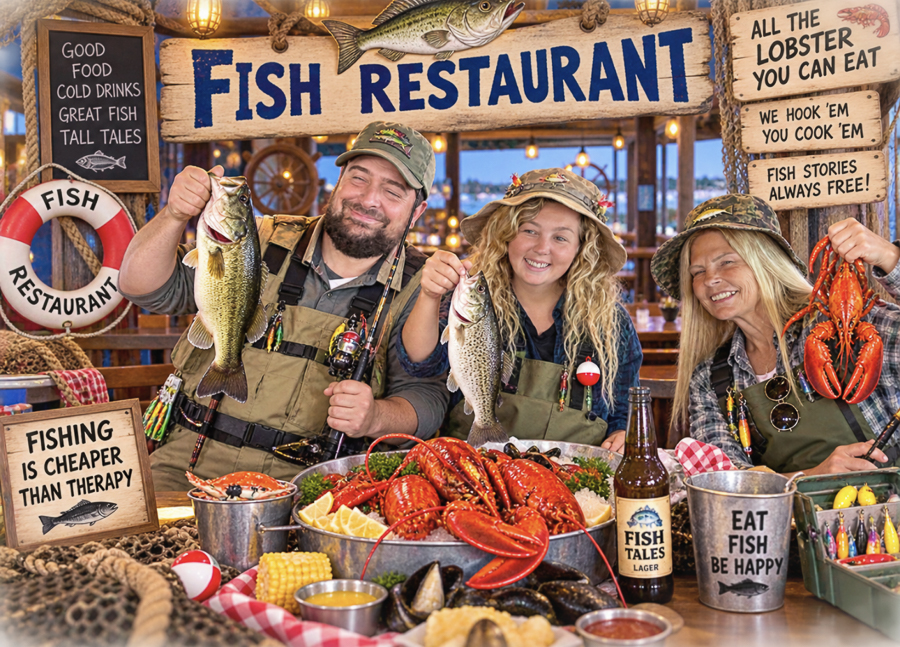
Jon, Cassie and Colleen go fishing

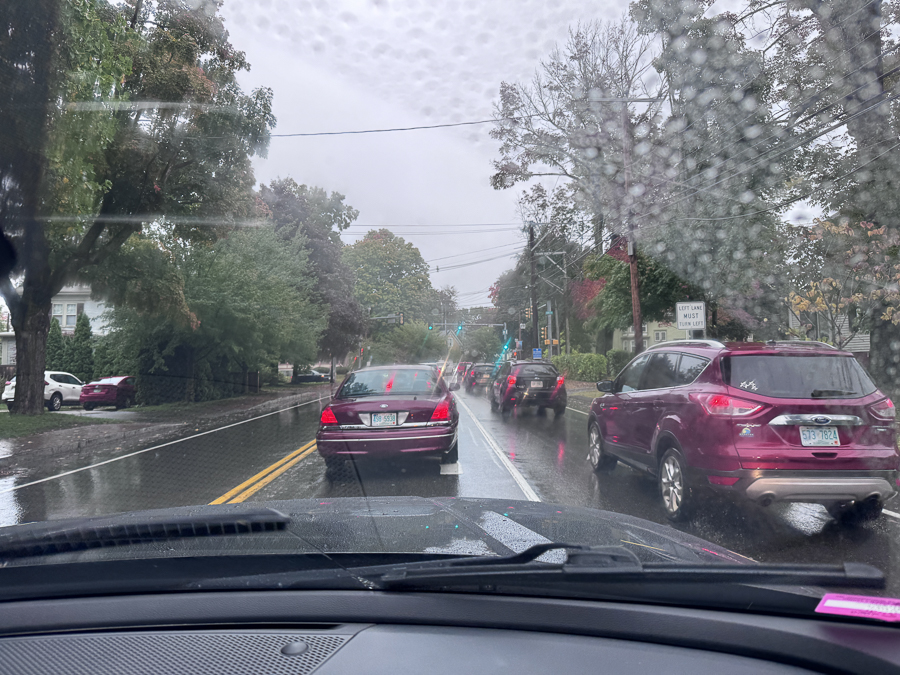
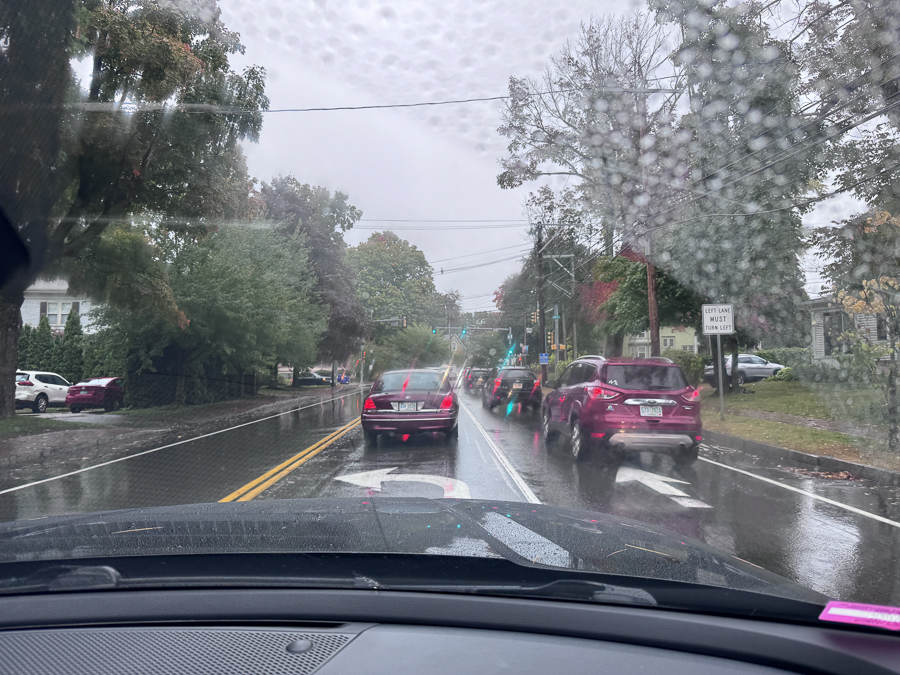

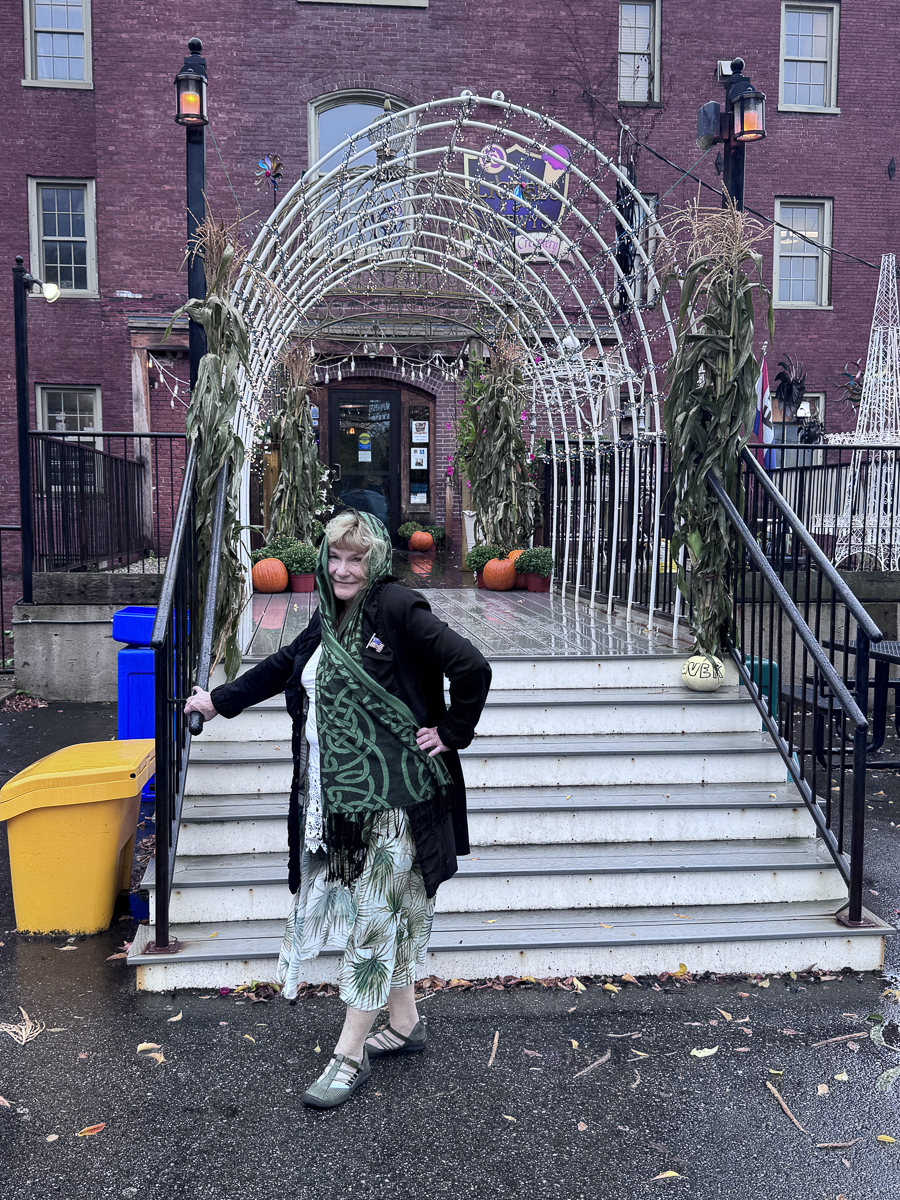


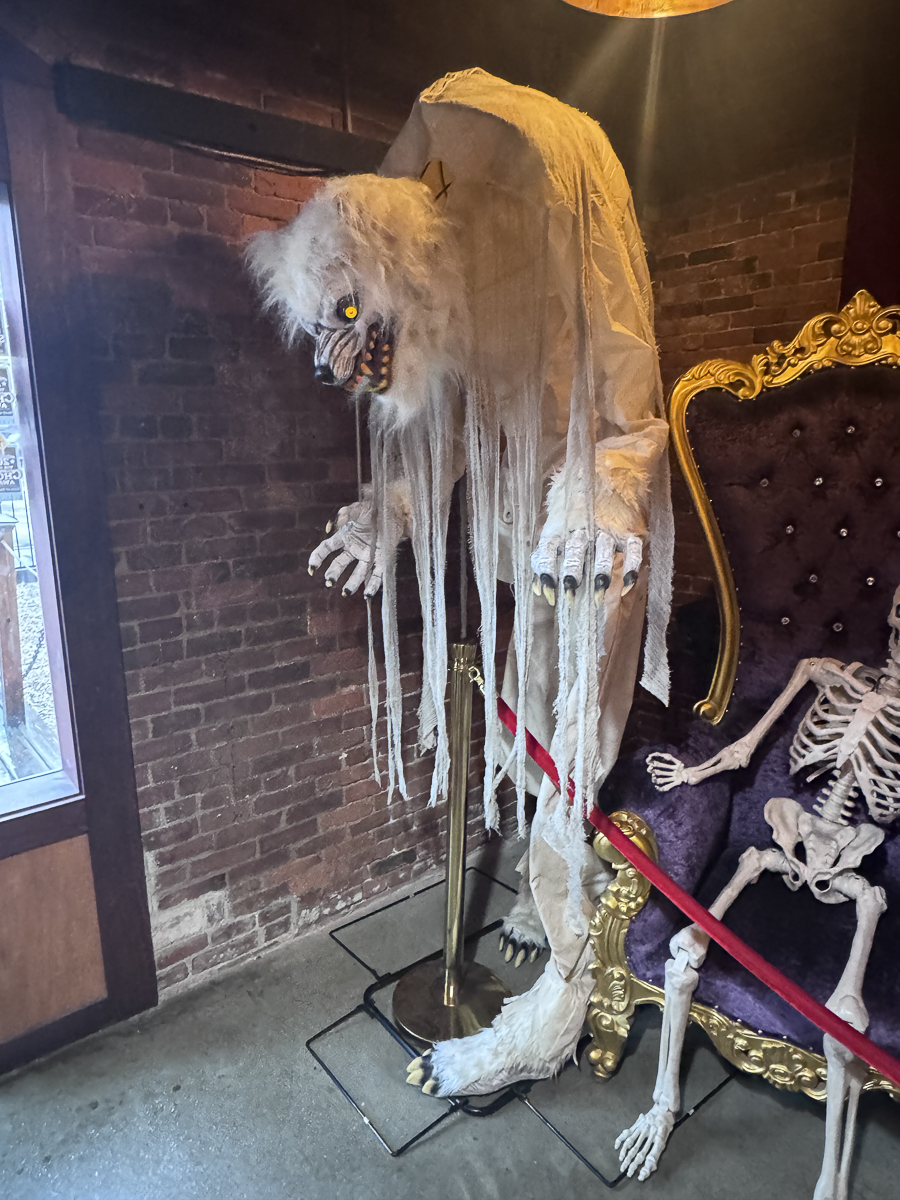
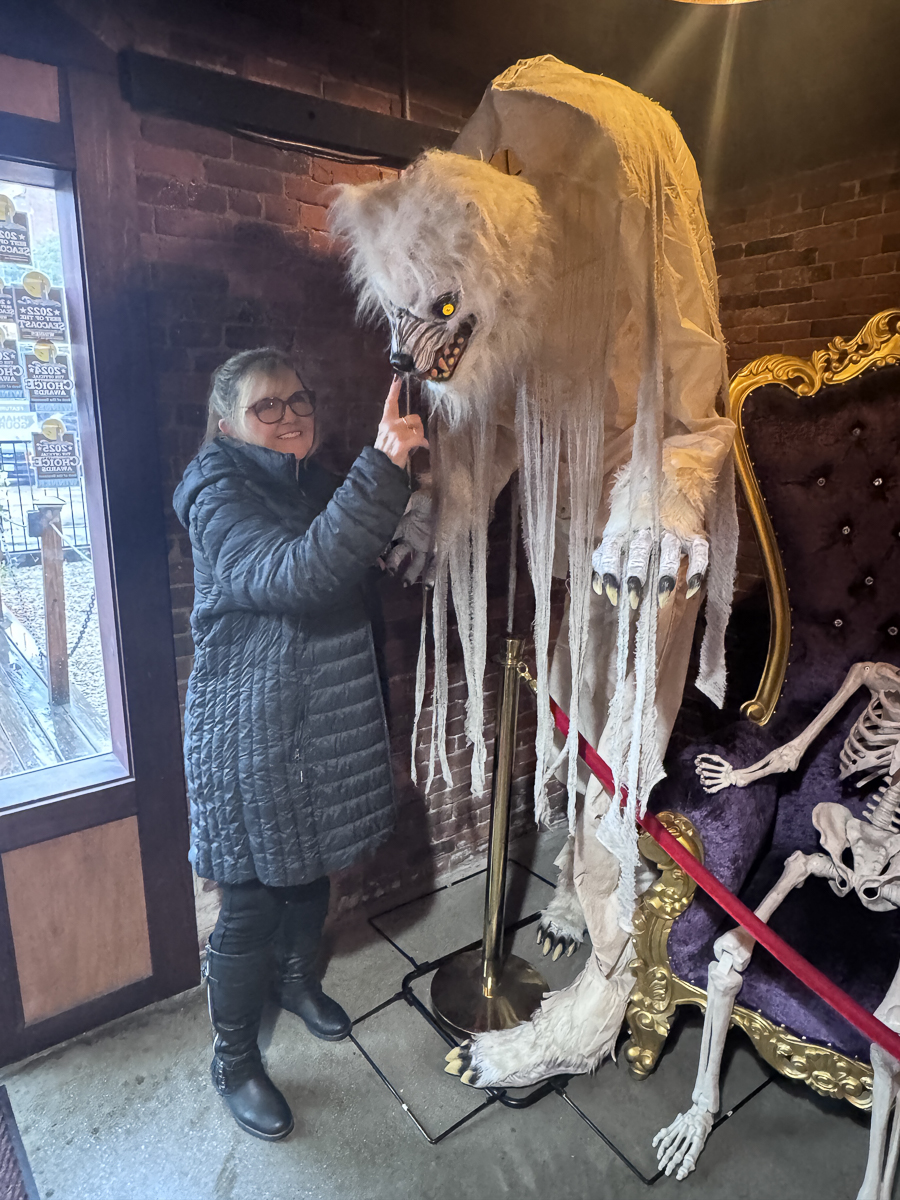
Frightening!!!
Goochy goochy goo!!


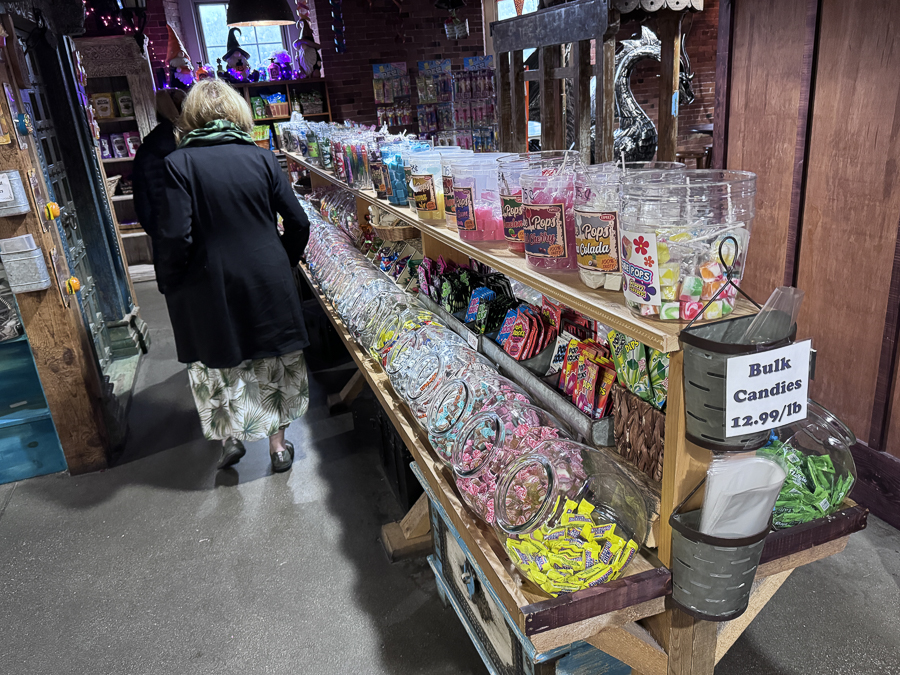
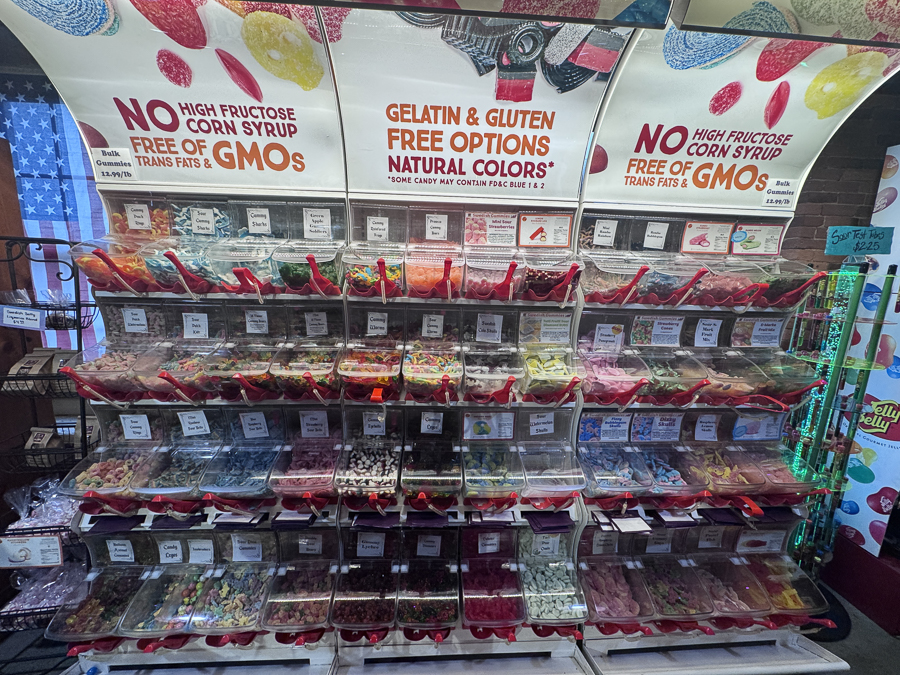

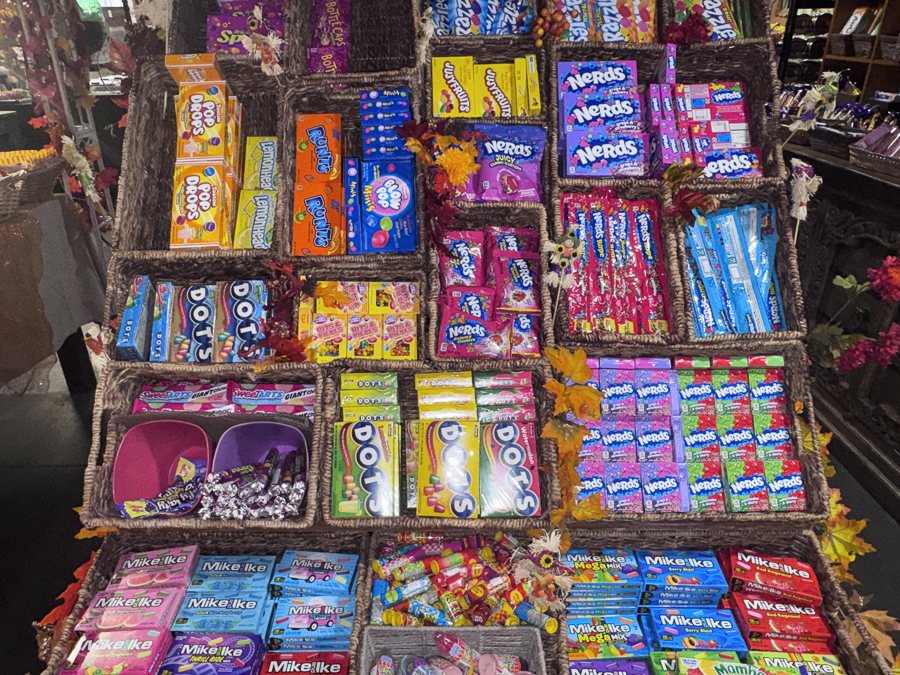
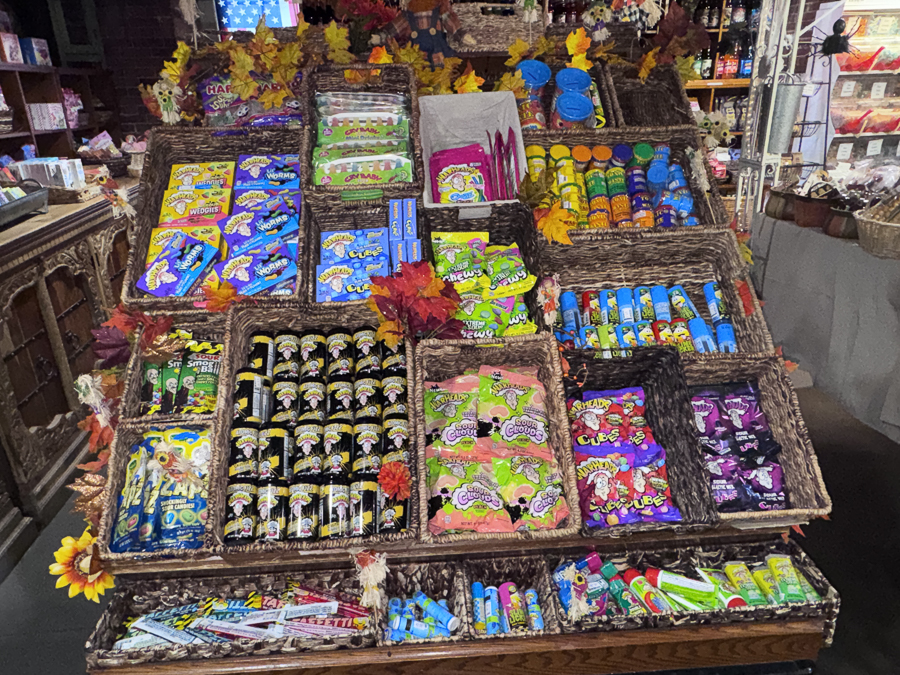
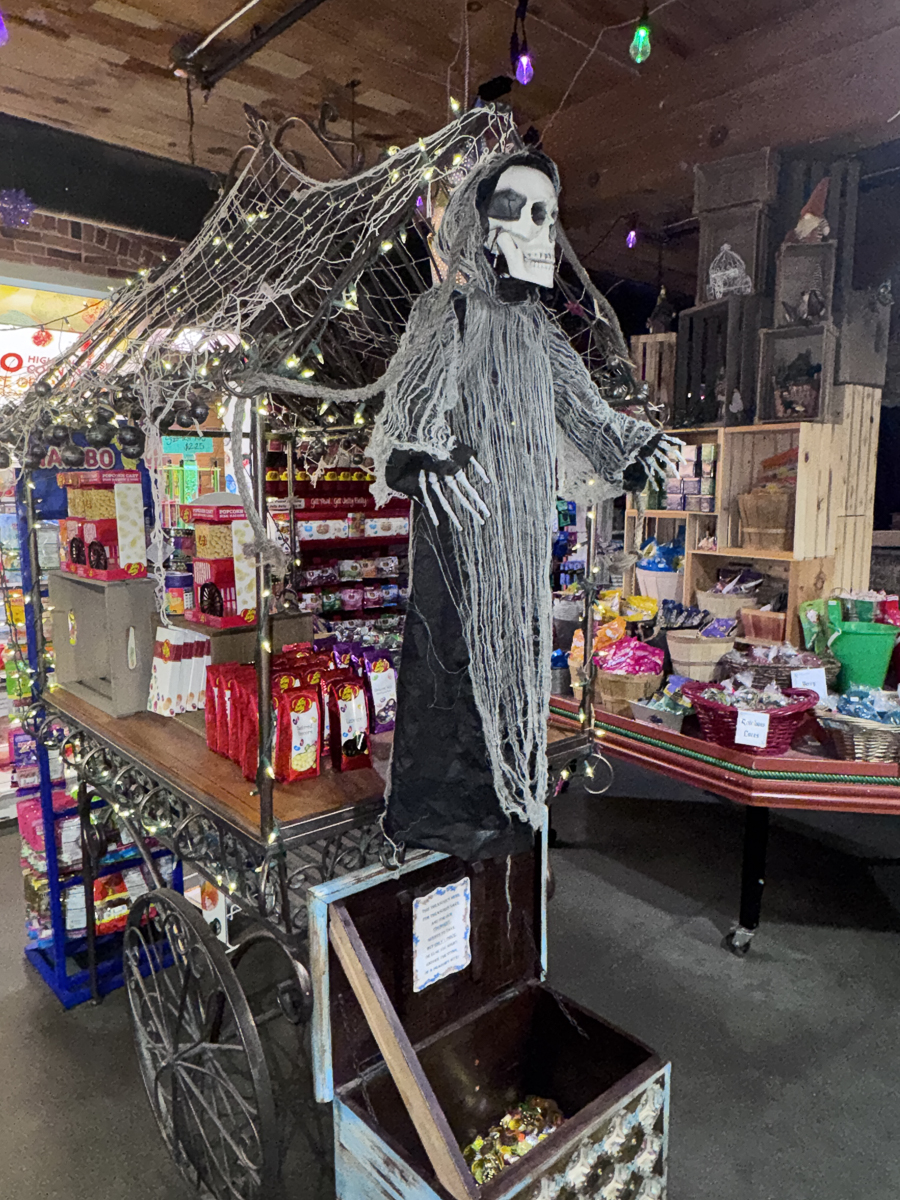
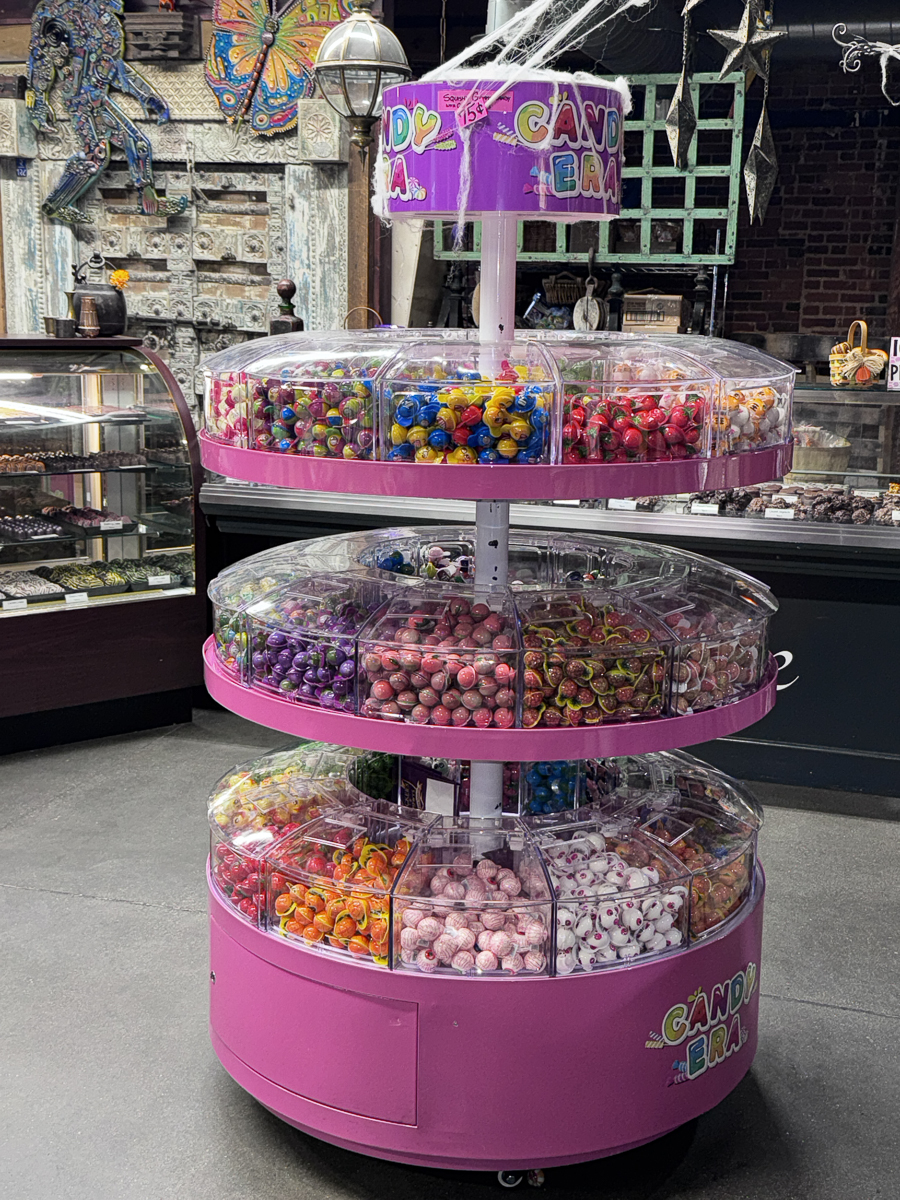



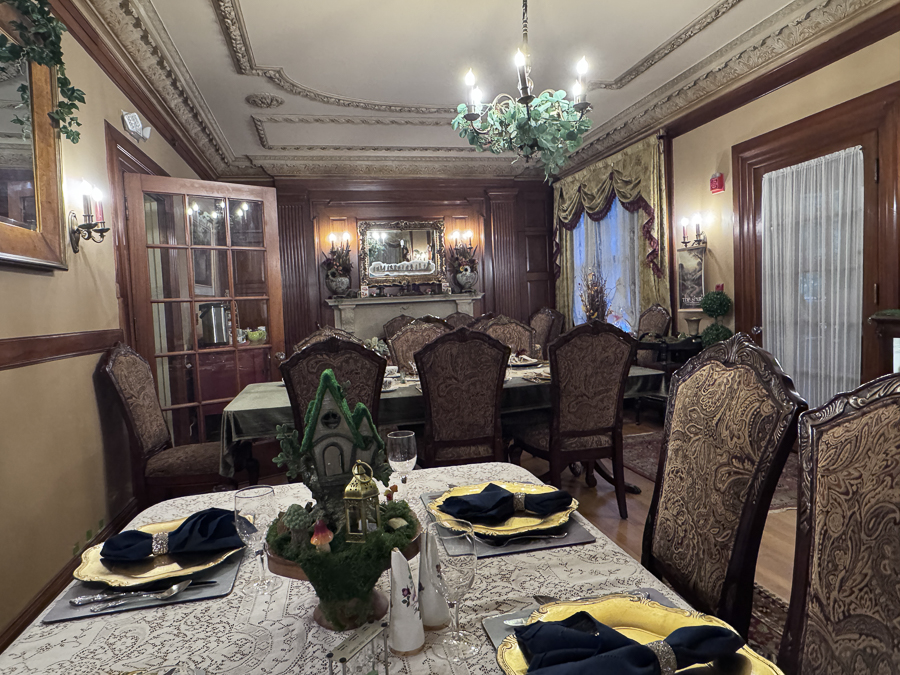
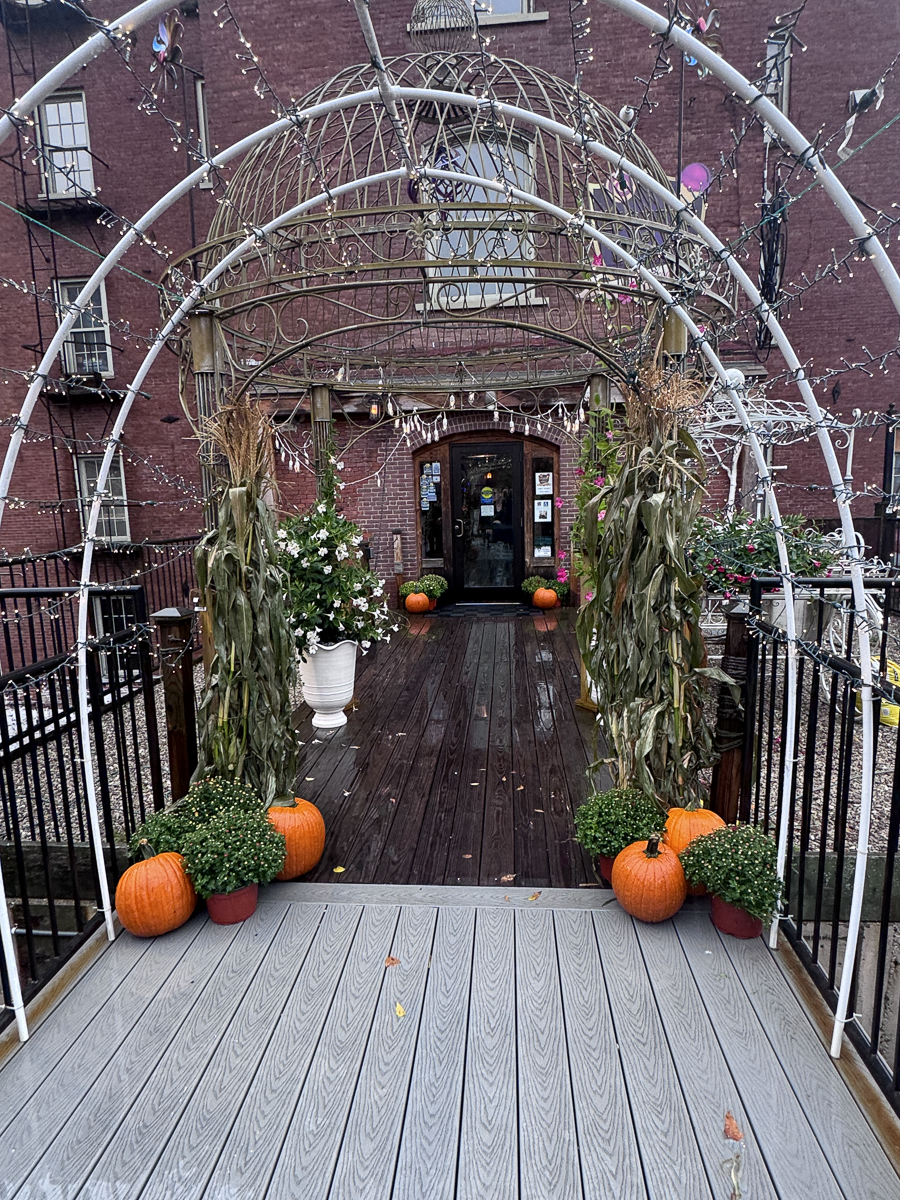
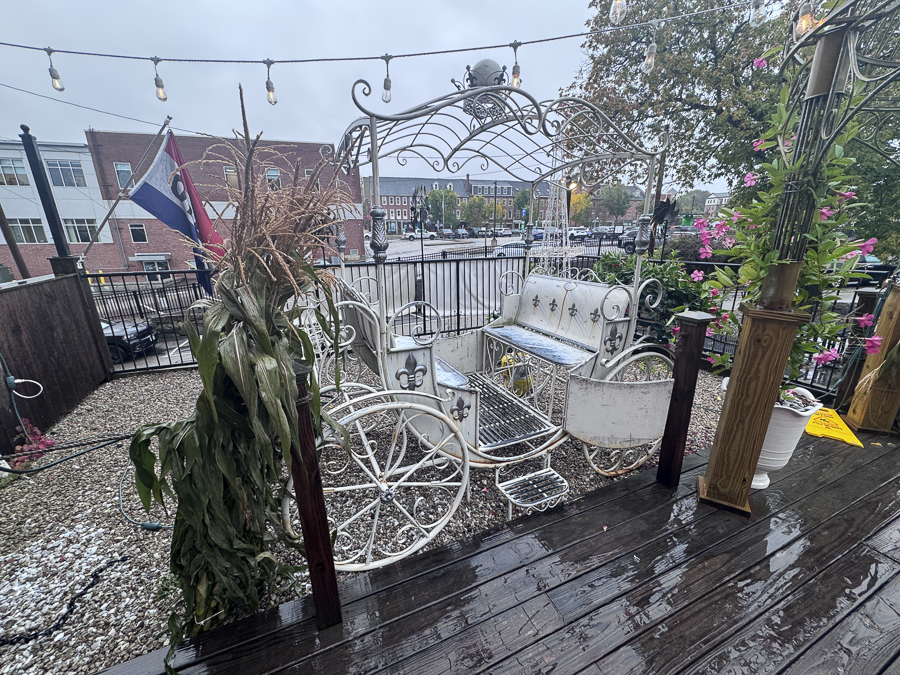
The Inn was magically transformed while we were out!

Day 6 - Out And About In Boston