1950's Sock Hop At The Santa Ana Elks! )Page One)
Remember, this was ago when we were young!
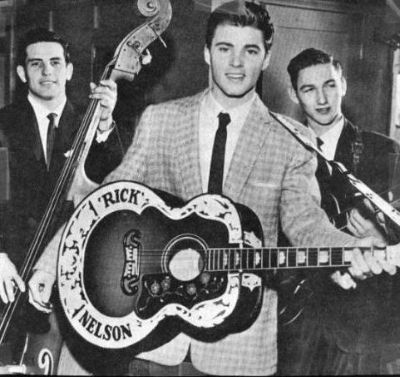
The sock hop was an informal sponsored dance at American high schools, typically held in the high school's own gymnasium or cafeteria. The term sock hop came about because dancers were required to remove their shoes to protect the varnished floor of the gymnasium. These hops were a cultural feature of the 1950s and early rock and roll. The music was usually records, sometimes presented by a disc jockey. Occasionally there were also live bands.
But First It Is Good To Remember...
The 1950s was the decade that ran from January 1, 1950, to December 31, 1959. During the early 1950s in the United States manufacturing and home construction was on the rise as the American economy was on the upswing. The Korean War and the beginning of the Cold War created a politically conservative climate. The Cold War between the Soviet Union and the United States played out through the entire decade. Fear of Communism caused public Congressional hearings by both houses in Congress and Anti-Communism was the prevailing sentiment in the United States throughout the decade. Conformity and conservatism characterized the social mores of the time. The 1950s in the developed western world are generally considered both socially conservative and highly materialistic in nature.
Rock and roll (often written as rock & roll or rock ’n’ roll) is a genre of popular music that originated and evolved in the United States during the late 1940s and early 1950s, primarily from a combination of the blues, country music and gospel music. Though elements of rock and roll can be heard in country records of the 1930s, and in blues records from the 1920s, rock and roll did not acquire its name until the 1950s. An early form of rock and roll was rockabilly, which combined country and jazz with influences from traditional Appalachian folk music and gospel.
Let The Cavorting Begin!!
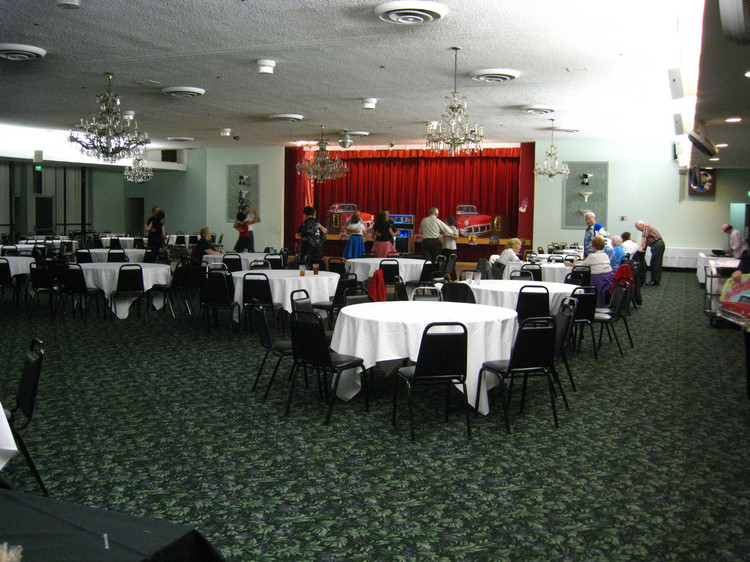
As with everything, the Elks do it up nice! The volunteers did a smashing job in decorating the serving this evening making it great fun for all!
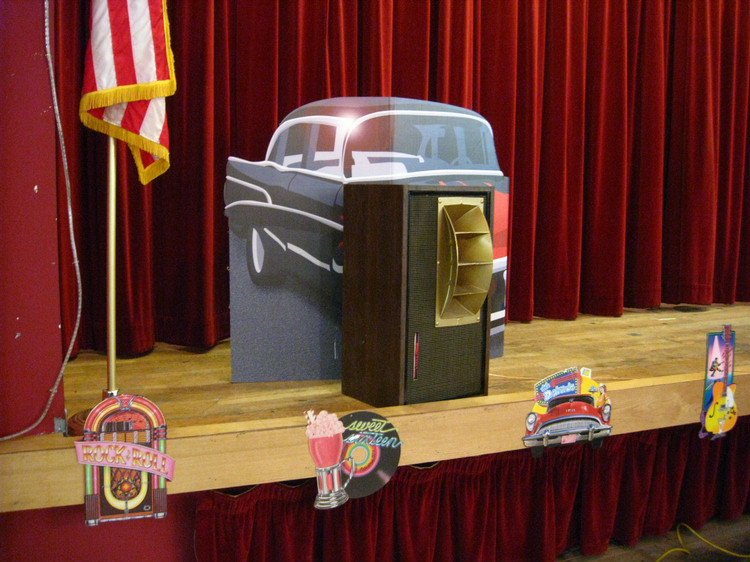
Decorations everywhere!
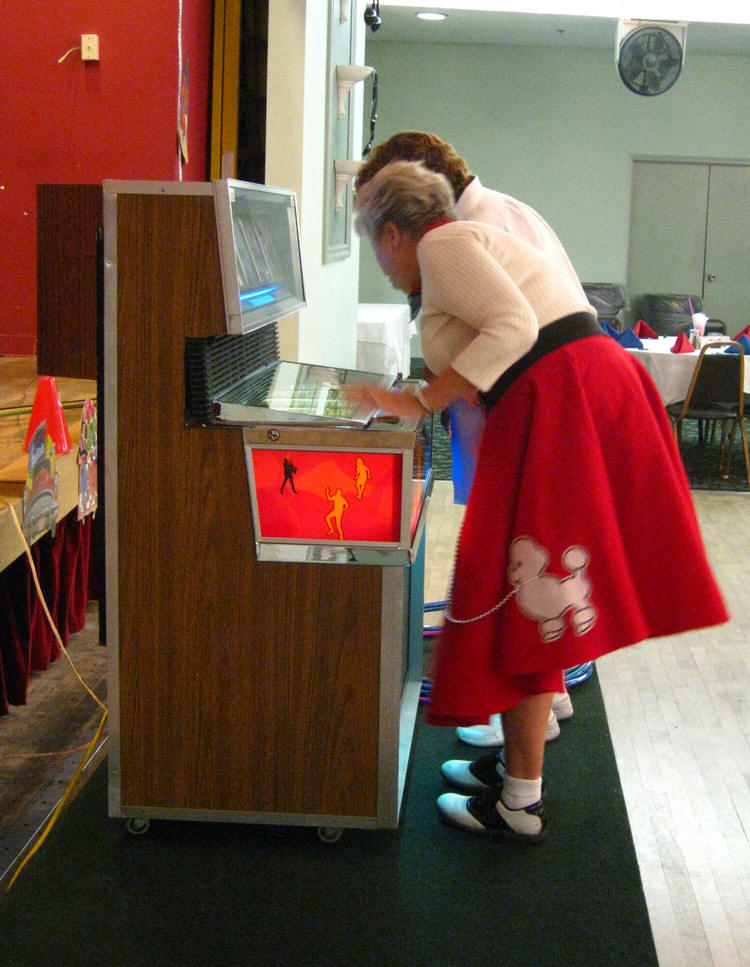
"Do you remember this one???"
Did You Know? -
Coin-operated music boxes and player pianos
were the first forms of automated coin-operated musical devices. These were soon
followed in the 1890s by coin-operated phonographs. The introduction of
recording on wax cylinder records made possible records which could survive many
plays, and early operators converted cylinder phonographs to accept a coin,
usually a nickel, which unlocked the mechanism, allowing the listener to turn a
crank which simultaneously wound the spring motor and placed the reproducer's
stylus in the starting groove. Frequently exhibitors would equip many of these
machines with listening tubes (acoustic headphones) and array them in
"phonograph parlors" allowing the patron to select between multiple records,
each played on its own machine. Some machines even contained carousels and other
mechanisms for playing multiple records. However, by the early 1900s the novelty
of the phonograph wore off and this, combined with the advent of phonographs in
the home, as well as the increasing sophistication and volume of mechanical
orchestrions in public facilities, led to the decline of the coin-operated
phonograph industry.
The advent of electrical recording and amplification led to a resurgence of the
coin-operated phonograph.
One of the first successful selective jukeboxes was an automatic phonograph
produced in 1927 by the Automated Musical Instrument Company, later known as
AMI. With the passage of time the and development of technology new products are
manufactured and consequently in 1928, Justus P. Seepburg, who manufactured
player pianos, created an electrostatic loudspeaker combined with a record
player that was coin operated and gave the listener a choice of eight records.
The shellac 78 rpm record dominated jukeboxes until the Seeburg Corporation
introduced an all 45 rpm vinyl record jukebox in 1950.
The term "juke box" came into use in the United States around 1940, apparently
derived from the familiar usage "juke joint", derived from the Gullah word
"juke" or "joog" meaning disorderly, rowdy, or wicked.
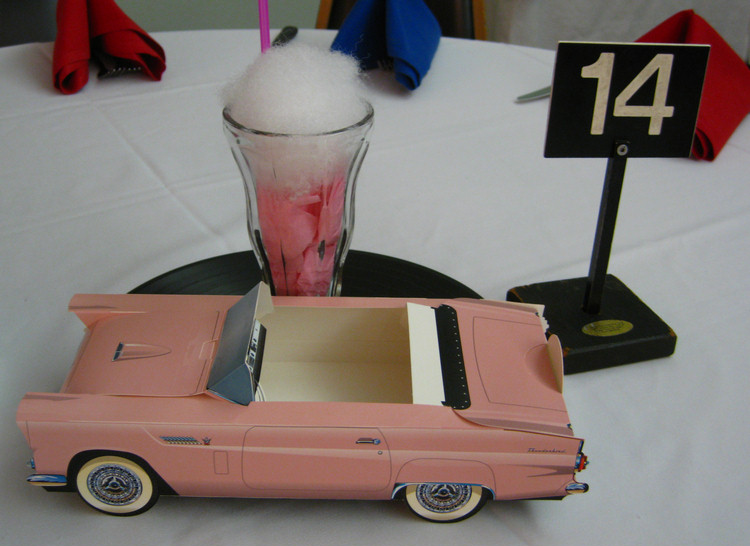
The table decorations were cute... and edible... Not!
Did You Know? - The Ford Thunderbird began life in
February 1953 in direct response to Chevrolet's new sports car, the
Corvette, which was publicly unveiled in prototype form just a month before.
Under rapid development, the Thunderbird went from idea to prototype in
about a year, being unveiled to the public at the Detroit Auto Show on
February 20, 1954. Like the Corvette, the Thunderbird had a two-seat
coupe/convertible layout. Production of the Thunderbird began later on in
1954 on September 9 with the car beginning sales as a 1955 model on October
22, 1954. Though sharing some design characteristics with other Fords of the
time, such as single, circular headlamps and tail lamps and modest tailfins,
the Thunderbird was sleeker and more athletic in shape, and had features
like a faux hood scoop and a 150 mph (240 km/h) speedometer hinting a higher
performance nature that other Fords didn't possess. Mechanically though, the
Thunderbird could trace its roots to other mainstream Fords. The
Thunderbird's 102.0 inches (2,591 mm) wheelbase frame was mostly a shortened
version of that used in other Fords while the car's standard 292 cu in (4.8
L) Y-block V8 came from Ford's Mercury division.
Though inspired by, and positioned directly against, the Corvette, Ford
billed the Thunderbird as a personal luxury car, putting a greater emphasis
on the car's comfort and convenience features rather than its inherent
sportiness. Designations aside, the Thunderbird sold exceptionally well in
its first year. In fact, the Thunderbird outsold the Corvette by more than
23-to-one for 1955 with 16,155 Thunderbirds sold against 700 Corvettes. With
the Thunderbird considered a success, few changes were made to the car for
1956. The most notable change was moving the spare tire to a
continental-style rear bumper in order to make more storage room in the
trunk. However, the addition of the weight at the rear caused steering
issues, and was changed back in 1957.
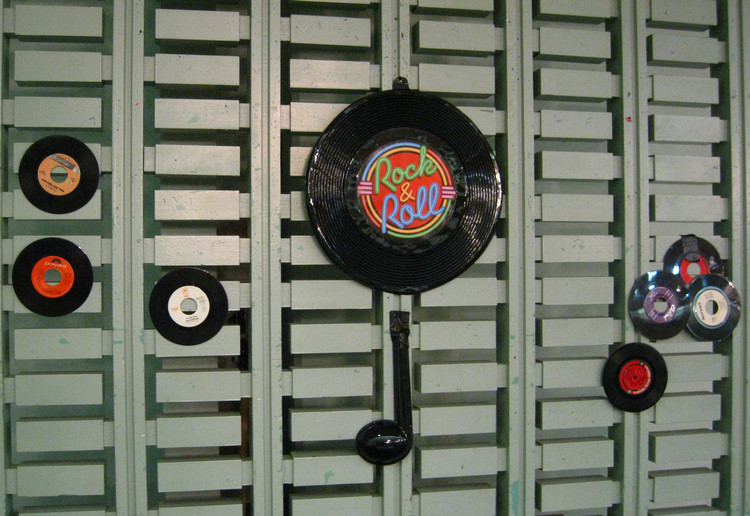
The kids asked "What are these things?"
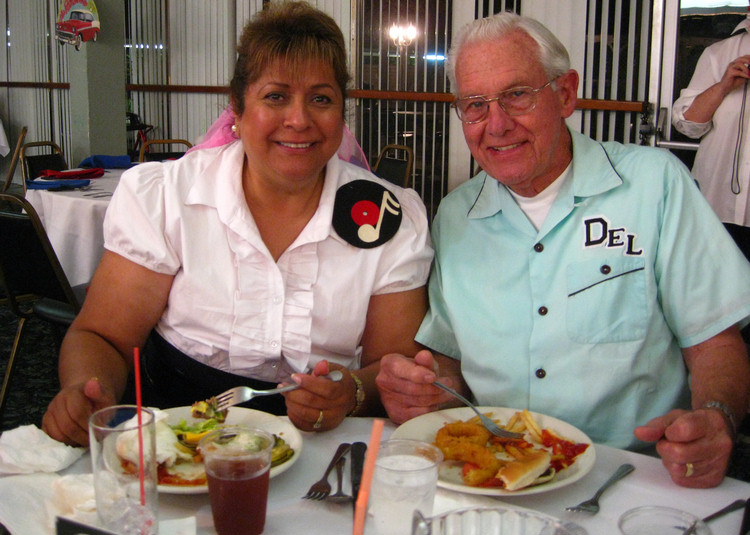
Dressed to the Nines!

Nita and Lee.... What, no Coke???? Did they have wine in 1955?

Marcia and Leon dig into the Hamburger's... Onion rings?
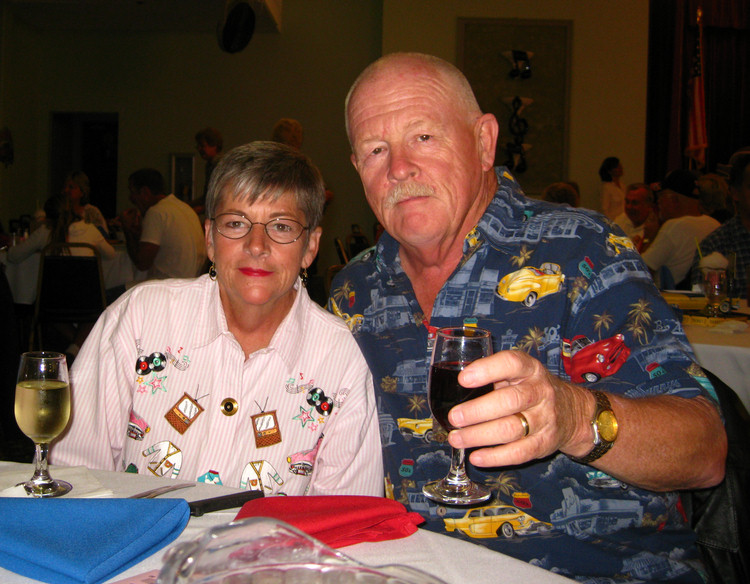
OK, coke gives us pimples... We prefer wine!
Hula Hoop Time
Did You Know? - Did you know? - A hula hoop is a toy hoop that is twirled around the waist, limbs, or neck. Hula hooping is fun. Although the exact origins of hula hoops are unknown, children and adults around the world have played with hoops, twirling, rolling and throwing them throughout history. Hula hoops for children generally measure approximately 28 inches in diameter, and those for adults around 40 inches. Traditional materials for hoops include willow, rattan (a flexible and strong vine), grapevines and stiff grasses. Today, they are usually made of plastic tubing.
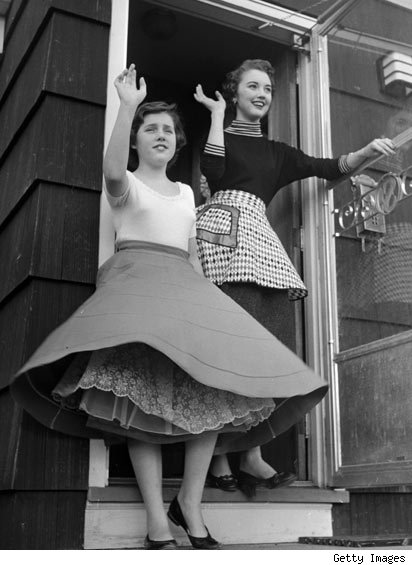
Richard Knerr and Arthur "Spud" Melin, two University of Southern California college graduates unhappy with their employment, began the company in 1948 as WHAM-O Mfg. Co. in the Knerr family garage in South Pasadena, California. When they outgrew the garage they rented a building on S. Marengo Ave in Alhambra, California. The company eventually moved its manufacturing plant to neighboring San Gabriel, California. Their first market idea was a slingshot. The idea came up as the founders hurled meat into the air for the training of pet falcons and hawks. The name Wham-O was used because it was a term the founders used as a sound effect when they released the sling.
In 1957, Wham-O, still a fledgling company, took the idea of Australian bamboo "exercise hoops" and manufactured them with Marlex. The new Hula Hoop was born (the name "hula hoop" has been used since the 18th century). Knerr and Melin had created the biggest fad to date. Twenty-five million were sold in less than four months, and in two years sales reached more than 100 million units. By the end of 1959, after US$45 million in profits, the fad slowly was dying out.
Shortly after, they got lucky again with the Frisbee. In 1955 Fred Morrison began marketing a plastic flying disc which he called the "Pluto Platter". He sold the design to Wham-O in 1957 and the design was modified, the product renamed Frisbee and sales took off in 1959.
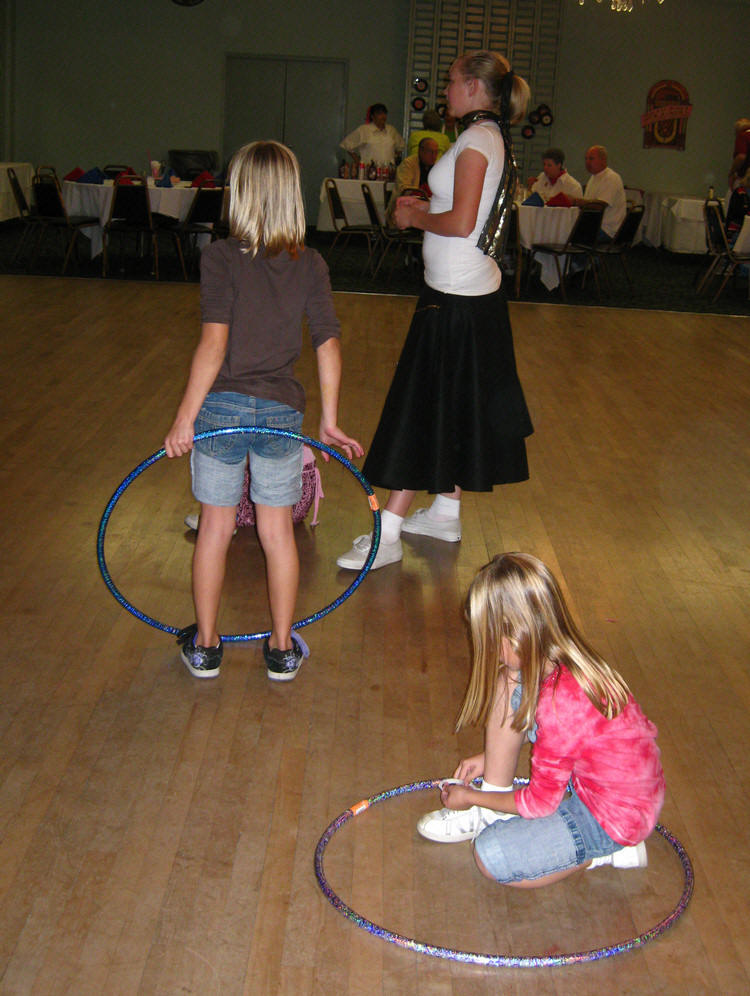
OK ladies, start your engines!
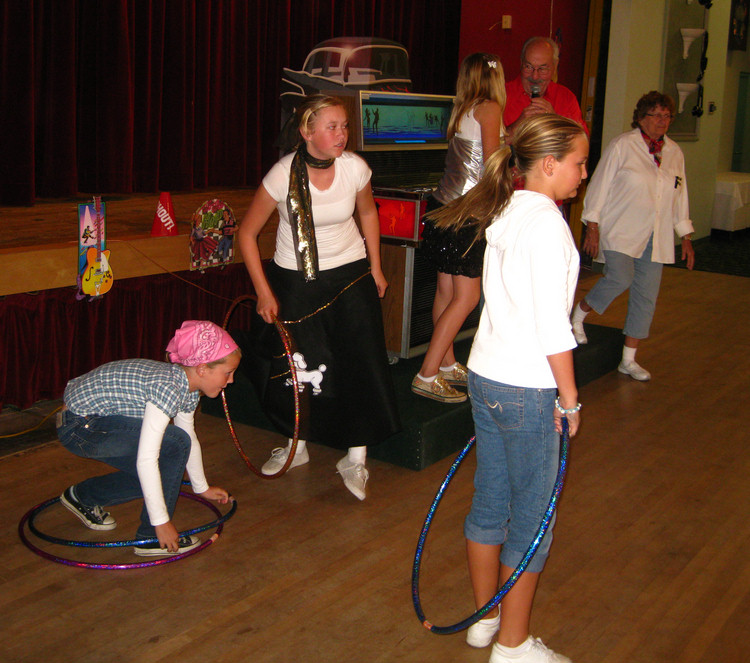
Ready, Set.....Go!
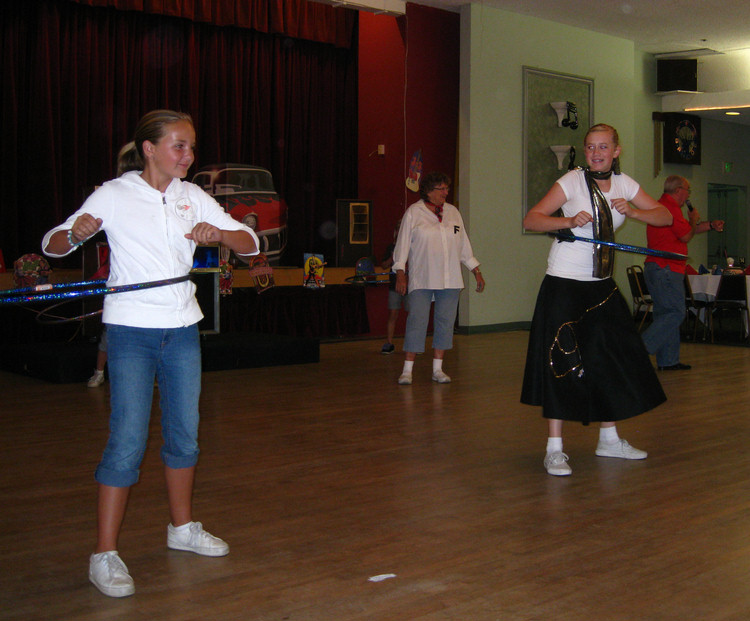
With NO effort, the hoops stayed up for hours!
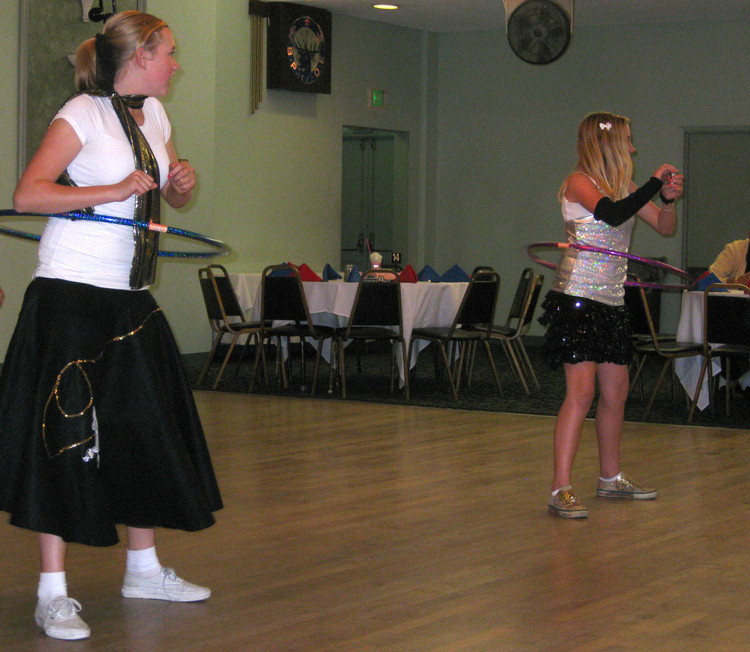
Go Go Go
The Adults Were So Tired We Needed Dessert!
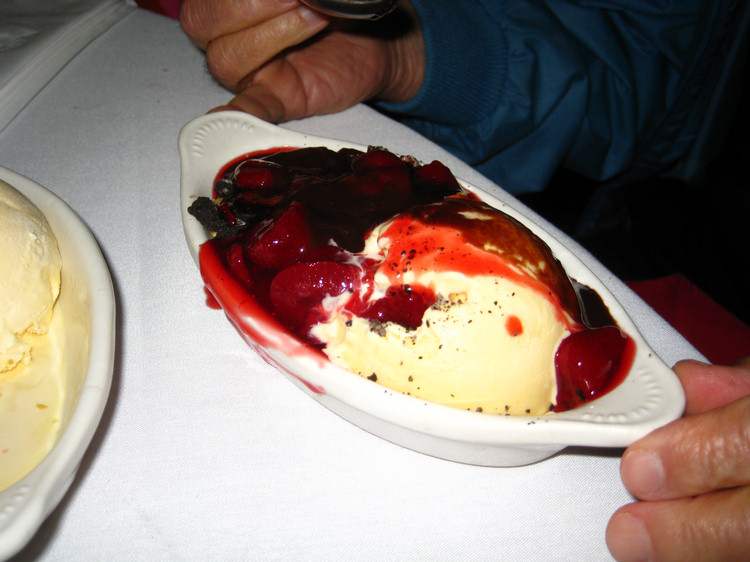
Leon is the dessert master
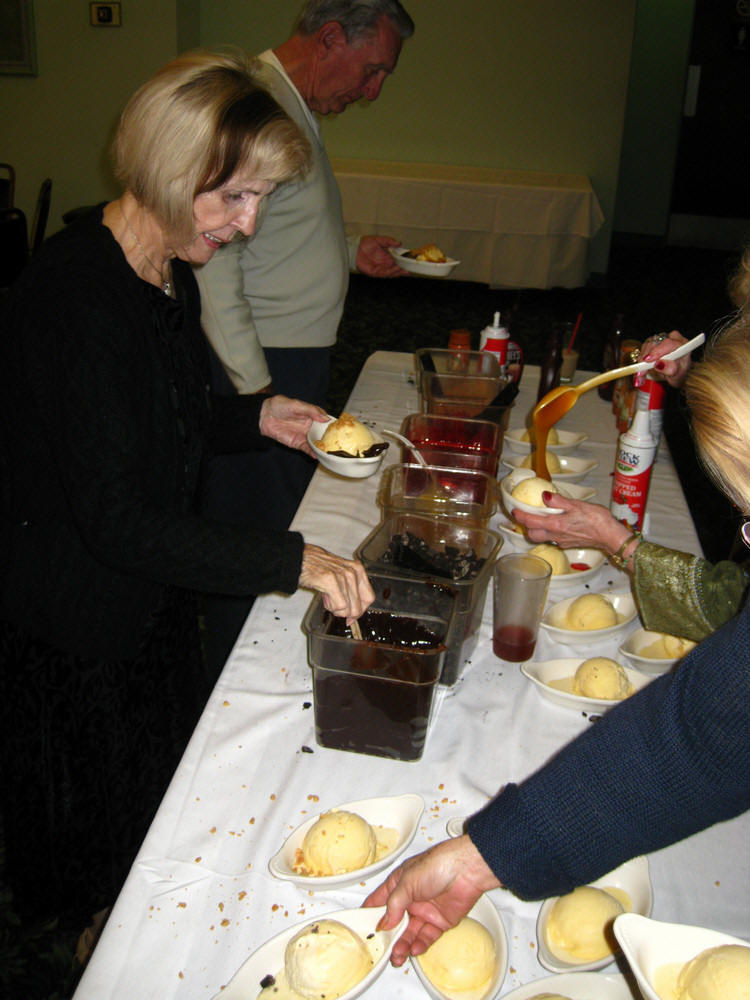
Build your own!
Did you know? - According to the Oxford English Dictionary, the origin of the term sundae is obscure. Various American localities have claimed to be the birthplace of the ice cream sundae. These claimants include Ithaca, New York; Two Rivers, Wisconsin; Plainfield, Illinois; Evanston, Illinois; New York City; New Orleans, Louisiana; Cleveland, Ohio; and Buffalo, New York. In recent years, officials in Two Rivers and Ithaca have used the controversy to gain publicity for their cities.
Of the many stories about the invention of the sundae, one frequent theme is the sinfulness of the ice cream soda and the need to produce a substitute for the popular treat for consumption on Sunday. The name 'sundae' was adopted from Illinois state's early prohibition of ice cream consumption on Sundays, because ice cream with a topping that obscured the main product was not deemed to be ice cream.
Some folks believe that ice cream sundaes were invented in Evanston, Illinois, in the late 19th century, when traders added syrup instead of soda because ice-cream soda was illegal on a Sunday; the dessert was called a "sundae" with an "e" so that religious leaders would not object.
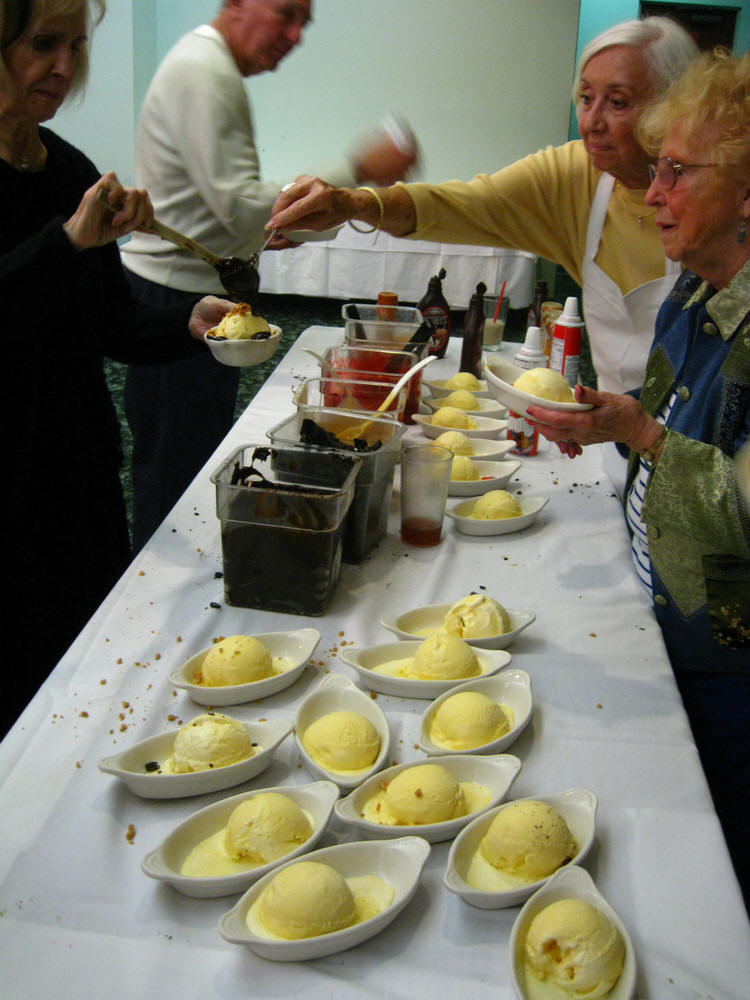
"One for you, three for me'
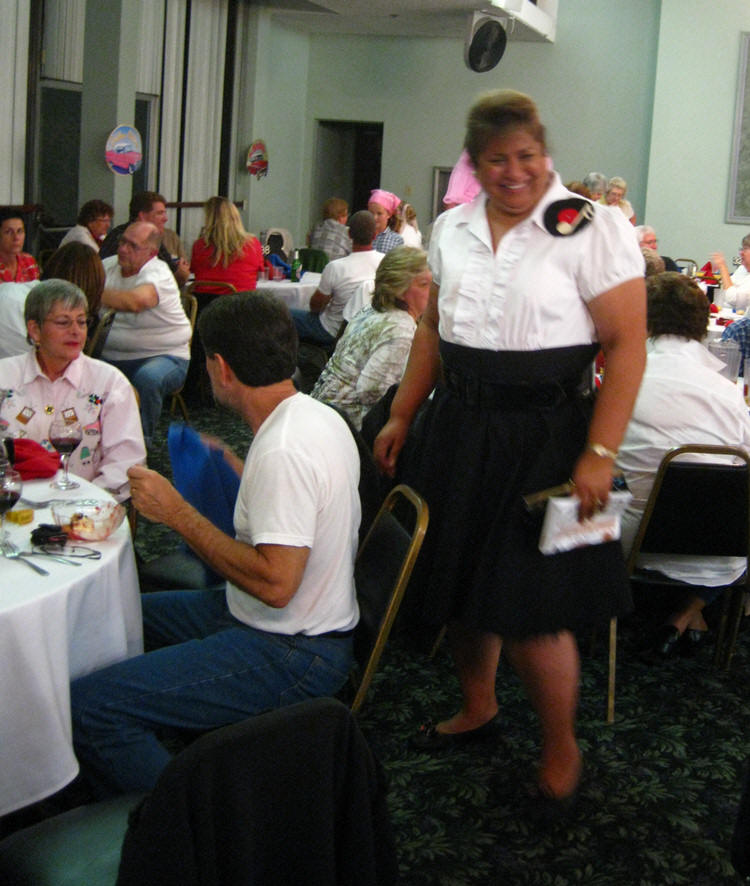
Vicky checks everytihg out.
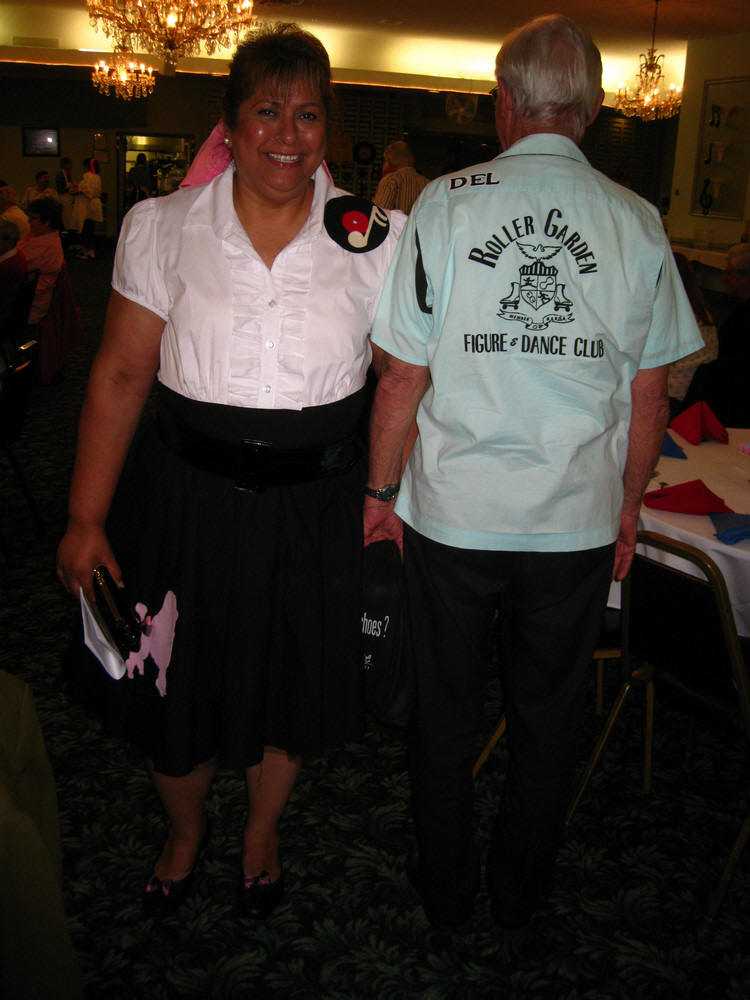
Checking Out The Fashions!
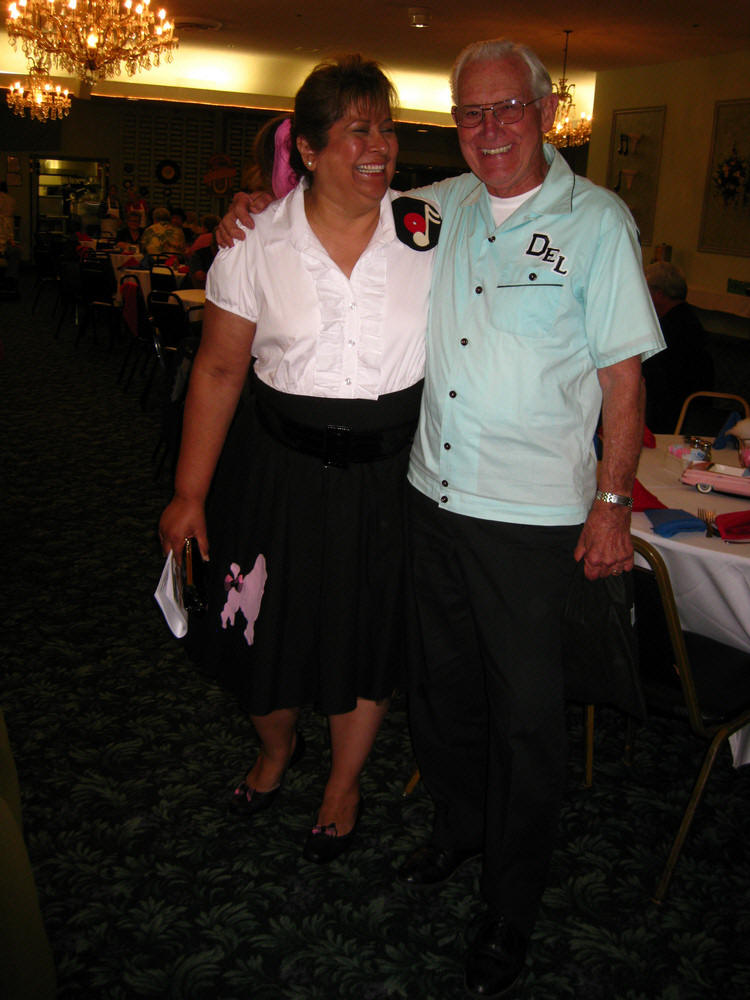
And he didn't bring his skates!
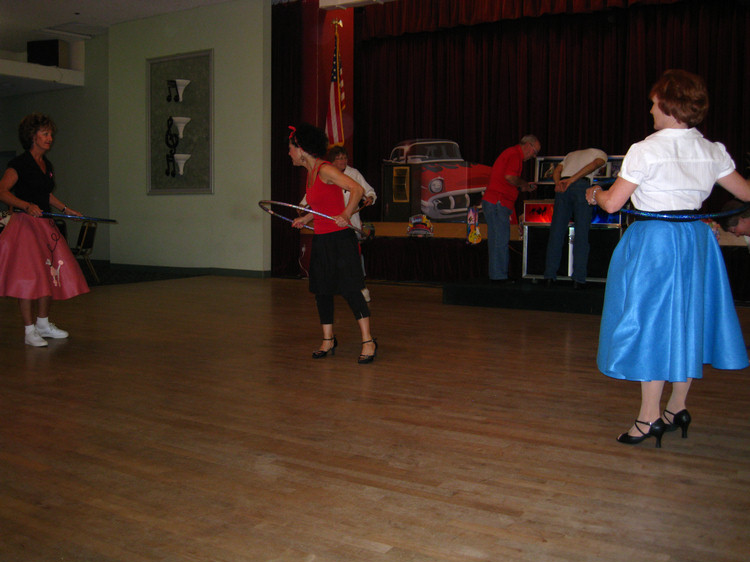
Time For The Ladies Hula Hoop Contest
Warming up!
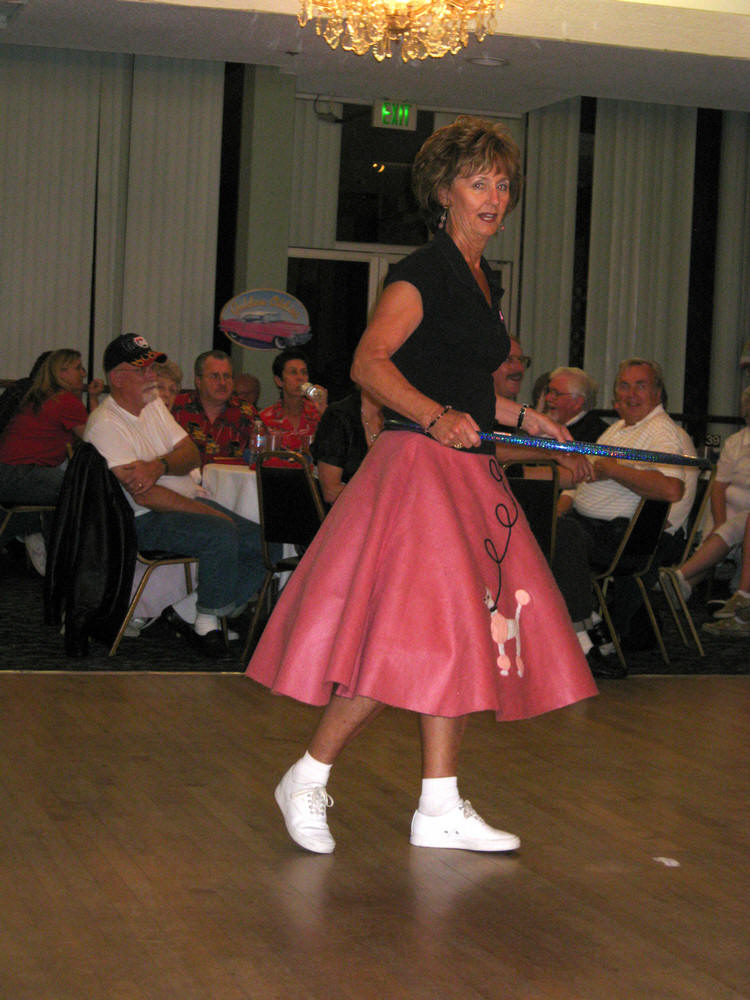
"This is easy... just move everything!"
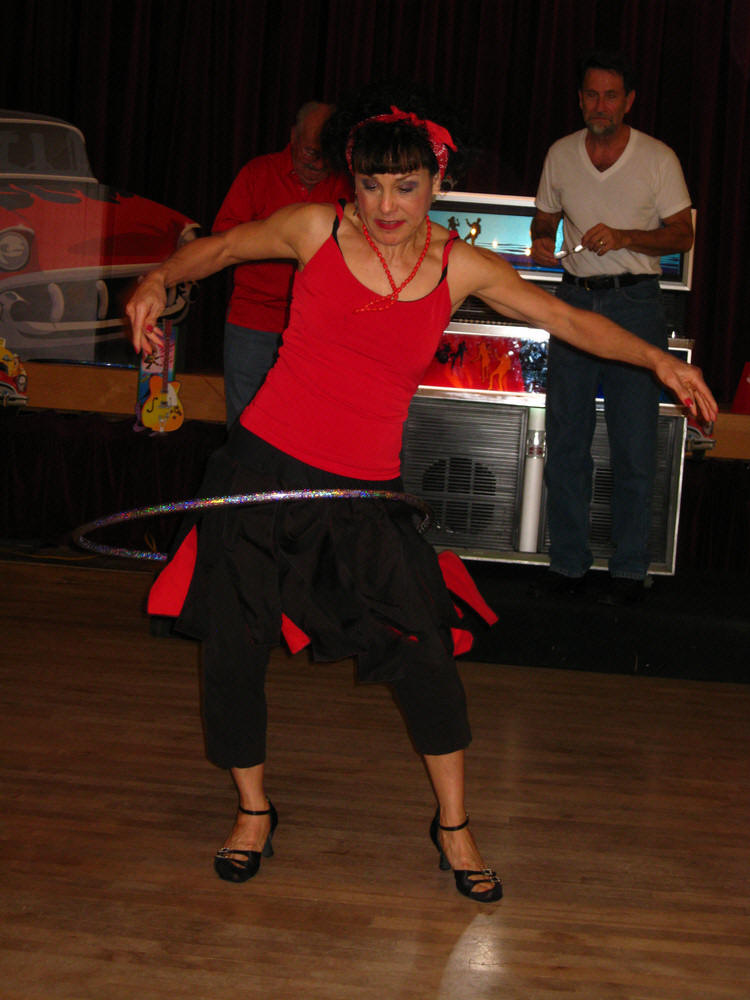
"Stay up"
The Rules:
- The record is for continuous revolution of a hula hoop.
- A standard size and weight hula hoop must be used.
- The hoop must be revolved between the shoulders and hips.
- If the hoop passes above the shoulders the attempt is ended.
- If the hoop passes below the hips the competitor has 30 seconds in which to try to recover it without using his/her hands or arms. If the hoop is not revolving above the hips within 30 seconds the attempt is ended.
- If the hoop passes below the knees and/or touches the ground, the attempt is ended.
- Once the hoop has begun to spin the hands of the competitor must not touch the hoop. If the challenger touches the hoop with his/her hands, the attempt is ended.
- Rest breaks of 5 minutes per hour are allowed. (Note: This rule has been changed; in previous years, this was a non-stop categories)
- No person under the age of 14 may compete.
- Persons aged between 14 and 18 must, before competition, be in possession of a document signed by their parent or legal guardian, giving them permission to compete. This document must be added to the log book and witnessed before the attempt has started.
- A fully-qualified practicing member of the medical profession must be present at all times watching the attempt.
- The entire attempt must be filmed on audio video.
Records verified: 72 hrs Kym Coberly (USA) 17-20 October 1984
The Sock Hop Continues (Page Two)
Us guys now get to show the girls how real hula hooping is done....
Men To The Floor And Defend Our Honor!
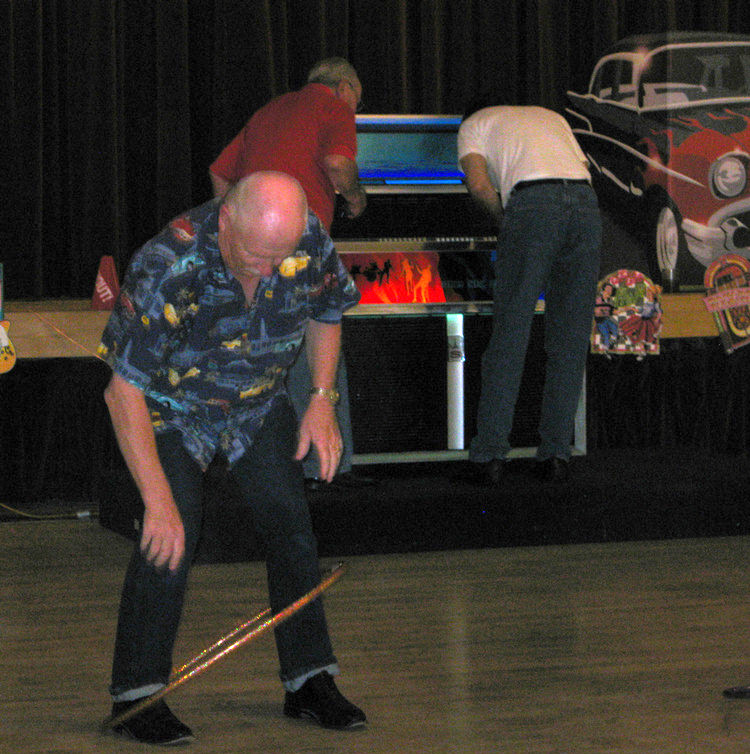
"I thought this was easy!!"

"Ah... I got it, hold it with both hands!"

Look... We all have it now
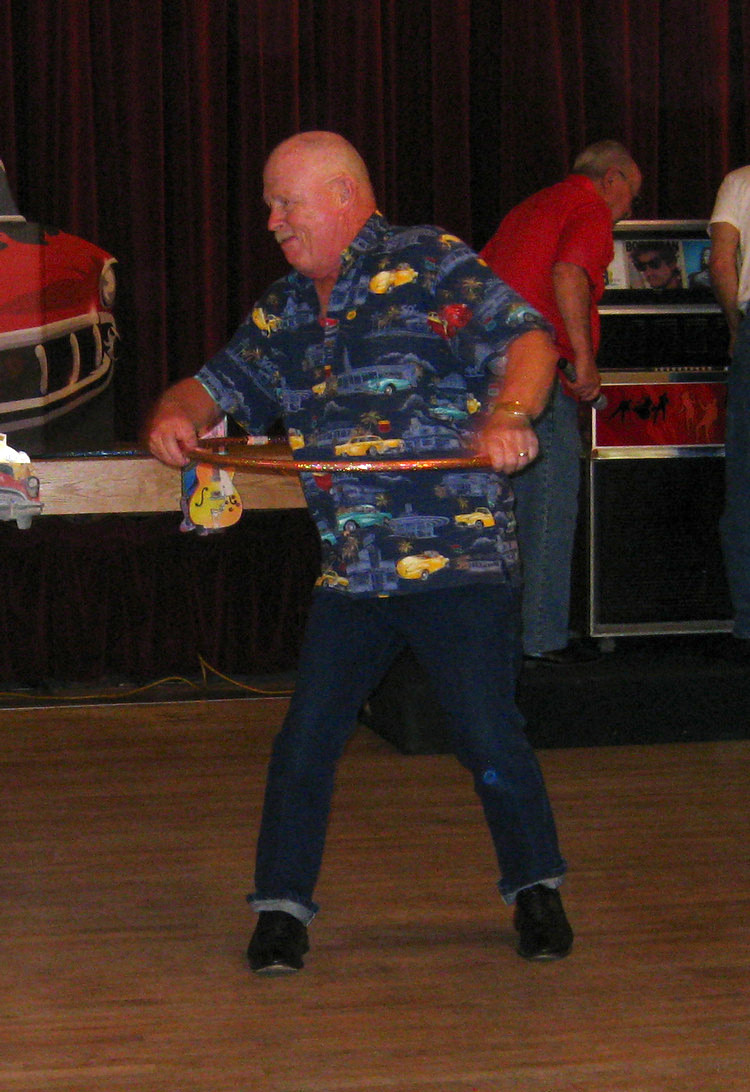
Restart!

"Maybe the girls can give us a hand!!"
Thank Goodness The "Contest" Was Over!

We thought she was signaling Lexus... Then we found out the truth! It
hurt!
How About Some Semi-Line Dancing?
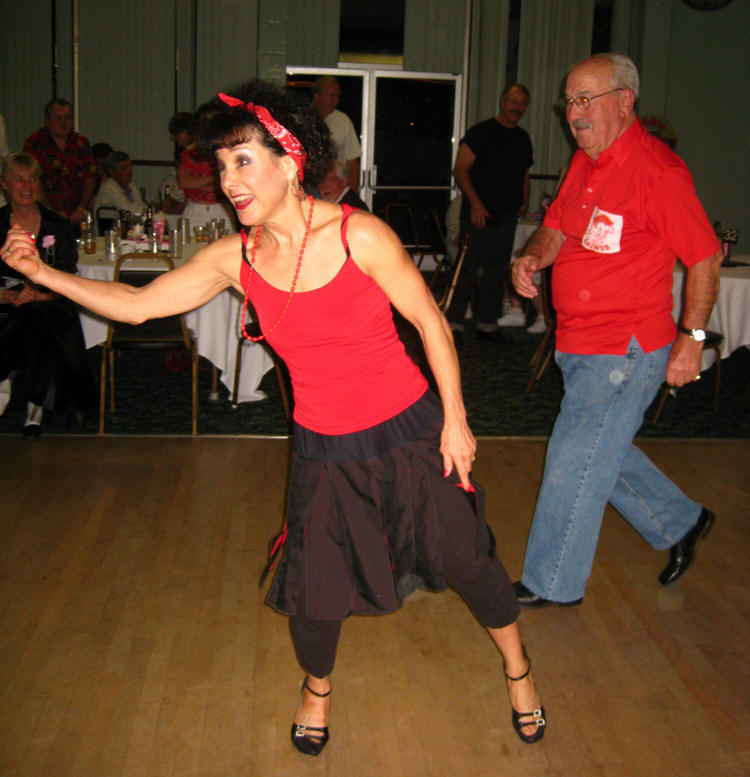
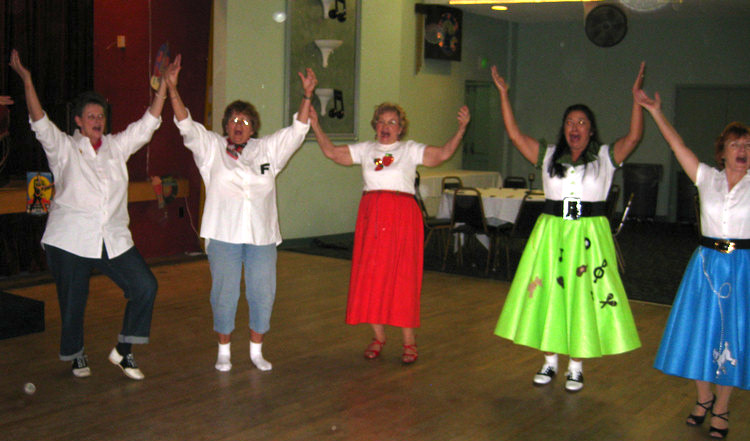
The ladies jumped at this opportunity
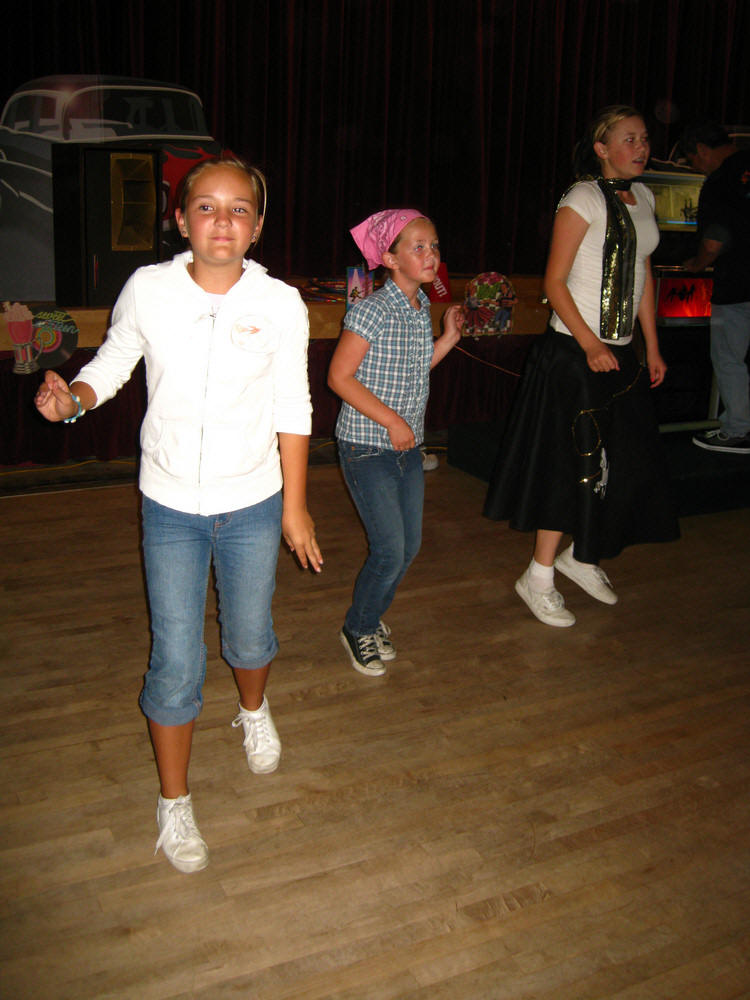
The girls helped!
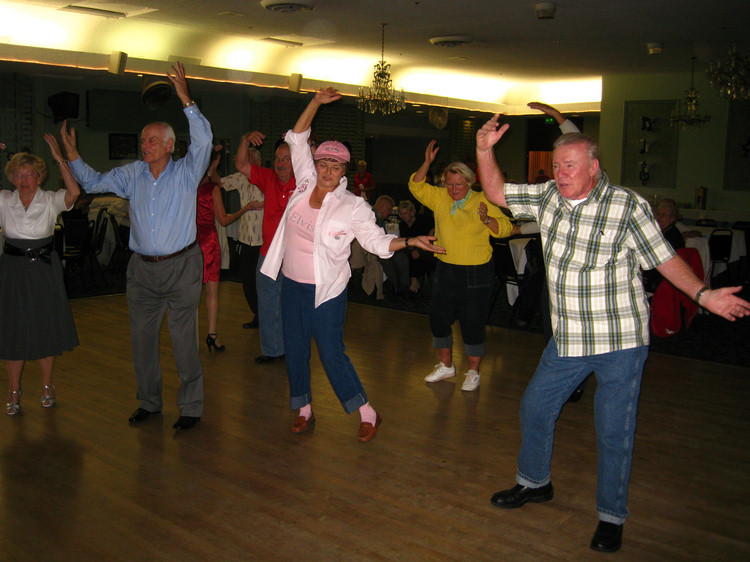
A little YMCA anyone??
Watch Out.... Coming Through... The Soul Train!

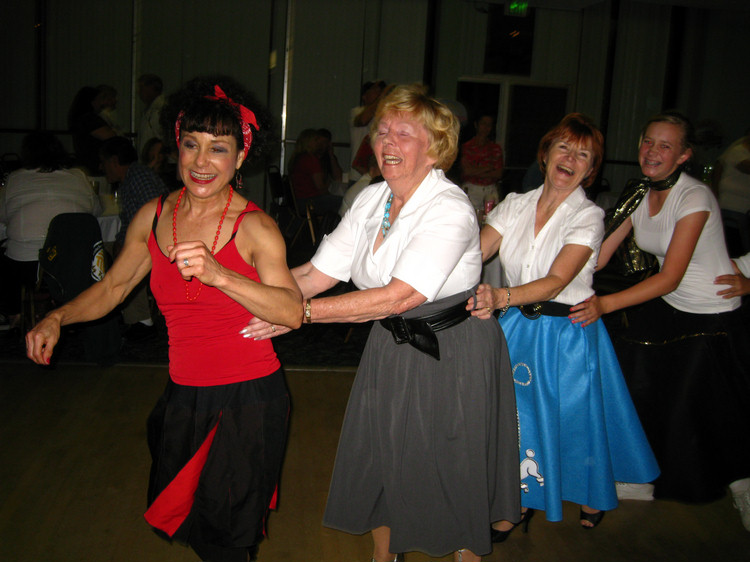
Bob Finds The Hokey Pokey On The Juke Box
Did You Know? - According to one account, in 1940, during the Blitz in London, a Canadian officer suggested to Al Tabor, a British bandleader of the 1920s, 1930s and 1940s that he write a party song with actions similar to "Under the Spreading Chestnut Tree". The inspiration for the song's title, "The Hokey Pokey", that resulted, came from an ice cream vendor whom Al had heard as a boy, calling out "Hokey pokey penny a lump. Have a lick make you jump".
He changed the name to "The Hokey Cokey" at the suggestion of the officer who said that 'hokey cokey', in Canada, meant 'crazy' and would sound better. A well known lyricist/songwriter/music publisher of the time, Jimmy Kennedy, reneged on a financial agreement to promote and publish it, and finally Al settled out of court, giving up all rights to the number. There had been many theories and conjectures about the meaning of the words "Hokey Pokey", and of their origin.
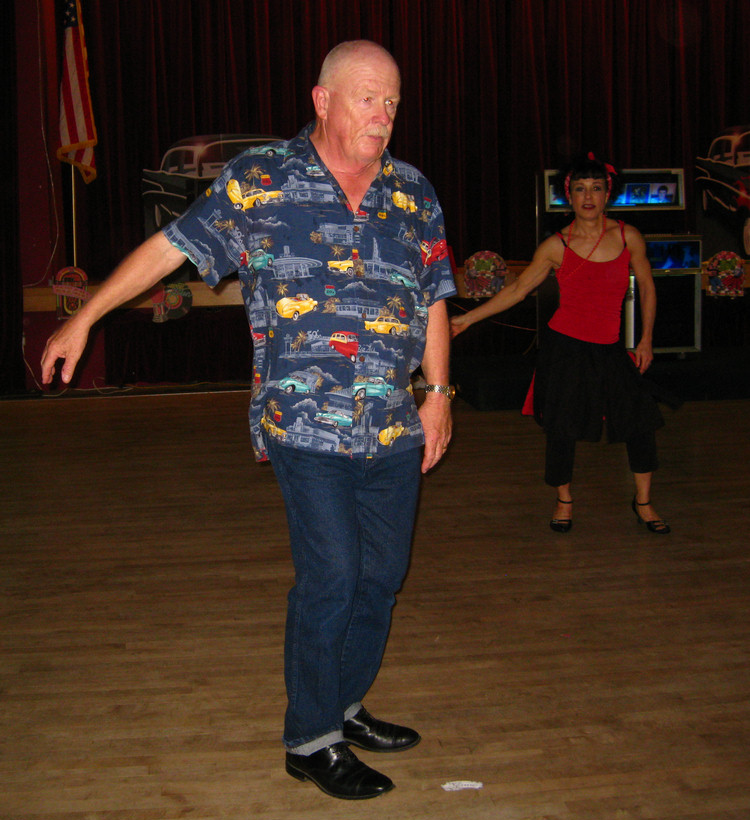
Something about arms???
Did you know? - Some believe its origins were earlier than WWII.
"A song rendered ("with appropriate gestures") by two Canterbury sisters while on a visit to Bridgewater, N.H. in 1857 starts thus:
I put my right hand in,
I put my right hand out,
I give my right hand a shake, shake shake
And I turn myself about.
As the song continues, the "left hand" is put in, then the "right foot," then the "left foot," then "my whole head."
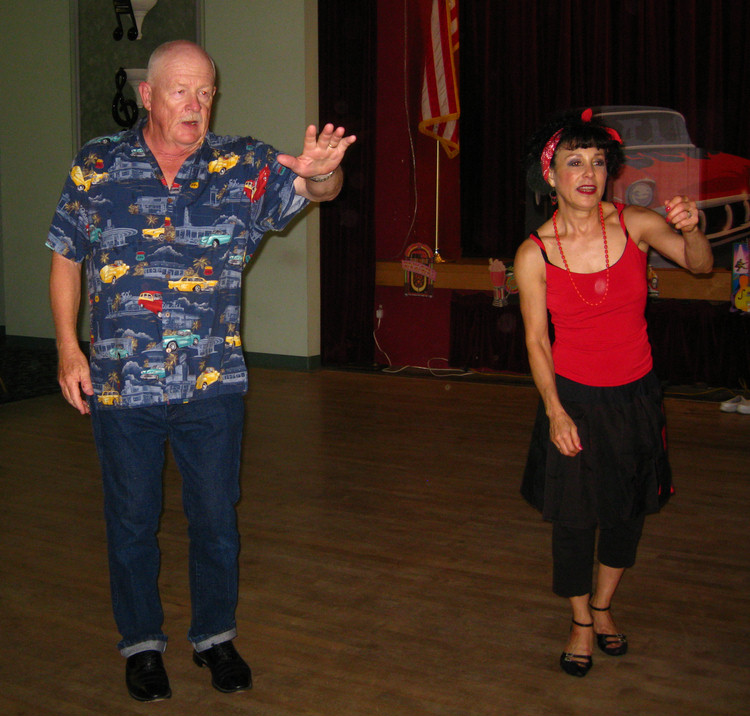
Left arm in! Got it!

Half was through "That's what it is all about!"
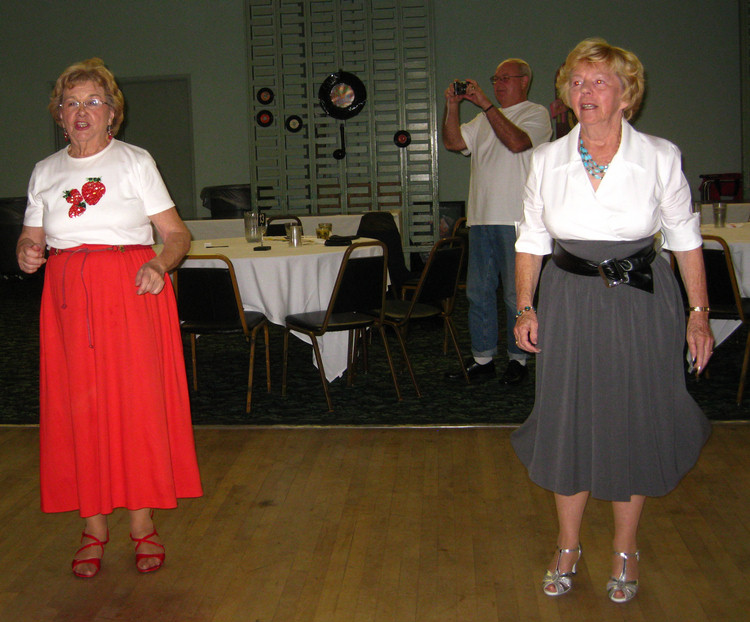
"OK, what's next???"
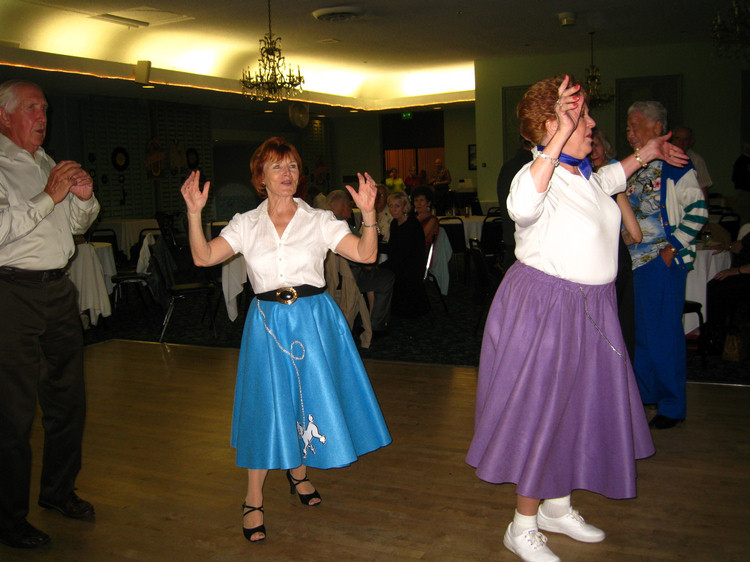
Turn turn turn
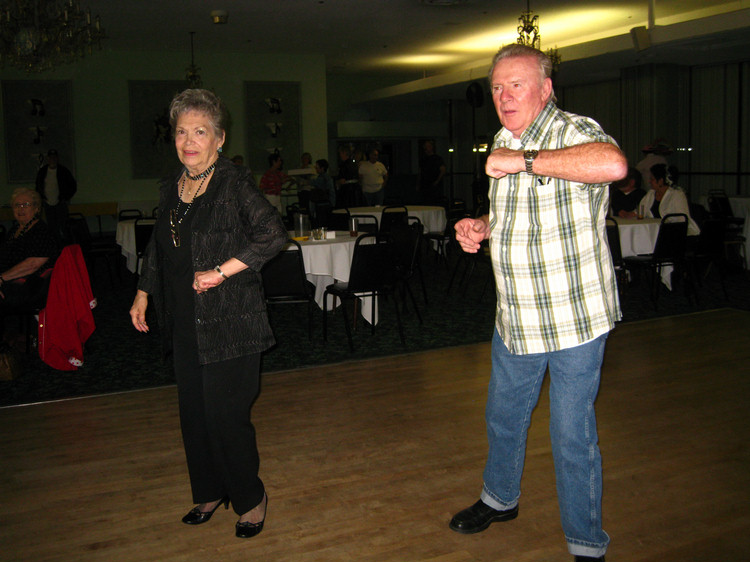
Left elbow in!
Did you know? - Known as the Hokey Pokey, it became popular in the USA in the 1950s. Larry LaPrise, Charles Macak and Tafit Baker were granted the copyright for the song in 1950. According to popular legend they created this novelty dance in 1949 as entertainment for the ski crowd at Idaho's Sun Valley resort.
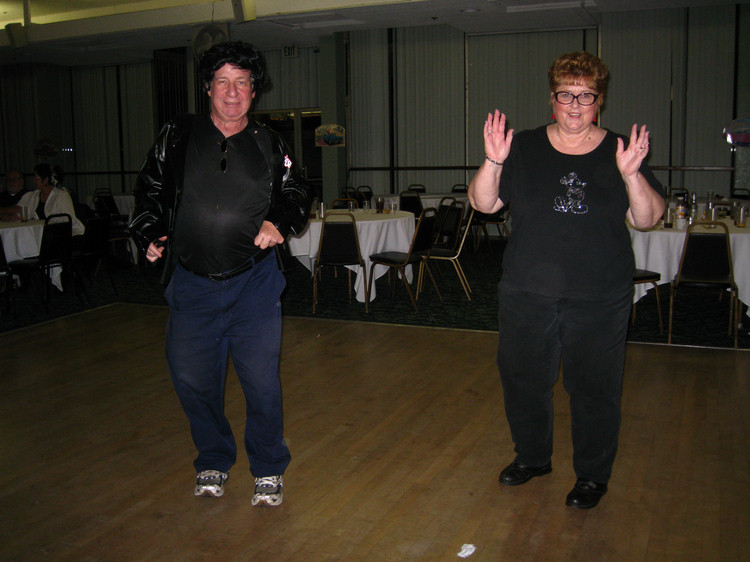
Put your whole self in...
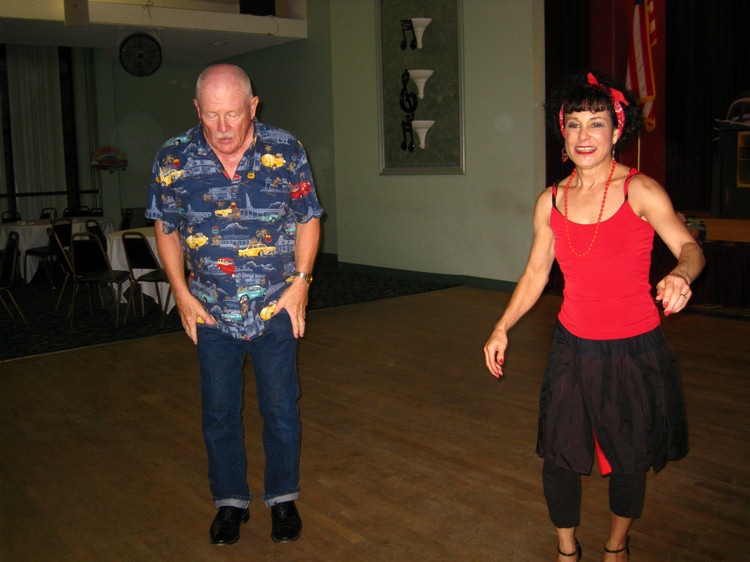
Whole self out....
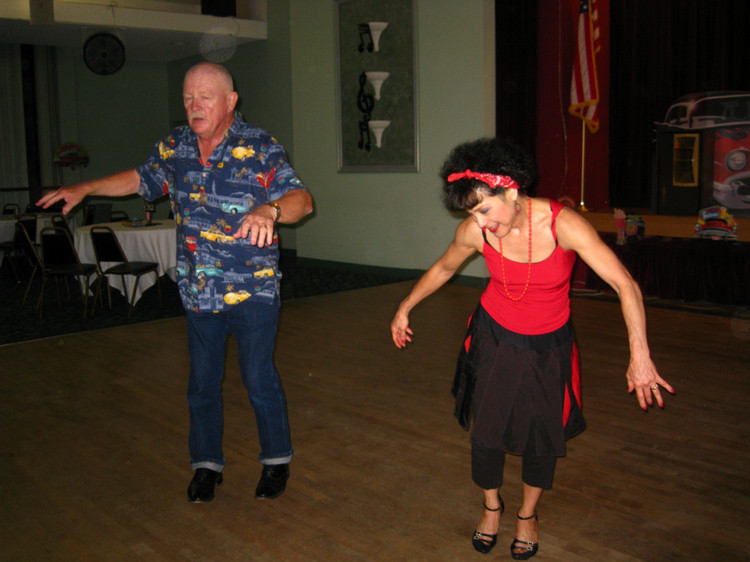
That's what it is all about!
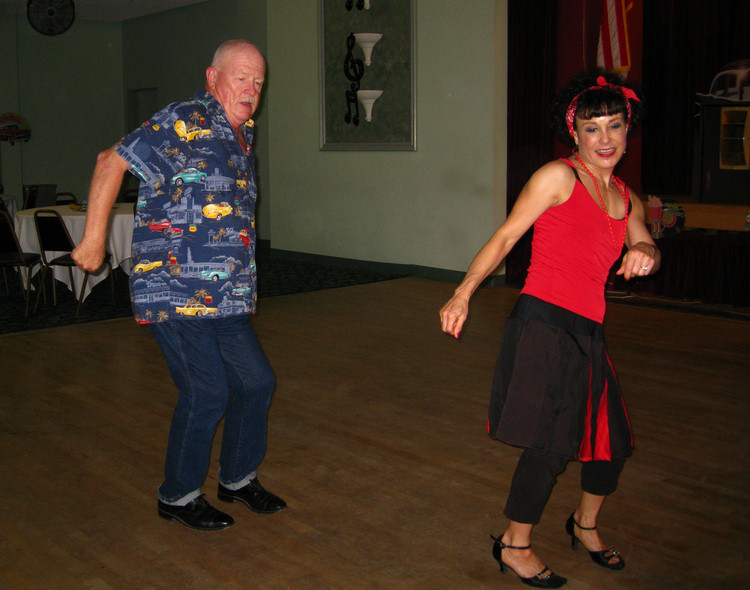
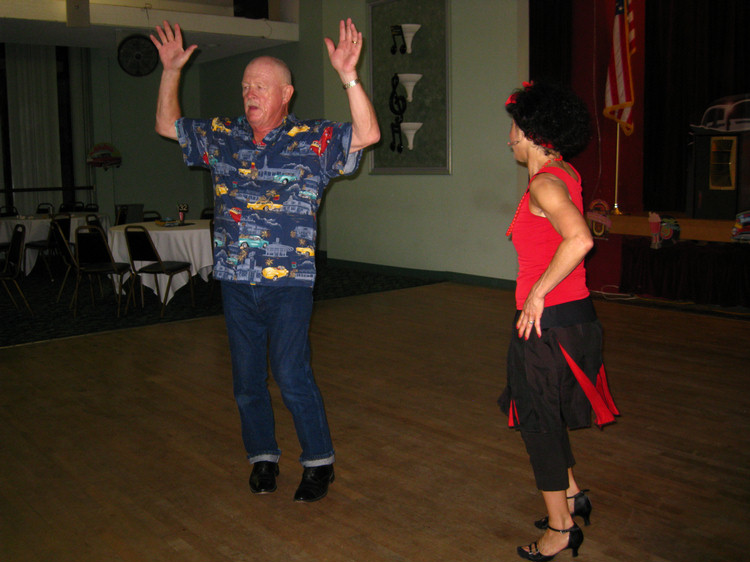
I give up!

Put your rear end in!
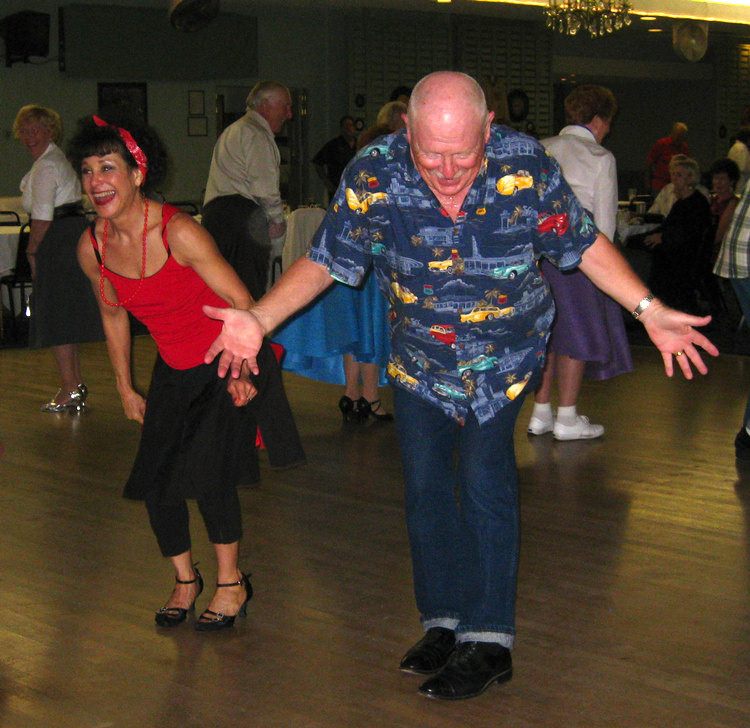
Time To Rest
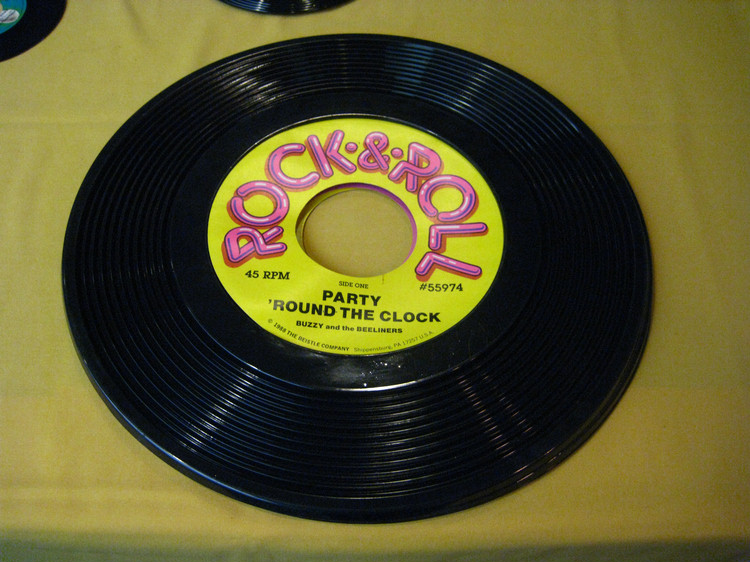
Did you know? - A gramophone record, commonly known as phonograph record, vinyl record (when made of polyvinyl chloride), or simply record, is an analog sound storage medium consisting of a flat disc with an inscribed, modulated spiral groove. The groove usually starts near the periphery and ends near the centre of the disc.
Gramophone records were the primary medium used for commercial music reproduction for most of the 20th century, replacing the phonograph cylinder by the 1920s. They were largely supplanted by the late 1980s by digital media, leaving the mainstream in 1991.
We loved our records back in the day!
Did you know? - By 1925, the speed of the record became standardized at a nominal value of 78 rpm. However, the standard was to differ between America and the rest of the world. The actual 78 speed in America was 78.26 rpm, being the speed of 3600 rpm synchronous motor (run from 60 Hz supply) reduced by 46:1 gearing. Throughout the rest of the world, 77.92 rpm was adopted being the speed of a 3000 rpm synchronous motor powered by a 50 Hz supply and reduced by 38.5:1 gearing.
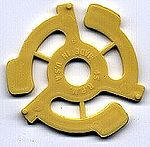
The commercial rivalry between RCA Victor and Columbia Records led to RCA Victor's introduction of what it had intended to be a competing vinyl format, the 7-inch (175 mm) 45-rpm disc. For a two-year period from 1948 to 1950, record companies and consumers faced uncertainty over which of these formats would ultimately prevail in what was known as the "War of the Speeds". But the 45-rpm size was gaining in popularity, too, and Columbia issued its first 45s in February 1951. By 1954, 200 million 45s had been sold.
The 45-rpm discs also came in a variety known as extended play (EP) which achieved up to 10–15 minutes play at the expense of attenuating (and possibly compressing) the sound to reduce the width required by the groove. EP discs were generally used to reissue LP albums on the smaller format for those people who had only 45 rpm players. LP albums could be purchased 1 EP at a time, with four songs per EP, or in a boxed set with 3 EPs or 12 songs. The large center hole on 45s allows for easier handling by jukebox mechanisms. EPs were generally discontinued by the late 1950s as three- and four-speed record players replaced the individual 45 players. One indication of the decline of the 45-rpm EP is that the last Columbia Records reissue of Frank Sinatra songs on 45-rpm EP records, called "Frank Sinatra" (Columbia B-2641) was issued December 7, 1959.
Everything Is Normal, Our Group Was The Last People Standing!
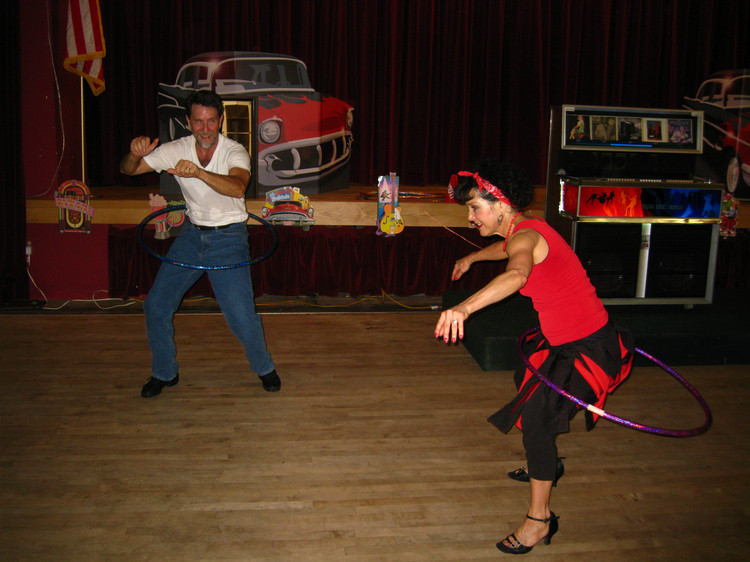
Bob and Donna were NOT going to let the hoop get the better of them!!!
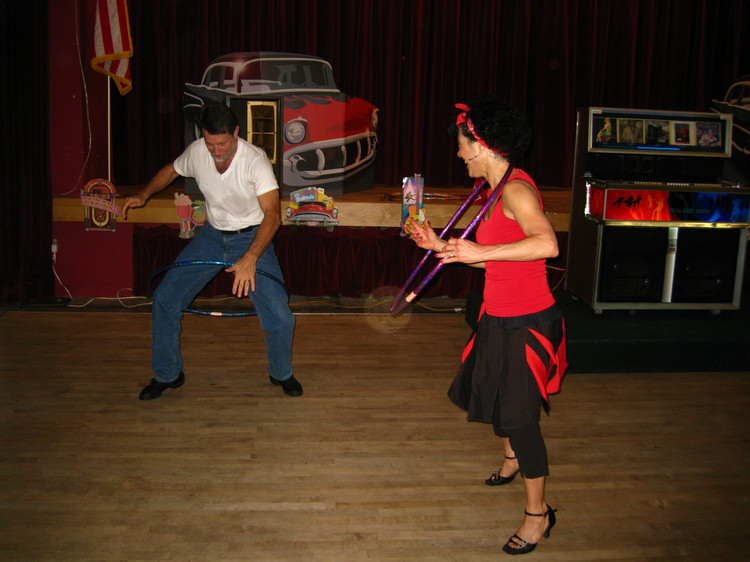
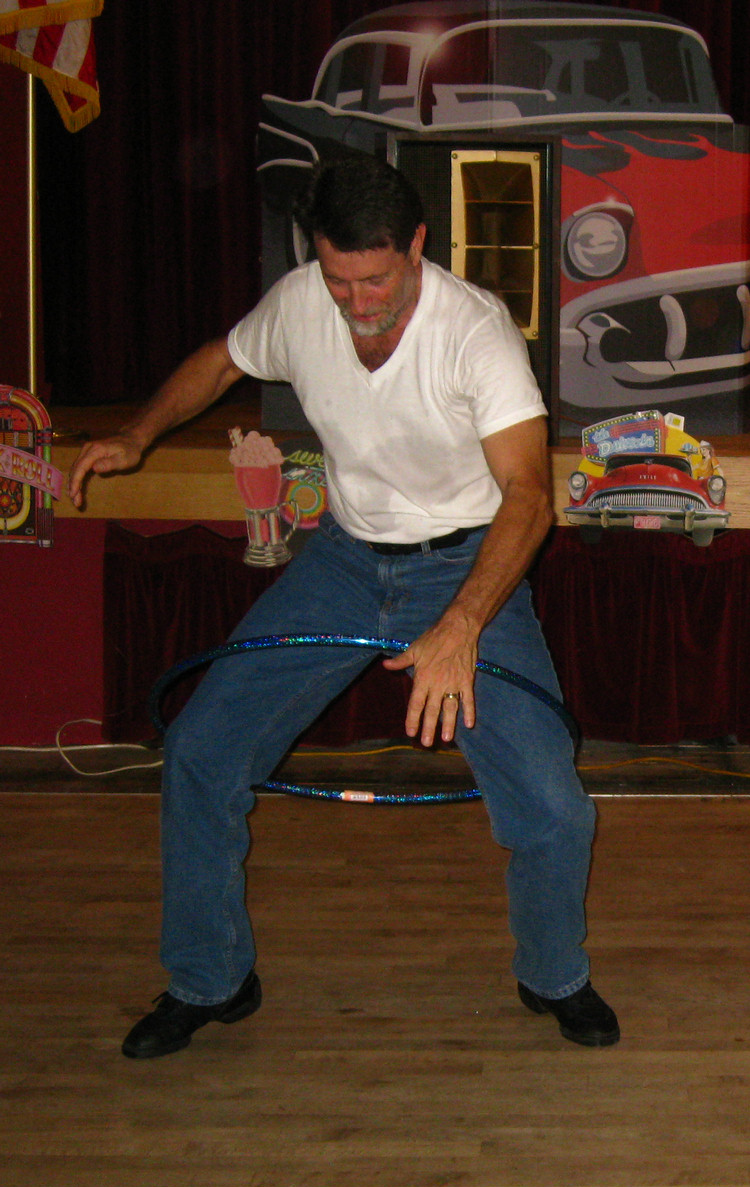
Well Maybe the hoop will get the better of Bob!
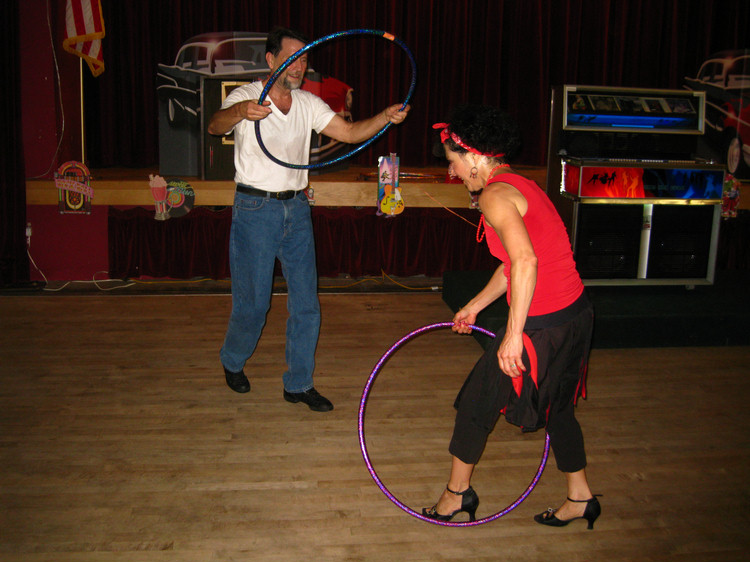
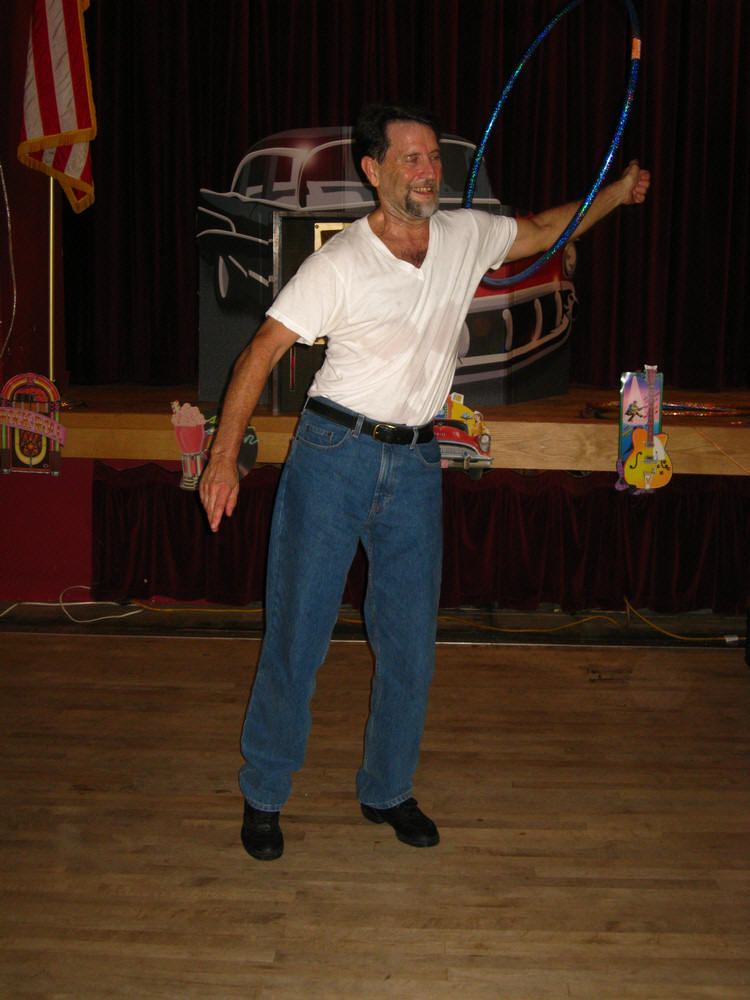
No Bob, see rule #3!
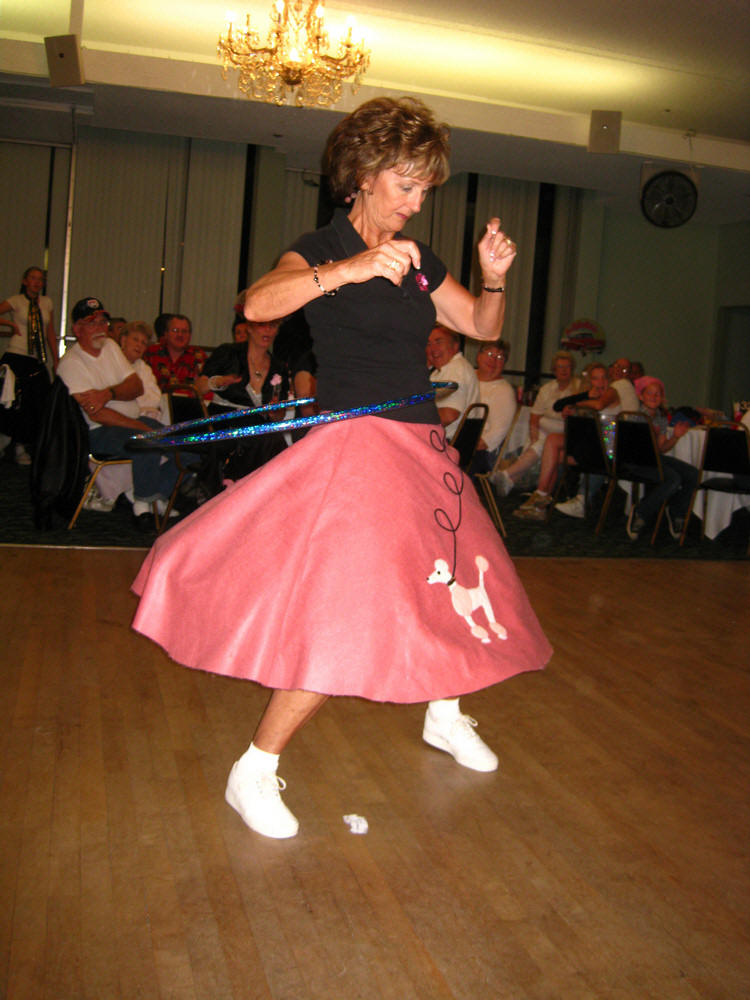
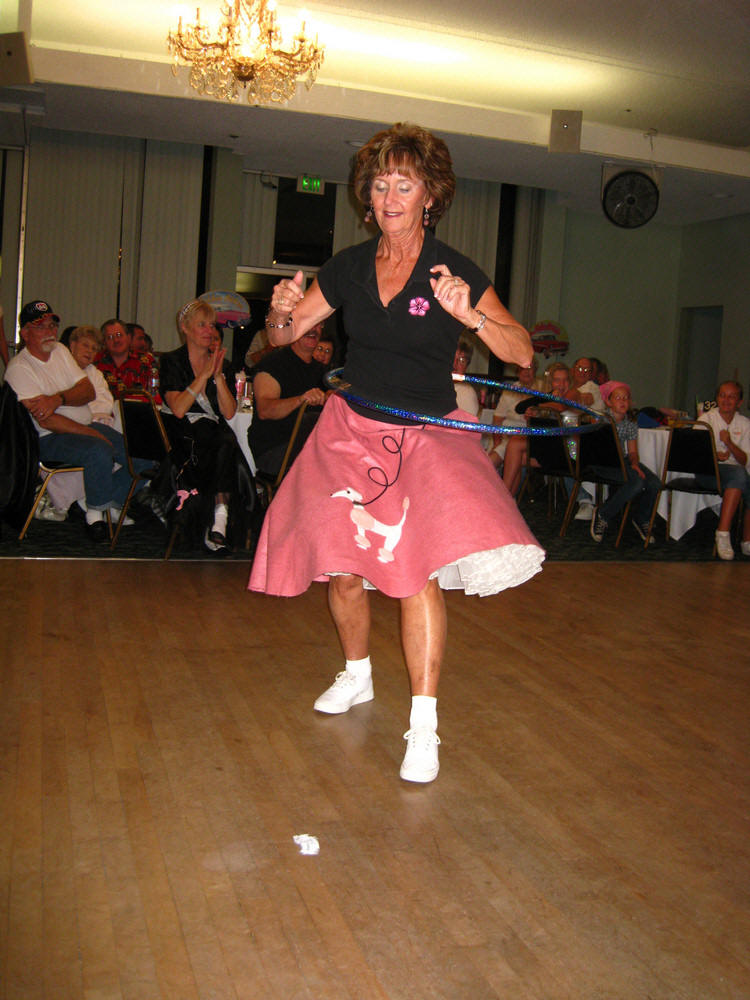
She is a shoe in!!
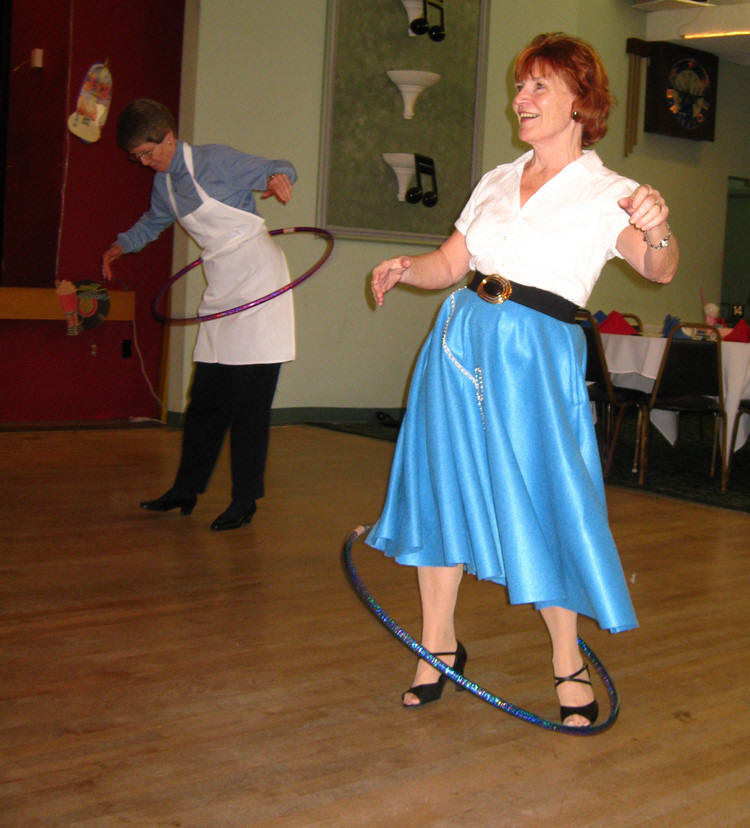
Oops!
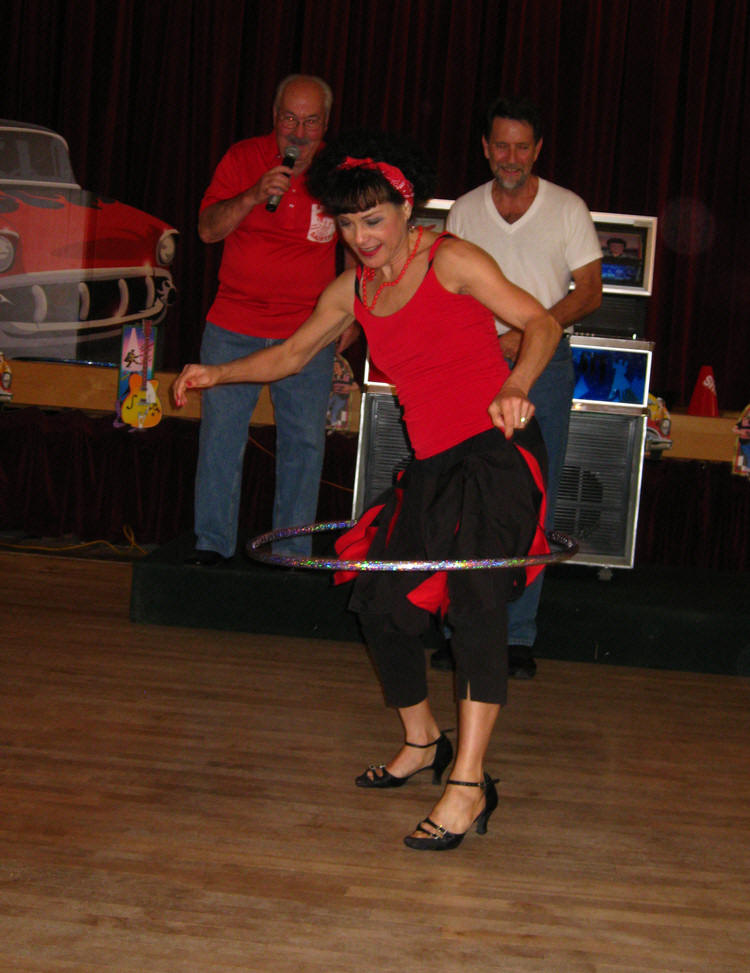
Come on Donna
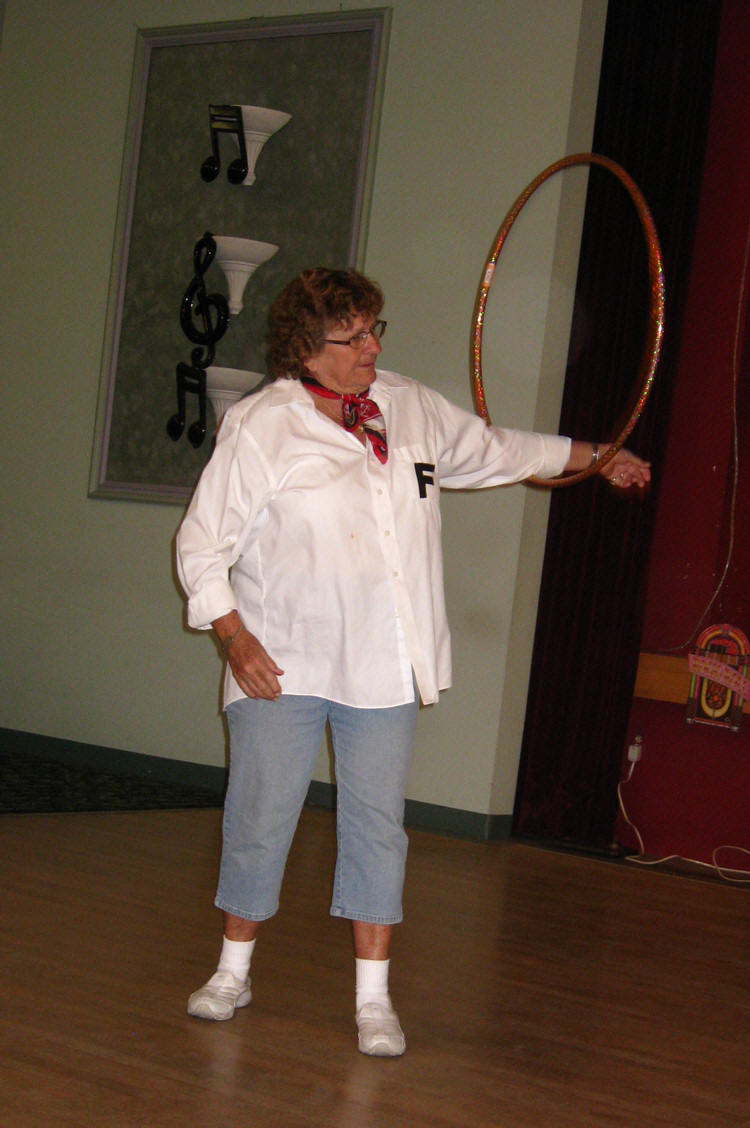
Ah ah... See rule number three....

Leon is so tired now he needed ANOTHER dessert!